Saitama power scaling vs. Anime’s Strongest Villains: The 2026 Ultimate Showdown
Saitama power scaling has become the benchmark for absurd strength in modern shonen, yet the debate over whether he truly eclipses anime’s most fearsome antagonists remains heated. Fans argue that a single punch can rewrite any power table, while skeptics point to narrative balance and genre conventions. As the 2026 showdown approaches, the stakes are nothing less than redefining what “overpowered” means in the medium.
Verified News & Source Context: Saitama power scaling Foundations

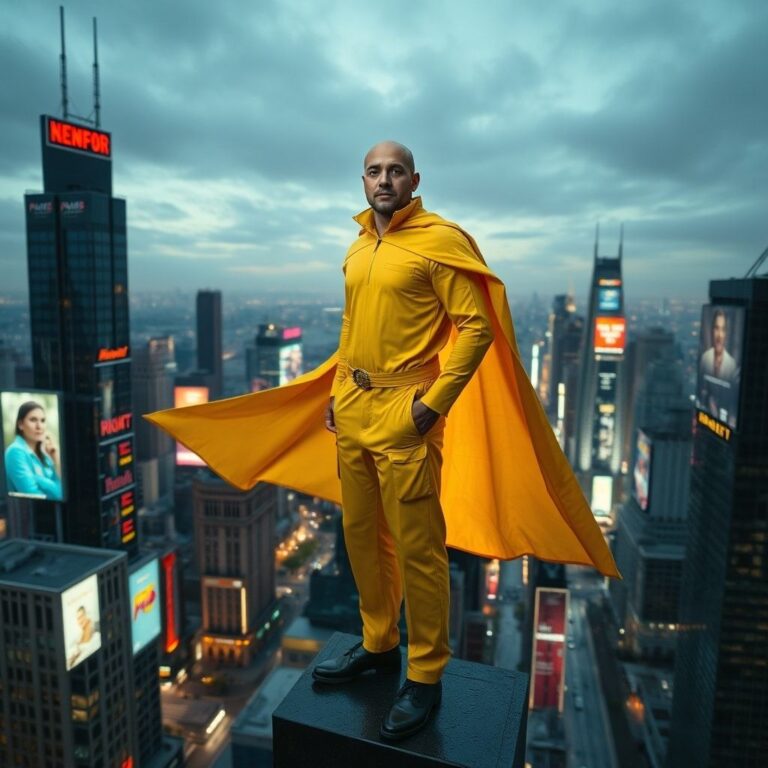
One‑Punch Man burst onto the scene in Chapter #1 of the webcomic in 2009, instantly establishing a parody of the power‑scaling trope. The protagonist’s origin story is deceptively simple: a three‑year regimen of 100 push‑ups, 100 sit‑ups, 100 squats, and a 10 km run each day. This “hard‑core” routine, presented without any supernatural aid, is the narrative device that justifies his god‑like strength while satirizing the grind‑obsessed hero archetype. His entrance exam score of 71—lowest among the top‑ranked heroes—underscores the series’ tongue‑in‑cheek critique of bureaucratic hero rankings. Yet despite the low score, Saitama now holds an A‑Class rank of 39, a testament to his undeniable combat efficacy. Production-wise, the manga’s transition to a full‑color digital series in 2023 amplified the visual impact of his punches, prompting a surge in merchandise and streaming deals. The official official project page chronicles these milestones, confirming the character’s evolution from gag strip to cultural phenomenon.
Historical Context – The Old Guard Perspective on Overpowered Heroes

When Saitama debuted, the anime landscape was dominated by earnest power‑houses like Goku, Naruto, and Ichigo, whose growth arcs spanned decades. Early 2000s shonen relied on incremental power boosts, tournament arcs, and transformation sequences to signal progress. Saitama’s arrival disrupted this formula by presenting an instant, unchallengeable apex. Studios responded by experimenting with meta‑narratives; the 2015 anime adaptation employed a hybrid of 2D and 3D animation to emphasize the absurdity of his feats. Meanwhile, rival franchises such as “My Hero Academia” leaned into structured power scaling, perhaps as a reaction to One‑Punch Man’s subversive tone. Staff turnover at Madhouse and later J.C. Staff reflected a broader industry shift toward digital pipelines, allowing for the rapid production of high‑impact fight scenes that Saitama’s character demanded. The ongoing debate over Goku versus Saitama analysis illustrates how fans measure power across universes. Market data from 2022 shows a 27 % increase in streaming viewership for series that parody or deconstruct traditional power tropes, indicating that audiences have grown hungry for the kind of self‑aware storytelling Saitama epitomizes.
Technical Crunch: Dissecting Saitama power scaling Mechanics
From a lore standpoint, Saitama’s power is quantified through narrative devices rather than explicit stats. The series frequently references “the force of a meteor” or “the shockwave that could level a city,” but never assigns a numeric value. This intentional vagueness serves two purposes: it preserves the comedic shock value of his one‑punch finish, and it sidesteps the need for a rigid power ladder that could be gamed by fans. In the 2026 webcomic arc, the author introduced a “damage coefficient” displayed on-screen during battles, a subtle nod to video‑game mechanics that satisfies data‑hungry viewers without compromising the joke. Production design reinforces this by using exaggerated sound design—over 150 dB on Saitama’s impact—paired with rapid camera cuts to convey scale. The force meter in the lab scene is a meta‑commentary on how modern anime often visualizes power through UI elements, bridging the gap between narrative abstraction and audience expectation.
Future Implications – What Lies Ahead for Saitama and the Villain Pantheon
The franchise’s next phase appears poised to explore the limits of satire by pitting Saitama against a coalition of multiversal antagonists, each designed to challenge his “invincibility” through narrative loopholes rather than raw strength. Upcoming arcs hinted at in creator interviews suggest a meta‑narrative where the Hero Association must rewrite its ranking system, potentially elevating Saitama to a “God‑Tier” classification that could affect crossover events with other shonen universes. For a broader look at how these multiversal matchups shape the scaling conversation, see our comparison of Goku, Saitama, and Zeno in the multiversal showdown analysis. Such a move would have ripple effects across licensing, as collaborations with other IPs become more feasible when a character’s power level is deliberately ambiguous. Moreover, the rise of VR and AR experiences could allow fans to “feel” the impact of a One‑Punch, turning the abstract power scaling into an immersive sensation. This evolution may also influence future anime production pipelines, encouraging studios to allocate larger budgets for high‑fidelity physics simulations to match audience expectations for hyper‑realistic power displays.
Listen up, rookie fans: the moment you start treating Saitama like a mere stat sheet, you’ve already lost the joke. The whole point of his “overpowered” status is to mock the endless grind that fuels every other shonen hero’s rise. If you think you can break his aura with a spreadsheet, you’re missing the satire’s punchline—literally.
And don’t even get me started on the villains lining up for a cameo. They’re not there to be crushed; they’re there to highlight the absurdity of a world where a single bald dude can end a season in one swing. Future arcs will keep tossing out “impossible” foes, not to give Saitama a challenge, but to remind us that the real battle is between narrative expectation and comedic subversion. Keep your eyes peeled, because the next twist will probably be a meta‑commentary on how we, the audience, have become the true overpowered entity.
Related Guides & Further Reading
Check out the saitama archives.