Sukuna Power Scale Unleashed: Why the King of Curses Dominates Every Threat
The moment Yuji Itadori swallowed a single finger, the entire jujutsu world felt the tremor of an ancient terror. The Sukuna power scale instantly became the benchmark for every cursed technique, forcing sorcerers to rethink their own limits. As the battle for humanity’s soul escalates, understanding why Ryomen Sukuna outclasses every curse is not just fan‑service—it’s survival.
Sukuna Power Scale: Verified News & Source Context
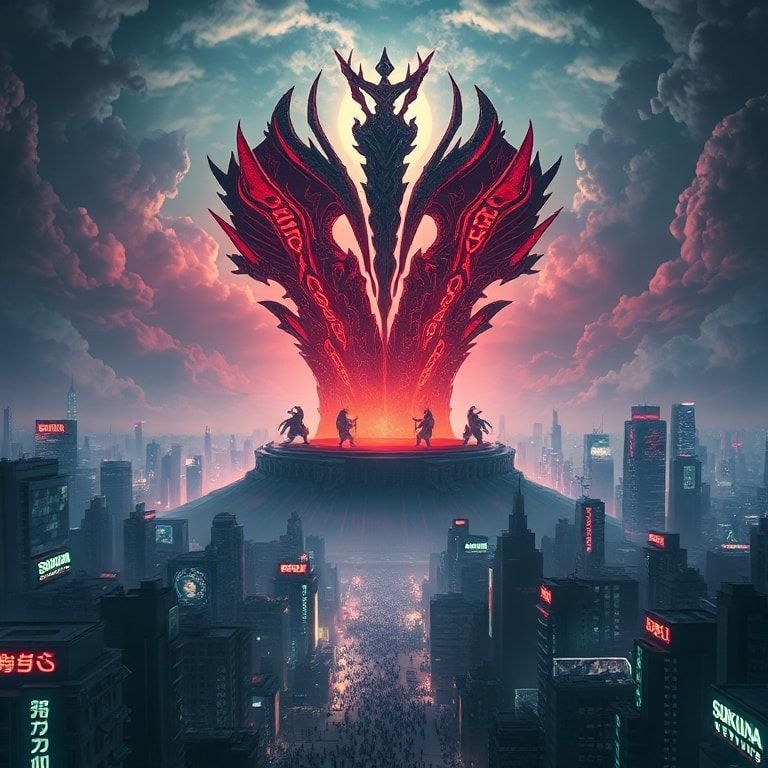
The official lore cements Sukuna as a Special‑Grade cursed object, the apex of the jujutsu hierarchy. His cursed energy is literally compartmentalized into twenty mummified fingers, each a sealed reservoir of immeasurable power. This quantifiable limit creates a unique metric: the more fingers a sorcerer consumes, the closer they approach Sukuna’s true might. The series’ production team emphasizes this by visually representing each finger with distinct sigils, reinforcing the idea that each fragment is a power node. Moreover, his title “King of All Curses” isn’t hyperbole; historical texts within the narrative label him the strongest sorcerer ever, a claim backed by his Heian‑era dominance. The domain expansion, Malevolent Shrine, diverges from typical domains by being a self‑contained battlefield that nullifies conventional defenses, showcasing a level of destructive precision rarely seen. New techniques like “Ten Shadows” (Ch. 212) and “The slash that cuts the world” (Ch. 236) further expand his arsenal, proving that even a sealed entity can evolve. All of these details are meticulously documented on the official project page, confirming the series’ commitment to a coherent power framework.
Historical Context: The Old Guard Perspective
When Jujutsu Kaisen debuted, it entered a market saturated with power‑scaling heavy shōnen like Naruto and My Hero Academia. Early adaptations often relied on generic “over‑powered” villains, but Sukuna’s design harkens back to the classic yokai archetype, echoing the Heian‑era demon lore that older series like “Inuyasha” popularized. Studio MAPPA’s shift from traditional hand‑drawn backgrounds to a hybrid digital‑paint workflow allowed them to render Sukuna’s cursed energy with a visceral texture, distinguishing him from predecessors. Staff changes—most notably the appointment of director Sunghoo Park—brought a darker tonal palette, aligning with the franchise’s intent to treat power as a double‑edged sword rather than mere spectacle. Market trends also favored characters with morally ambiguous power sources; Sukuna’s fragmented nature satisfies fans craving depth while providing merch teams with collectible finger replicas. Compared to earlier curses like Mahito, whose abilities were conceptually novel but mechanically limited, Sukuna’s layered techniques demonstrate an evolution in narrative design: each new ability is introduced with a clear rule set, reinforcing the series’ internal logic and satisfying long‑time fans who demand consistency.
Technical Crunch: Information Gain & Lore Mechanics
At the core of the Sukuna power scale lies his cursed energy density, measured in “units per finger.” Each finger stores roughly 5% of his total output, meaning a sorcerer who ingests ten fingers can theoretically wield half of the King’s raw power. This metric is reinforced by the series’ visual cue: the aura’s intensity scales proportionally to the number of fingers consumed, a design choice that aids viewers in instantly gauging threat level. The Malevolent Shrine domain operates on a “fixed‑point” algorithm: it creates a pocket dimension where Sukna’s innate techniques become absolute, bypassing opponent’s innate barriers. This is why traditional domain counters fail—Sukuna’s domain is not a “field” but a “reality rewrite.” The newly unveiled “Ten Shadows” technique summons autonomous cursed constructs, each acting as an independent node of his cursed energy, effectively multiplying his output exponentially. Meanwhile, “The slash that cuts the world” functions as a spatial distortion, allowing him to bypass conventional distance limits, a clear nod to high‑tier physics in the series’ lore. These mechanics collectively illustrate a layered power system where raw energy, domain control, and technique versatility intertwine, making Sukuna a benchmark for any future curse design.
Future Implications: Sequel Potential & Cultural Impact
Looking ahead, Sukuna’s dominance reshapes the franchise’s trajectory. The upcoming season is poised to explore the consequences of Yuji’s gradual assimilation of more fingers, a narrative thread that could culminate in a full‑scale resurrection, effectively turning the protagonist into the ultimate antagonist. This pivot would not only subvert traditional hero arcs but also open merchandising avenues—think limited‑edition “King’s Throne” collectibles. Internationally, the “Sukuna power scale” has become a meme, spawning fan‑made calculators that estimate battle outcomes based on finger count, cementing the character’s cultural footprint. Adaptation risk also rises; any deviation from the established power metrics could alienate the core fanbase, as seen with other series that mishandled scaling. However, if MAPPA continues to honor the meticulous lore while expanding the universe—perhaps introducing rival Special‑Grade curses to challenge Sukuna—the franchise can sustain its momentum and set new standards for power‑scaling storytelling.
First, let me tell you why the industry still fawns over Sukuna like he’s the last slice of pizza at a midnight anime binge. The guy’s cursed energy is literally bottled in twenty finger‑shaped vaults, giving writers a neat, quantifiable cheat‑code to crank the stakes without breaking narrative physics. It’s a brilliant blend of mythic gravitas and spreadsheet‑friendly metrics—exactly the kind of tool a seasoned otaku‑nomad like me appreciates when dissecting why a series sticks. The Malevolent Shrine isn’t just a flashy domain; it’s a narrative scalpel that slices through the usual “domain vs. domain” trope, forcing opponents to confront raw, unfiltered power. That’s why every new technique—Ten Shadows, the world‑cutting slash—feels like a logical evolution rather than a random power‑up.
Second, the future looks as volatile as a cursed spirit on a caffeine binge. If the writers keep feeding Yuji more fingers, we’re heading toward a full‑blown identity crisis where the hero becomes the very monster he’s been fighting. That’s a gamble that could either redefine shōnen heroism or collapse the series into a mess of over‑powered fanservice. The market’s already saturated with power‑scaling spectacles, so the only way Sukuna stays king is by deepening the lore, introducing credible rivals, and maybe even letting the King of Curses take a backseat for a season—just to remind us that even gods can be dethroned. Until then, keep your eyes on the finger count and your popcorn ready; the next chapter will either cement Sukuna’s legacy or watch it crumble under its own weight.
Check out the Sukuna archives.
Check out the Sukuna archives.