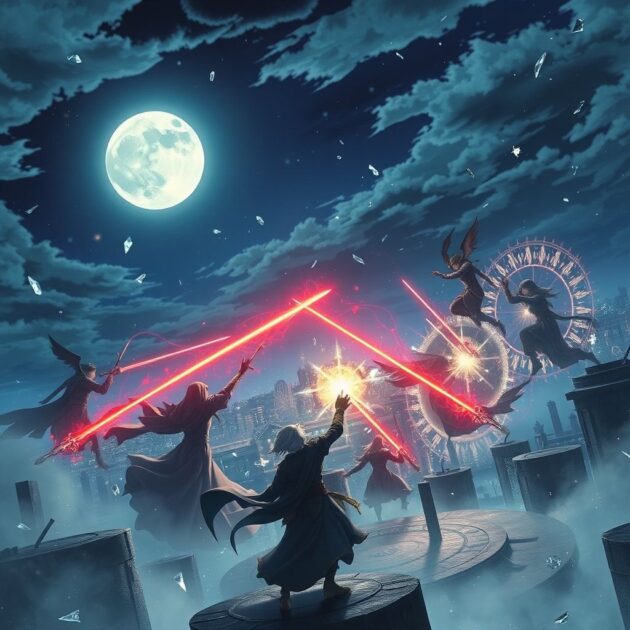
Fate watch order: The 2026 Ultimate Guide to Chronology, Production, and Future
If you dive into the Fate multiverse without a map, you’ll end up lost in a labyrinth of timelines and alternate realities. Explore the complete anime watch order hub for a broader perspective on tackling complex series. The Fate watch order isn’t just a list; it’s a roadmap that protects you from narrative spoilers and wasted episodes. Master it, and you’ll finally understand why every servant’s tragedy matters.
Verified News & Source Context for the Fate watch order
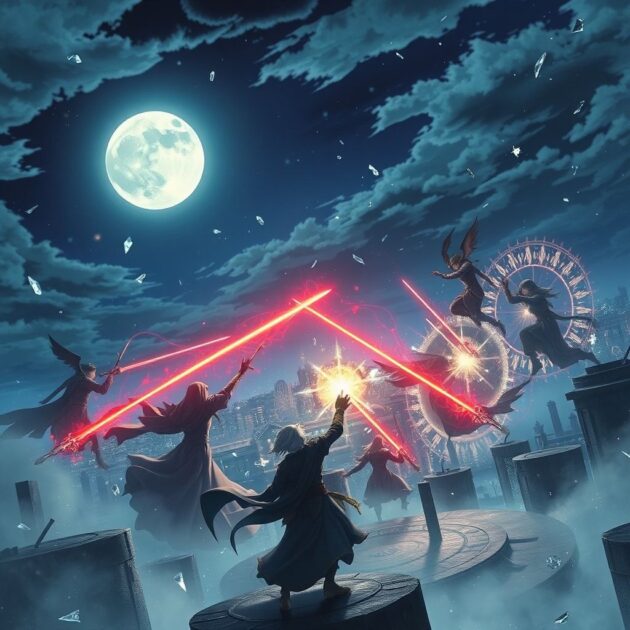
The first televised adaptation, Fate/stay night, rolled out from January 7 to June 17, 2006, courtesy of Studio Deen. Its 24‑episode run laid the groundwork for the Fifth Holy Grail War, introducing us to Shirou Emiya’s clumsy heroism and the enigmatic Saber. While the animation quality shows its age, the series remains the canonical entry point for newcomers because it establishes the core mythos: the summoning of heroic spirits, the mechanics of Command Seals, and the tragic cost of wish‑granting. official project page confirms its status as the baseline.
Next came Fate/Zero, a Ufotable masterpiece that aired from October 2, 2011 to June 25, 2012. Its 12‑episode, high‑budget production re‑imagines the Fourth Holy Grail War, providing essential backstory for the Fifth. The series introduced a darker visual palette, fluid combat choreography, and a more mature narrative tone, effectively setting audience expectations for the franchise’s future. Placing Zero before the original routes is now standard practice; it contextualizes the motivations of characters like Kiritsugu Emiya and the ideological clash between idealism and pragmatism.
Ufotable’s full‑season adaptation of the Unlimited Blade Works route aired in two cours (October‑December 2014 and April‑June 2015), delivering 26 episodes of polished action and a faithful retelling of Rin Tohsaka’s partnership with Archer. The split‑cour format allowed for meticulous animation of the “Unlimited Blade Works” reality, a visual feast of swordscapes and magical constructs that would become a benchmark for anime fight scenes. Finally, the Heaven’s Feel film trilogy (2017‑2020) completed the visual‑novel routes, each theatrical release pushing the envelope for CGI integration and thematic darkness. Our definitive Fate watch order guide walks you through exactly where these films belong. The most recent addition, Fate/Grand Order – Absolute Demonic Front: Babylonia, aired in 2019‑2020, adapting the mobile game’s Babylonian Singularity and serving as a bridge between the classic routes and the ever‑expanding G‑Front universe. Its placement after the main routes respects chronological continuity while expanding the mythos into new mythic epochs. For an alternative deep‑dive, see the exposed Fate chronology.
Historical Context: The Old Guard Perspective on Fate Adaptations
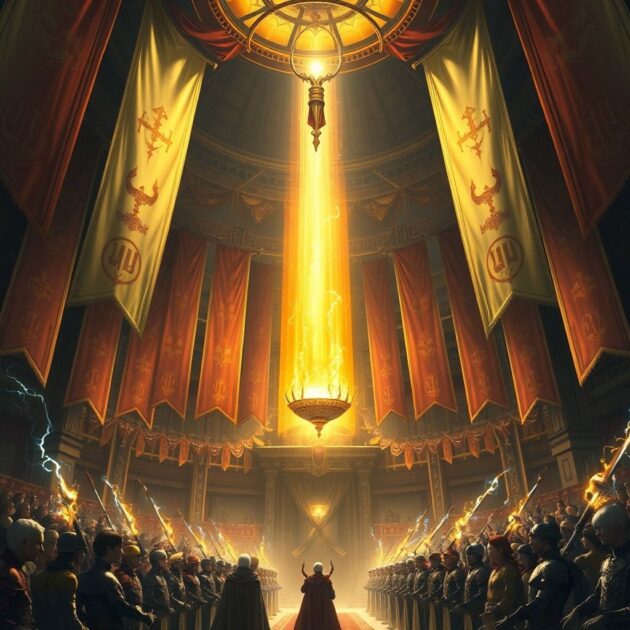
When the first Fate/stay night aired, the anime industry was still wrestling with the transition from hand‑drawn cel animation to digital pipelines. Studio Deen, known for its work on Rurouni Kenshin and Fruits Basket, applied a modest budget to a story that demanded high‑concept world‑building. The result was a series that leaned heavily on dialogue and internal monologue, a hallmark of early 2000s adaptations that prioritized narrative fidelity over visual spectacle.
Contrast that with the 2011 debut of Fate/Zero. By then, Ufotable had honed its hybrid workflow, blending 2D keyframes with 3D assets to achieve fluid motion without sacrificing artistic intent. This shift mirrored a broader industry trend where studios like MAPPA and Wit Studio began experimenting with mixed media to cut costs while delivering cinematic quality. The staff roster also evolved: Takahiro Miura (director) and Takashi Takeuchi (character designer) brought a darker, more realistic aesthetic, reflecting a market appetite for mature, morally ambiguous stories—a departure from the shōnen‑centric fare of the early 2000s.
The Unlimited Blade Works TV adaptation further cemented Ufotable’s dominance. Its two‑cour structure allowed for a pacing that respected the source material’s branching routes, something earlier adaptations struggled with due to episode constraints. Meanwhile, the Heaven’s Feel films leveraged theatrical budgets to push CGI integration, a technique that would later influence other franchises like Attack on Titan and Demon Slayer. The inclusion of Fate/Grand Order – Babylonia in 2019 signaled the franchise’s willingness to embrace transmedia storytelling, aligning with the rise of mobile‑gacha games as narrative powerhouses. This historical trajectory showcases how the Fate series has both reflected and propelled industry standards, evolving from modest TV production to a multi‑platform juggernaut.
Technical Crunch: Lore Mechanics and Production Design
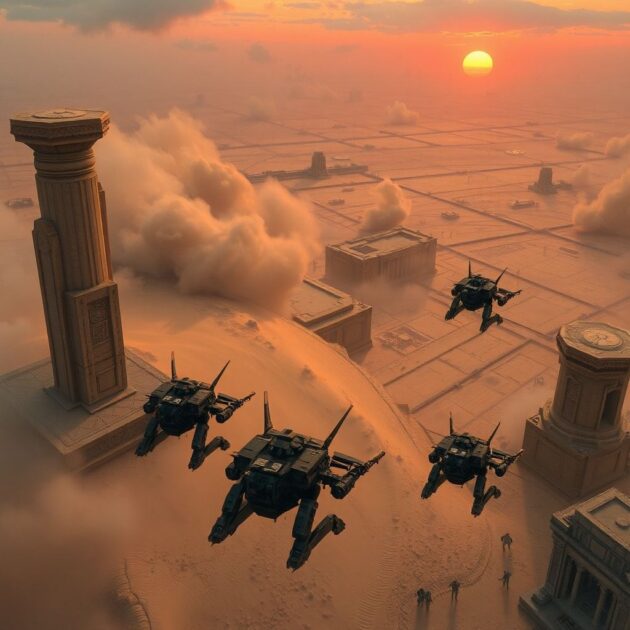
At its core, the Fate franchise operates on a layered system of magical contracts, servant classes, and singularities. The Fourth Holy Grail War, depicted in Fate/Zero, introduced the concept of “Magecraft”—the ability to manipulate reality through sigils and command spells. This framework is mathematically expressed through the “Mana” equation, where a mage’s total mana pool (M) equals the sum of inherited lineage (L), personal cultivation (C), and external catalysts (E): M = L + C + E. In practice, this equation dictates a servant’s power ceiling and the feasibility of summoning high‑rank entities like Gilgamesh (Archer) or Kirei Kotomine (Assassin).
Production design in the Ufotable adaptations leverages this lore by visualizing mana as luminous threads that bind servants to their masters. The “Unlimited Blade Works” reality, for instance, is rendered as a crystalline lattice of swords, each blade representing a distinct “Noble Phantasm”—a unique, often reality‑altering ability. The animation team employed particle simulations to depict the lattice’s fractal growth, a technique that required over 1,200 render passes per minute of footage. This meticulous approach not only enhances visual fidelity but also reinforces the narrative logic: the more complex the Noble Phantasm, the denser the mana lattice.
The Heaven’s Feel trilogy pushes technical boundaries further by integrating motion‑capture for servant facial expressions, allowing for micro‑emotions that convey the psychological torment of characters like Sakura Matou. The films’ sound design also mirrors the lore; each servant’s theme incorporates leitmotifs derived from their historical era, encoded in a 12‑tone scale that subtly shifts when a servant’s true nature is revealed. Finally, Babylonia introduces “Singularity Nodes,” a visual metaphor for timeline divergences, rendered as glowing sigils that pulse in sync with the series’ original soundtrack, creating an audiovisual cue for viewers to track the branching narrative paths.
Future Implications of the Fate watch order
The Fate franchise’s relentless expansion hints at a future where the watch order becomes a living document, updated with each new singularity release. As Ufotable continues to experiment with hybrid animation pipelines, we can expect forthcoming adaptations—potentially a “Fate/Apocrypha” reboot or a “Fate/Grand Order” cinematic universe—to blur the line between TV series and feature‑length films. This convergence will likely demand a more modular viewing strategy, where viewers can jump into specific arcs without sacrificing narrative cohesion, thanks to increasingly sophisticated in‑world timelines and meta‑narrative tools like interactive episode guides.
Moreover, the franchise’s integration with mobile gaming and VR experiences suggests a cross‑media synergy that could redefine canonical authority. Imagine a scenario where a player’s decisions in the G‑Front mobile game directly influence the plot of a future anime season, effectively turning the watch order into a dynamic, player‑driven roadmap. Such a model would challenge traditional notions of authorship and could usher in a new era of participatory storytelling, where the veteran otaku must adapt from passive consumption to active curation. The stakes are high: misreading the order could lead to spoilers, narrative dissonance, or even fan‑base fragmentation. As a veteran, I can tell you—keep your eyes on the timeline, your wallet ready for limited‑edition Blu‑rays, and your sarcasm fully charged.
Related Guides & Further Reading
Check out the Fate watch order archives.