How to Crush Istanbul on a Shoestring: The Ultimate Istanbul Budget 3‑Day Hack
Mastering the Istanbul Budget: Transport Hacks You Can’t Miss
Before you dive in, consult our comprehensive Istanbul budget hub and our ultimate route hub for the full picture. When you hear the phrase Istanbul budget, the first image that pops is a backpacker juggling a kebab and a metro ticket while the city’s minarets loom like ancient sentinels. Yet the reality of traveling on less than $30 a day hinges on mastering the public‑transport maze, and the key is the Istanbulkart. Sold for a non‑refundable 130 TL deposit, this smart‑card becomes your passport to metros, trams, ferries, and even the cable car. The deposit may seem steep, but once topped up, each ride costs a fraction of a dollar, shaving off the bulk of daily expenses.
Beyond the Istanbulkart, tourists can opt for the Istanbul City Card, granting unlimited rides for 1, 3, 5, 7, or 15 consecutive days—perfect for a 3‑day sprint. If you’re a light‑footed wanderer, limited‑use passes like ONEpass or TWOpass let you pre‑pay a set number of rides, usable within a chosen window, giving flexibility without the upfront deposit. Physical vending machines, branded BELBİM, pepper major hubs—Sultanahmet Square, Taksim, Kadıköy Harbor, and the airport—so you can grab or recharge on the spot. And for the ultra‑short stay, contactless credit or debit cards are accepted directly on buses, metros, trams, ferries, metrobus, Marmaray, and even the cable car, eliminating the need for a separate card altogether.
All these options are detailed on the official project page, which breaks down pricing, validity periods, and where to find vending machines. Understanding these layers means you can allocate your $30 daily budget toward food, museums, and that inevitable Turkish coffee, rather than overspending on transport. For a broader look at how to stretch your lira across the city, see our Istanbul Budget Guide: How to Explore the City Without Emptying Your Wallet. If you’re planning a four‑day backpacking sprint, check out our no‑bullshit guide that breaks down every cheap tip.
From Ottoman Roads to Modern Rails: Historical Context of Istanbul’s Transit

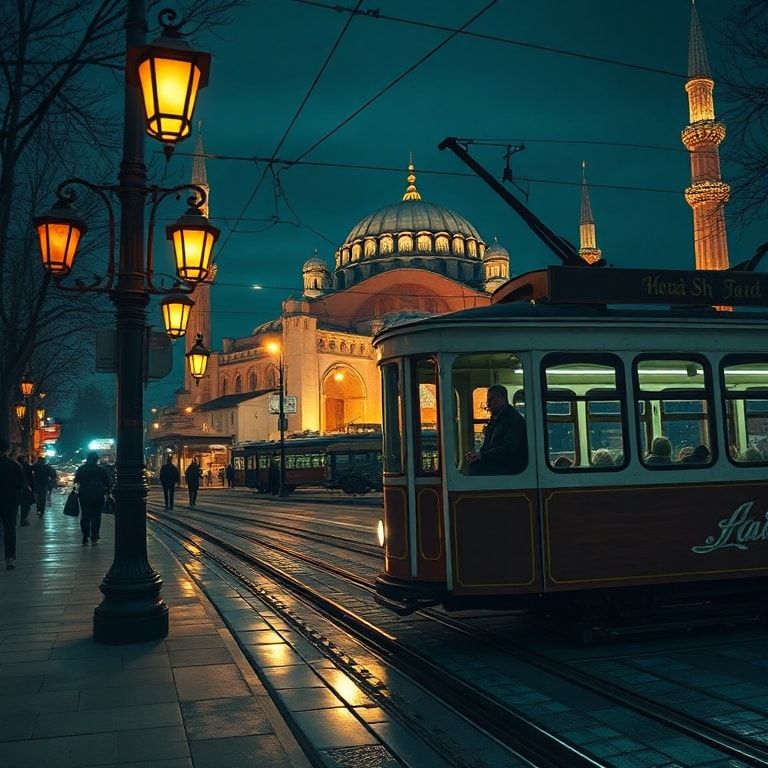
To truly appreciate the modern Istanbulkart, you have to travel back to the era when the city’s arteries were horse‑drawn carriages and bustling bazaars. The Ottoman Empire’s first public‑transport experiment was the horse‑drawn tram in the 1860s, a novelty that connected the European side’s burgeoning neighborhoods with the historic peninsula. Fast‑forward to the early 20th century, the electrified tram network sprouted, mirroring European metropolises and laying the groundwork for today’s extensive tram lines that glide past ancient walls.
The post‑World War II boom saw the introduction of the subway—M1—linking Aksaray to the historic core, a bold statement that Istanbul was stepping into the modern age. Each subsequent line, from the Marmaray tunnel that finally united Europe and Asia beneath the Bosphorus, to the high‑speed ferries that cut across the strait, reflects a city constantly reinventing its mobility. The evolution of ticketing mirrors this trajectory: from paper tickets printed on silk to magnetic cards, and now to contactless smart‑cards and mobile payments.
Studios and production houses that have chronicled Istanbul’s transformation—think of the 1970s Turkish cinema’s romanticized depictions of trams, or recent anime series that set their narratives against the backdrop of the Bosphorus ferry—have always used transport as a metaphor for cultural convergence. The current smart‑card system is not just a convenience; it’s a cultural artifact, embodying decades of infrastructural ambition and the city’s desire to stay globally competitive while preserving its historic soul.
Technical Crunch: Decoding the Istanbulkart, City Card, and Passes

Let’s dissect the mechanics that make the Istanbul budget possible. The Istanbulkart operates on a RFID chip, similar to Japan’s Suica, storing a monetary balance that deducts per ride based on distance and vehicle type. The base fare starts at roughly 5 TL, with discounts for transfers within a 90‑minute window—a crucial detail for budget travelers who hop between tram, metro, and ferry in a single outing.
The Istanbul City Card, by contrast, is a time‑based pass. Purchase a 3‑day unlimited card for about 150 TL, and you effectively pay less than 5 TL per ride if you plan to move around extensively. This is ideal for a 3‑day itinerary that includes the historic peninsula, the Asian side, and the trendy neighborhoods of Beyoğlu and Kadıköy. The limited‑use passes—ONEpass, TWOpass, etc.—function like a bundle of rides pre‑loaded onto the card, each ride deducting a fixed amount regardless of distance, which can be a cost‑saver if you stick to short hops.
Contactless payments on vehicles bypass the need for a physical card entirely. The system reads Visa, Mastercard, or local debit cards, charging the fare directly. While convenient, it lacks the transfer discount benefits, meaning each tap is a full fare. For a traveler on a tight budget, the Istanbulkart with its transfer discounts yields the best value, especially when combined with strategic route planning using the city’s integrated transport app, which shows real‑time connections and fare calculations.
Future Implications: How Budget Travel Shapes Istanbul’s Tourist Landscape
The ripple effects of a well‑structured budget system extend far beyond the wallet. As more travelers discover that Istanbul can be explored for under $30 a day, the city’s tourism board anticipates a surge in low‑cost backpackers, which in turn pressures local businesses to adapt. Hostels and street food vendors thrive, while mid‑range hotels may see a dip in occupancy during shoulder seasons. Moreover, the data collected from smart‑card usage informs city planners about passenger flow, enabling targeted upgrades to overcrowded lines and the introduction of new routes that cater to emerging neighborhoods.
From a cultural standpoint, the democratization of mobility encourages a more authentic exchange between tourists and locals. Budget travelers are more likely to stray from the typical “Top‑10” attractions, exploring lesser‑known districts like Balat or Çukurcuma, thereby dispersing economic benefits across the metropolis. This diffusion can stimulate preservation efforts for historic sites that previously suffered from neglect due to low foot traffic.
Listen up, fresh‑blood wanderers: the Istanbul budget isn’t a gimmick, it’s a battlefield. The moment you step off the plane, you’re hit with souvenir stalls, pricey cafés, and the seductive lure of a Bosphorus cruise that screams “premium”. If you cling to the Istanbulkart and master the transfer discounts, you’ll keep your cash for the real treasures—like a steaming cup of çay on a rooftop overlooking the Golden Horn. Don’t be fooled by the flash of contactless cards; they’re a convenience tax that eats into your daily $30 allowance faster than a hungry cat on a fish market.
Remember, the city’s pulse is in its transit veins. Every tram ride, every ferry crossing is a story waiting to be told. By leveraging the ONEpass or a 3‑day City Card, you unlock the ability to chase those stories without watching your wallet scream in agony. The future? More integrated apps, perhaps a unified travel pass that bundles museum entries with transport—making the Istanbul budget not just survivable, but downright enjoyable. Keep your eyes sharp, your card topped up, and you’ll turn this sprawling metropolis into your personal anime adventure.
Related Guides & Further Reading
Check out the Istanbul budget archives.