
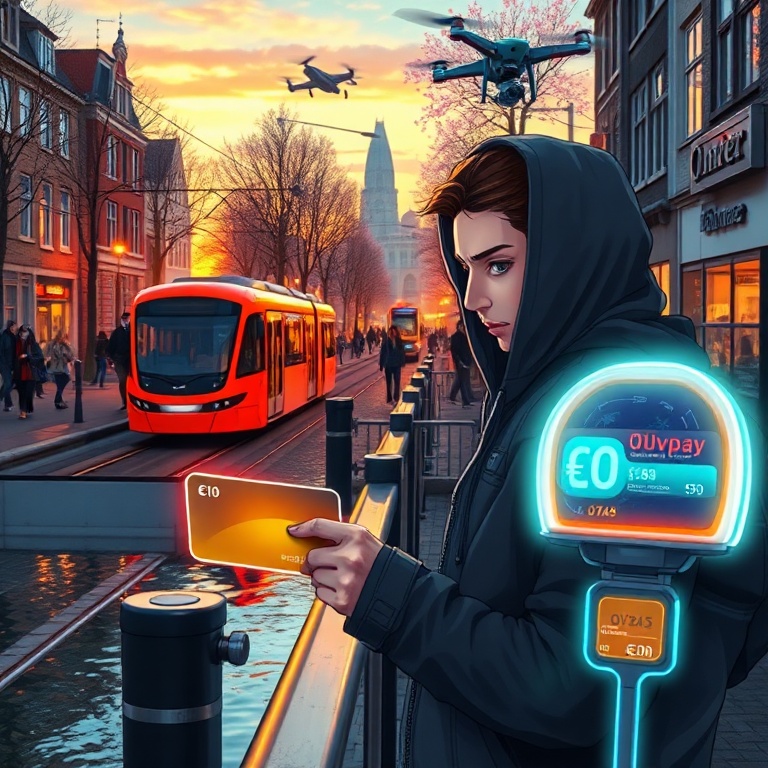
Survive Amsterdam on $50 a Day: The No‑Fluff Amsterdam Budget Guide
Ever wondered if you could actually see the canals, museums, and neon‑lit coffee shops of Amsterdam without selling a kidney? The comprehensive Amsterdam budget hub proves you can, as long as you respect the city’s clever public‑transport tricks and keep a tight daily cash cap. Miss the memo and you’ll be paying for every tram like you’re buying a souvenir cheese wheel, but follow this plan and you’ll be sipping cheap local brews while the city glides by. For a step‑by‑step $50‑a‑day itinerary, check out our detailed $50‑a‑day guide.
Unlimited Travel for €10 a Day with OVpay
The official public‑transport portal confirms that with OVpay—a contactless debit, credit, or mobile payment—travelers can cap daily unlimited rides across all GVB tram, bus, metro, and train lines at €10, regardless of distance or frequency. A single tap on a Visa, Mastercard, or Apple Pay grants you unrestricted movement for the entire day, eliminating the need for the clunky OV‑Chipkaart.

Other Pass Options for Budget Travelers
| Pass | Coverage | Typical Cost | Notable Benefits |
|---|---|---|---|
| OVpay (daily cap) | All GVB tram, bus, metro, and train lines | €10 per day | Contactless, no OV‑Chipkaart required |
| I amsterdam City Card | Unlimited travel + museum entries + discounts | Varies (premium option) | Bundles attractions with transport |
| Amsterdam & Region Travel Ticket | GVB + Connexxion, AllGo, R‑net, NS services (day trips to Haarlem, Zaanse Schans) | Varies | Beyond city core coverage |
| Free passenger ferries | Central Station ↔ Amsterdam Noord (24/7) | Free | Zero‑cost crossing, sub‑five‑minute wait |
All these options are detailed on the official project page, which serves as the authoritative source for up‑to‑date fare structures and service alerts.
Historical Evolution of Amsterdam’s Transit System
Amsterdam’s public‑transport story reads like a classic anime saga: humble beginnings, dramatic upgrades, and a cast of characters that evolve with the times. In the early 20th century, the city relied on horse‑drawn trams, later electrified in the 1900s, mirroring the industrial boom across Europe.
Fast‑forward to the 1970s, the GVB introduced the iconic orange trams that became cultural symbols, much like a beloved shōnen protagonist. The 1990s saw a surge in tourism, prompting the city to expand its metro network and integrate regional rail, akin to a studio adding new staff to handle a blockbuster sequel.
The shift toward contactless payment with OVpay reflects the modern anime trend of digital transformation—think of studios moving from hand‑drawn frames to CGI. This evolution also mirrors market shifts: as budget travelers grew in number, the demand for transparent, low‑cost fare structures intensified, pushing the city to adopt the €10 daily cap.
Technical Overview: How OVpay Saves Money

OVpay leverages token‑based authentication: each tap generates a one‑time cryptographic token that the GVB server validates against the user’s card issuer. The system aggregates all rides within a 24‑hour window and applies the €10 cap once the threshold is reached.
- Eliminates per‑trip calculations that could reach €2‑3 per ride during peak hours.
- Saves up to €60 on a three‑day stay compared with traditional tickets (€30 vs. €60‑€90).
- Syncs with mobile wallets for real‑time balance checks and push notifications when the cap is hit.
- Integrates multiple operators (GVB, Connexxion, NS) under one payment umbrella, reducing backend complexity.
- Free ferries let you replace a €5 metro ride with a zero‑cost crossing, shaving additional euros while offering a scenic route.
Understanding these mechanics empowers budget travelers to plan routes that maximize free or capped services, essentially turning the city’s transport grid into a strategic game board. For broader budgeting tips, see our budget strategies for Amsterdam.
Future Developments and Practical Tips for Budget Nomads
Looking ahead, the city’s commitment to contactless, capped‑fare travel suggests further innovations that could benefit the budget traveler. The GVB is piloting dynamic pricing models that reward off‑peak travel with even lower caps, potentially dropping the €10 daily limit to €7 for night‑owl explorers.
Integration with European‑wide mobility platforms could allow a single OVpay card to function across borders, turning a weekend in Amsterdam into a gateway to Brussels or Cologne without extra cards.
Increased tourism may pressure the system, prompting the city to introduce reservation‑based slots for popular routes during festivals—similar to limited‑edition anime releases that require pre‑booking. Budget travelers will need to stay agile, leveraging real‑time apps and community forums to snag those slots before they sell out.
Insider Advice from a Seasoned Budget Nomad
Listen up, fresh‑blood wanderers: the moment you step off the ferry and onto the cobblestones, you’ll feel the city’s pulse like a bass line in a shōnen opening. The OVpay cap is your secret weapon, but it’s not a free pass to binge‑watch every museum in a day—time, like stamina, is finite. Prioritize the Rijksmuseum early, then let the night buses whisk you to a hidden jazz bar in De Pijp. If you ignore the night‑bus schedule, you’ll be stuck waiting for the last tram, and that’s a plot twist no one wants.
My two‑decade‑long trek across Europe taught me that the true art of budget travel lies in reading the city’s rhythm and dancing to it. Treat each €10 cap as a chapter: start strong, build tension with a canal cruise, and end with a cheap yet unforgettable stroopwafel at a late‑night market. When the city rolls out new fare experiments, be the first to test them—just like a veteran anime fan watches the director’s cut for hidden easter eggs. Stay salty, stay savvy, and let Amsterdam’s seamless transport be the wind beneath your budget‑bound wings.
Related Guides & Further Reading
Related Guides & Further Reading
Check out the Amsterdam budget guide archives.