Why Magic Science Anime Like Mahouka Are the Ultimate Nerd Playground
Ever wondered why some anime treat sorcery with the cold precision of a lab report? The rise of magic‑science anime has turned spell‑casting into a discipline you can actually study, and the stakes have never been higher. Strap in, because we’re about to dissect the top seven series that blend arcane lore with hard‑core scientific methodology.
Mahouka Koukou no Rettousei – Flagship of Magic‑Science Anime
Series Overview
The flagship series Mahouka Koukou no Rettousei (The Irregular at Magic High School) epitomizes the magic‑as‑science trend. Airing from April 6 2014 to June 28 2024, the show amassed 52 episodes across three seasons, each expanding the world’s techno‑magical framework. Its source material, a light novel spanning 32 volumes plus six side stories, ran from July 2011 to September 2020, providing a dense narrative well‑spring for adaptation.
Production Studios
Season 1 was helmed by Manabu Ono at Madhouse, a studio renowned for kinetic action and meticulous animation. Seasons 2 and 3 shifted to Eight Bit under Risako Yoshida and Jimmy Stone, reflecting a strategic studio hand‑off that kept production values high despite changing staff.
Spin‑offs and Supplemental Media
- The Honor Student at Magic High School (July‑September 2021) – focuses on Miyuki Shiba, showing how the same magical technology can be examined through a different character lens.
- TV film Reminiscence Arc (December 31 2021) – serves as a narrative bridge, reinforcing the franchise’s commitment to world‑building.
All these entries are cataloged on the official project page, underscoring the franchise’s sustained relevance in a market that increasingly favors scientifically grounded fantasy.
Evolution of Magic‑Science Anime
Before Mahouka’s debut, magic in anime was largely mythic—think Cardcaptor Sakura or Fullmetal Alchemist, where alchemy flirted with pseudo‑science but never fully embraced it. The 1990s and early 2000s saw studios like Sunrise and Bones experiment with techno‑fantasy, yet the blend remained superficial. Mahouka arrived at a crossroads: the industry was transitioning to digital pipelines, and audiences were craving intellectual depth.
By integrating real‑world concepts—electromagnetism, quantum theory, and engineering—Mahouka positioned itself as a bridge between classic shōnen spectacle and hard‑science speculation. The shift in directorial stewardship from Madhouse to Eight Bit mirrors broader studio trends: legacy houses delegating riskier, niche projects to newer studios adept at rapid production cycles. Market data indicates a surge in viewership for series that treat supernatural elements with academic rigor, a niche that now commands dedicated fanbases and merchandise pipelines.
Consequently, Mahouka didn’t just ride a wave; it helped shape a sub‑genre that other franchises—such as Science Fell in Love, So I Tried to Prove It and The Asterisk War—have since emulated.
Mahouka’s World‑Building Mechanics
Magic Engineering and Quantified Spellcasting
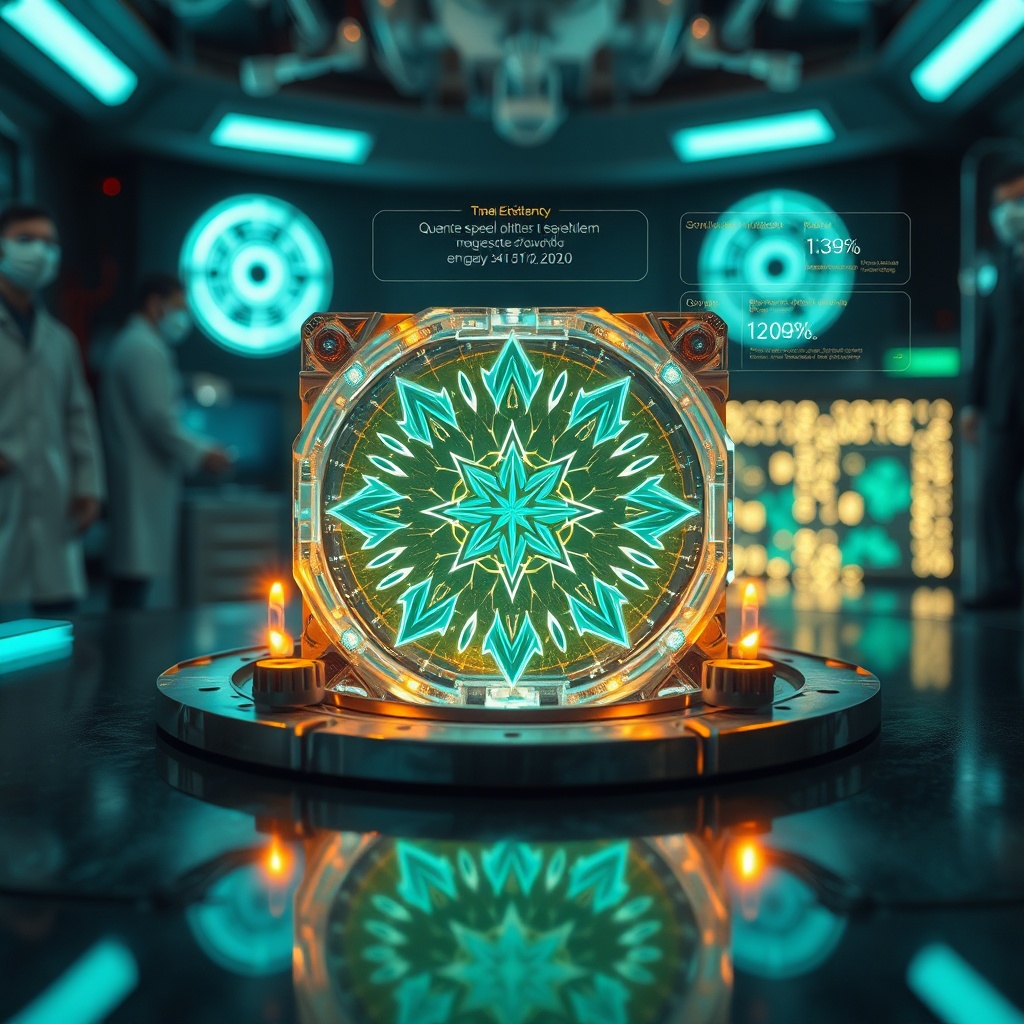
The allure of magic‑science anime lies in its meticulous world‑building. Mahouka introduces “Magic Engineering,” a curriculum where students learn to quantify spell output using units like “Mana per Second” and “Circuit Efficiency.” This quantification allows the narrative to explore concepts such as energy loss, thermal regulation, and even software‑like debugging of spells. For instance, the “Decomposition” spell is dissected like a particle accelerator experiment, complete with data logs and error margins.
Visual Design and Narrative Formula
Production design mirrors this precision: the series employs a muted color palette for laboratory settings, contrasted with vibrant hues during combat to visually separate empirical study from chaotic battle. Story arcs often follow a classic problem‑solution structure—identify a magical anomaly, hypothesize a scientific explanation, test via controlled experiments, and iterate.
This formula not only educates viewers on speculative physics but also reinforces character development, as protagonists evolve from raw talent to disciplined researchers. The statistical overlays and HUD graphics are not mere aesthetic flourishes; they serve as narrative devices that convey stakes, such as a 12% efficiency drop that could mean the difference between victory and catastrophic failure.
Future Outlook and Risks for the Magic‑Science Sub‑Genre
Looking ahead, the franchise’s longevity suggests fertile ground for expansion. With the original light novels now complete, studios can explore spin‑offs focusing on peripheral technologies—think a series dedicated to “Magical Robotics” or “Quantum Spellcraft.” The growing appetite for cross‑media storytelling also opens doors for video‑game adaptations that let players experiment with spell‑engineering in sandbox environments, potentially revitalizing the franchise’s market presence.
Culturally, Mahouka has cemented the template for treating magic as a discipline, influencing newer titles to adopt similar frameworks. This trend may push the industry toward collaborations with scientific consultants, ensuring that speculative tech feels plausible. However, the risk lies in oversaturation; if every new series mimics the formula without fresh twists, audience fatigue could set in. Balancing rigorous world‑building with emotional resonance will be the key to sustaining the magic‑science wave.
The moment a veteran like me sees another “magic‑as‑science” pitch, I can already smell the corporate boardrooms trying to milk the formula dry. Sure, the blend of equations and incantations is sexy, but it’s the characters’ grit that keeps us glued, not the sparkle of a new HUD.
Don’t be fooled by glossy trailers promising “next‑level spell physics.” If the writers can’t give you a protagonist who actually cares about the ethics of weaponizing mana, you’ll end up with a hollow spectacle. Remember, the best magic‑science anime doesn’t just teach you how to calculate spell output—it forces you to confront what that power means in a world that treats sorcery like a lab experiment.
Check out the magic science anime archives.