15 Seinen Anime Recommendations That Will Make Cinephiles Question Reality
If you thought anime was just bright‑eyed shōnen fireworks, think again. Seinen anime recommendations are the dark, sophisticated cocktails that seasoned cinephiles crave, and this list pours fifteen of the finest. Miss it, and you’ll be stuck watching reruns of watered‑down fluff.
1. Last Exile (Gonzo, 2003)
The sky‑bound tapestry of “Last Exile” is a masterclass in industrial world‑building. The series positions the Atlantic continent under the iron grip of the Empire of Anatoray, whose war machine is sustained by the elegant yet militaristic vanships—aircraft that fuse steampunk aesthetics with hard‑science aerodynamics.
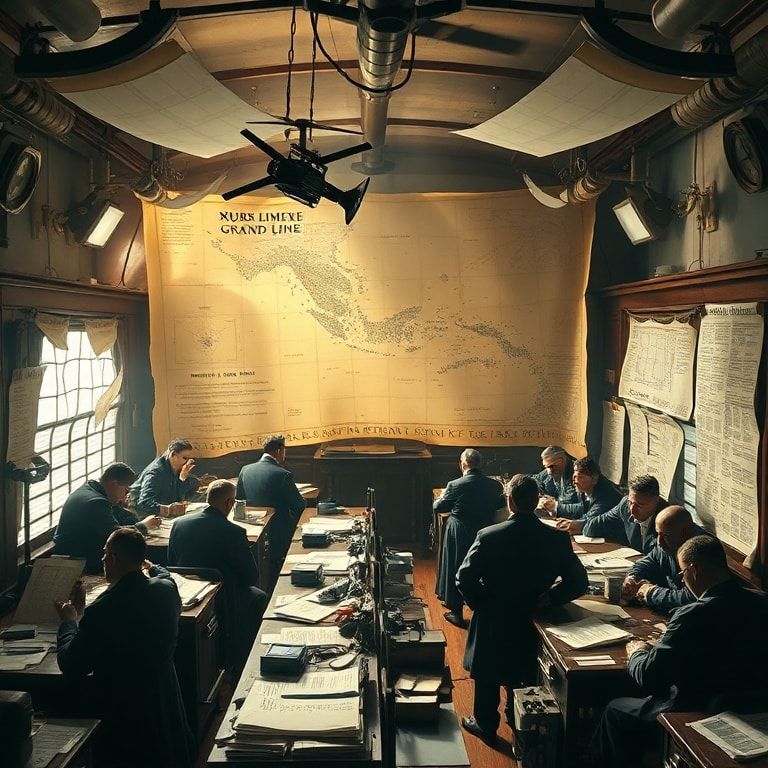
The Grand Stream, a perpetual atmospheric current that channels vaporous energy, functions as both a narrative highway and a geopolitical fulcrum; control over it determines supply lines, trade routes, and the very balance of power. By anchoring conflict in the geography of wind and the scarcity of “White Whistles” (the rare fuel that powers the vanships), the show forces every pilot to treat the sky as a contested battlefield, turning every aerial chase into a strategic calculus rather than a gratuitous setpiece.
Beyond the mechanics, the show weaves its lore through the enigmatic Prester, a mythical vanship rumored to possess forbidden technology. The pursuit of Prester drives characters to betray, ally, and sacrifice, mirroring the classic quest for the Holy Grail while grounding it in a meticulously rendered world of customs, uniforms, and an economy built on vapor trade. The result is a layered tension where personal ambition constantly collides with the unforgiving physics of the world, rewarding viewers who can read the schematics as fluently as the dialogue.
2. Psycho‑Pass (Production I.G, 2012)
The Sybil System Dystopia turns the whole of Greater Tokyo into a living algorithm, quantifying every citizen’s mental health into a single Psycho‑Pass number. This numeric geography creates a de‑facto stratification: districts with low Crime Coefficients enjoy relaxed surveillance, while “Red” zones become hunting grounds for the state’s pre‑emptive justice. The mechanic is not merely a plot device; it is the tectonic plate upon which every conflict slides, converting moral dilemmas into cold, statistical thresholds that the audience can feel snapping under the weight of each episode’s case.
Enforcer units wield the Dominator, a gun that reads a target’s Crime Coefficient in real time and selects non‑lethal, lethal, or “disable” rounds accordingly. This hardware embodiment of the system forces characters to confront the horror of being judged by a machine whose “mind” is a hive‑mind of human brains, as revealed by the fact that the Sybil System is a collective of several hidden individuals. The tension spikes whenever a protagonist’s own score teeters on the edge, turning internal self‑assessment into an external battlefield where personal agency collides with deterministic governance.
3. Ergo Proxy (Studio White Fox, 2006)
Romdeau Dome is a sealed micro‑society perched atop a barren wasteland, its artificial climate sustained by massive CO₂ scrubbers. The city’s geography—glass ceilings, controlled sunlight, and a rigid caste system separating citizens, immigrants, and the subterranean “City of Ruins”—creates a pressure‑ cooker where any breach feels like a planetary fault line. The existence of Proxies—god‑like, immortal entities engineered as humanity’s last defense against ecological collapse—acts as a mythic scaffolding that both justifies the dome’s authoritarian order and threatens to implode it when their true purpose is uncovered.
Each Proxy embodies a facet of human consciousness, a design choice that ties personal identity to world‑shaping powers. When Proxy incidents occur, the city’s power grid quivers, and the AutoReiv androids—infused with “Cogito” circuits that can become corrupted—serve as both servants and potential catalysts for rebellion. The series leverages this duality to make every revelation about the dome’s false utopia a bolt of existential dread, forcing Inspector Re‑L Mayer to navigate a labyrinth of philosophy, broken memories, and the looming threat that the Proxies may ultimately decide humanity is outdated.
4. Serial Experiments Lain (Triangle Staff, 1998)
The Wired is presented not as a network of cables but as an omnipresent, quantum‑level substrate that redefines geography: borders become bandwidth, and personal space dissolves into data streams. Lain’s gradual transformation into a node capable of both accessing and rewriting this reality blurs the line between digital consciousness and flesh, turning each “login” into a metaphysical crossing that destabilizes the world’s ontological foundations.
Key to the series’ tension is the emergence of an AI‑like “God” born from the cumulative consciousness of every user. Lain’s dual personas—her ordinary self and the omnipotent “Ninety‑two” entity—allow the narrative to explore how identity can be fragmented, duplicated, and weaponized. The show’s fragmented storytelling mirrors this digital disintegration, forcing the viewer to piece together truth from corrupted packets, while the underlying question—whether the Wired is an evolution or a regression of humanity—keeps the audience perpetually off‑balance.
5. Texhnolyze (Madhouse, 2003)
Lux, a subterranean metropolis illuminated only by the dim glow of bioluminescent flora, forces its denizens into a literal embodiment of environmental determinism. The city’s power hierarchy hinges on “Texhnolyze,” a cybernetic limb‑augmentation technology that replaces flesh with modular circuitry. Because the nanite‑rich “Mikage” sun periodically shutters, plunging the city into abyssal darkness, the scarcity of augmentation resources becomes a brutal economy where power is measured in the number of synthetic limbs one can afford.
The three factions—D (the ruling aristocracy), RATTLE (the violent underworld), and the Organo (the technocratic council)—battle not just for territorial control but for monopoly over the very means of survival. Each limb replacement is a transaction that erodes humanity, turning personal sacrifice into a literal ledger of loss. This biomechanical economy fuels a nihilistic narrative arc where every character’s quest for redemption or dominance is quantified by metal and polymer, culminating in a city‑wide countdown toward an inevitable self‑destruction that feels both inevitable and meticulously engineered.
6. Paranoia Agent (Madhouse, 2004)
Contemporary Tokyo is rendered as a collective psyche, where stress points crystallize into physical locations that become hotspots for the Lil’ Slugger’s attacks. Each victim’s trauma is externalized into the myth of Shōnen Bat, a psychosomatic construct that spreads panic through rumor, media sensationalism, and the city’s own electric hum. The geography of the series—shimmering neon corridors of Shibuya, quiet suburban streets of Urawa—functions as a pressure map, each node pulsing with latent anxiety that the assailant exploits.
The narrative tension stems from the feedback loop between media amplification and the manifestation of the attacker. As the Lil’ Slugger’s legend mutates, reality itself begins to bend, forcing characters to confront how collective denial can birthe a tangible threat. The series’ oscillation between hyper‑realistic urban visuals and surreal, stylized sequences mirrors the fragmented mental states of its protagonists, turning the city into a character whose very streets pulse with dread, urging viewers to question where myth ends and societal pressure begins.
7. Ghost in the Shell: Stand Alone Complex (Production I.G, 2002)
In the near‑future layers of Japan, cyberbrains and full‑body prosthetics have collapsed the line between organic and synthetic, creating a cyber‑physical topography where the mind itself is a navigable space. The Public Security Section 9 operates within this lattice, leveraging the same technology that threatens societal cohesion.
The world‑building hinges on the premise that identity is stored, transferred, and hijacked via neural implants, making every personal memory a potential battlefield. This framework drives tension through political intrigue: as Major Motoko Kusanagi confronts cyber‑terrorists and AI rights movements, the series interrogates the cost of a world where the state can monitor, rewrite, or erase consciousness at will. The omnipresent hum of data streams and the visual motif of flickering holograms serve as constant reminders that reality is programmable, turning each episode into a forensic dissection of how power consolidates when the human mind becomes commodified.
8. Monster (Madhouse, 2004)
Set against the austere backdrop of post‑Cold‑War Europe, “Monster” deploys a world‑building approach anchored in real‑world geography and sociopolitical undercurrents rather than overt fantasy. The series maps a network of highways, train stations, and bureaucratic institutions that function as arteries for the cat‑and‑mouse chase between Dr. Kenzo Tenma and the enigmatic Johan Liebert.
The lack of supernatural mechanics forces the narrative to derive tension from the psychological weight of each locale—a cramped Berlin bunker, a rain‑slick Luxembourg border, a sterile Swiss clinic. By immersing the viewer in the mundane details of travel documents, police procedures, and post‑war trauma, the series turns every procedural step into a moral puzzle. The world feels oppressive because it mirrors our own institutions, and the absence of fantastical deus ex machina amplifies the dread that true horror can arise from ordinary human systems.
9. Berserk (OLM, 1997)
Berserk constructs its medieval world through a feudal lattice of kingdoms, mercenary bands, and a pervasive occult hierarchy. The Brand of Sacrifice acts as a literal scar on the protagonist, marking him for demonic entities and turning supernatural persecution into a geographic curse—anywhere he steps becomes a hunting ground for apostles.
The series’ magic system, anchored in dark sigils and sacrificial rites, is woven directly into the political ambitions of nobles like Griffith, whose transformation into Femto reshapes the very fabric of Midland. The narrative tension stems from the brutal interplay between class‑based warfare and the metaphysical horror that follows the Brand. Battles are not merely strategic; they are ritualistic displays of power where the fate of an entire kingdom hinges on the success of a single knight’s blade. This blend of gritty realism and supernatural determinism forces viewers to reckon with a world where agency is constantly undermined by forces both political and otherworldly.
10. Mushishi (Artland, 2005)
Mushishi’s world is a timeless, rural Japan where the invisible lifeforms known as Mushi constitute an ecological substratum that subtly shapes reality. The series treats geography as a living organism: mist‑shrouded forests, stagnant ponds, and abandoned shrines act as pockets where Mushi activity spikes, creating micro‑ecosystems that affect human health and emotion.
The core mechanic—Mushi interaction—does not rely on overt magic but on a fragile balance between natural law and the supernatural. This delicate equilibrium drives narrative tension in each self‑contained episode. Ginko, the wandering Mushi‑master, serves as a catalyst who deciphers the hidden rules governing each phenomenon, turning quotidian incidents into philosophical inquiries about coexistence. By never fully explaining Mushi, the series leaves room for interpretive ambiguity, compelling the audience to contemplate the unseen forces that shape existence.
Listen up, kiddo: the moment you think you’ve “watched it all” is the exact second the industry drops a new psychological thriller that’ll make you question why you ever bothered with fluffy romance. Seinen isn’t a hobby; it’s a relentless test of patience, intellect, and how many sleepless nights you’re willing to endure for a single, perfectly timed plot twist.
And don’t even get me started on the studios that think they can cash in by slashing a half‑baked moral dilemma onto a shōnen template. Real veterans know the difference between a story that *asks* you to think and one that merely *pretends* to. If you want to survive this marathon, keep your eyes on the credits, study the storyboard layouts, and remember: the best seinen gems are the ones that leave you with more questions than answers, long after the final frame fades to black.
Check out the seinen archives.