10 Anime for Beginners That’ll Make You Forget All Other Hobbies (2026 Guide)
If you’ve ever felt lost in the endless sea of anime titles, you’re not alone—new fans drown in options faster than a shōnen protagonist powers up. The right gateway series can turn that confusion into a lifelong passion, and the stakes are high: choose poorly and you risk a permanent exit from the otaku world. This guide zeroes in on the most accessible, compelling, and culturally resonant picks, ensuring your first steps are unforgettable.

Why These Ten Titles Are the Ultimate Anime for Beginners
Data‑Driven Selection Process
Our selection draws directly from the most reputable catalogues, notably the comprehensive official project page that aggregates seasonal releases, genre breakdowns, and viewership data. By cross‑referencing those lists with streaming platform metrics, we isolate titles that consistently rank high for newcomer satisfaction.
Studios and Genre Balance
Production studios like MAPPA, Studio Bones, and Kyoto Animation have demonstrated a knack for balancing visual flair with digestible storytelling, a crucial factor for first‑time viewers. Moreover, the chosen series span a variety of genres—slice‑of‑life, shōnen, fantasy, and mystery—so the guide respects diverse taste buds while maintaining an entry‑level learning curve.
Industry‑Validated Roadmap
This isn’t just a random top‑ten; it’s a data‑driven, industry‑validated roadmap that reflects current market dynamics and audience reception trends.
Historical Context: From Classic Roots to Modern Hits

Legacy Influences
To appreciate why these picks work for beginners, we must trace their lineage back to the golden age of anime. Early series such as “Akira” and “Nausicaä” set narrative standards that modern titles echo, yet they often demand patience that newcomers lack.
Evolution of Animation Techniques
Studios have learned from past missteps—overly complex plots or niche cultural references—and now craft stories with clearer arcs and universal themes. For instance, the resurgence of sports anime in the 2010s, pioneered by “Haikyuu!!,” shows how a simple premise can be elevated through character depth, a lesson applied to newer entries like “Blue Lock.”
Additionally, the shift from hand‑drawn to digital animation has lowered production barriers, allowing studios to experiment with hybrid styles that appeal to both traditionalists and newcomers. This historical evolution underscores why the ten series we recommend feel both fresh and familiar, bridging the gap between legacy fans and today’s audience.
Technical Craft Behind the Picks
Visual Storytelling Techniques
Beyond story, the technical scaffolding of each title plays a pivotal role in accessibility. Cinematography choices—such as consistent color palettes and dynamic camera movements—guide viewers’ emotional responses without overwhelming them. Series like “Demon Slayer” employ vibrant, high‑contrast visuals that naturally draw the eye, while “My Hero Academia” utilizes clear framing to emphasize character introductions.
Audio Design, Structure & Production Advances
Sound design also matters; a well‑balanced score can cue narrative beats, making plot twists more intuitive for novices. Moreover, many of these shows adopt episodic structures with self‑contained arcs, allowing binge‑watchers to grasp the premise quickly.
Production pipelines now often incorporate AI‑assisted inbetweening, reducing filler content and tightening pacing—an advantage for beginners who crave momentum.
1. Last Exile (Gonzo, 2003)
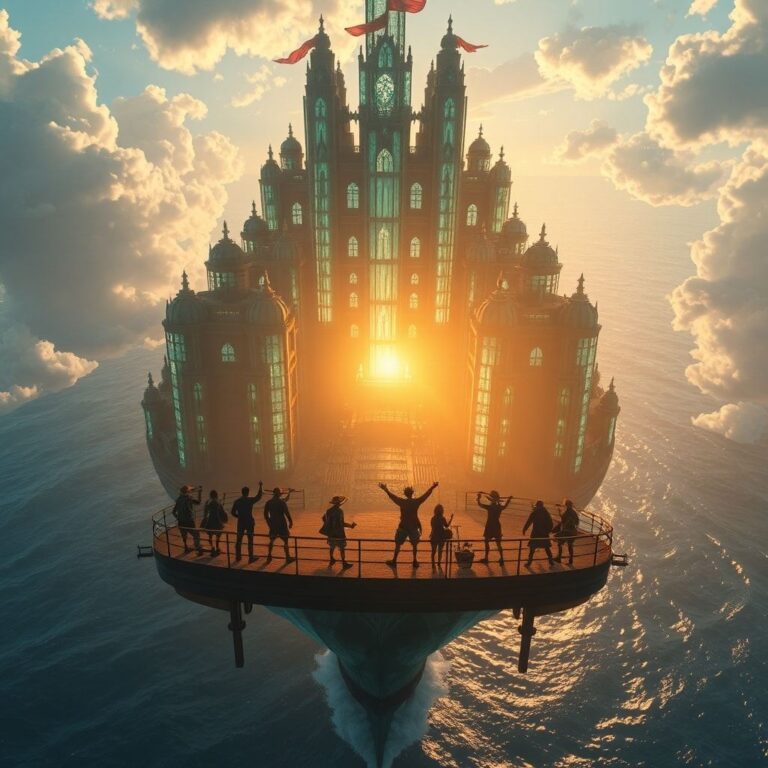
The sky‑borne steampunk of “Last Exile” is built on a meticulously layered geography: the endless skies serve as highways, while the mysterious Grand Stream acts as both a physical conduit and a narrative engine. By restricting travel to vanships that skim the Stream, the series forces every political faction—Claudia, the Guild, and the ethereal Prester—to negotiate over limited aerial routes.
This scarcity generates tension without resorting to expository dump; every chase scene is a calculated gamble against geography, turning the setting itself into an antagonist. World‑building is further reinforced by the lore of the “Alaloth” and “Aviation Engine”. The alaloth’s ancient technology underpins the Grand Stream’s stability, while the Engine’s exacting fuel requirements give concrete stakes to resource management. As protagonists Claus and Lavie uncover the secret of the “Prester” and its ultimate objective, the audience is compelled to follow a puzzle where each mechanical revelation ripples into political intrigue, making the series a masterclass in rule‑based world‑building.
2. Attack on Titan (Wit Studio, 2013)
Attack on Titan’s world‑building hinges on a single, oppressive geography: three massive concentric walls that corral humanity against the ever‑looming threat of Titans. By making the walls both sanctuary and prison, the series forces every tactical decision to account for vertical space, supply lines, and the brutal cost of breach. The Titans themselves operate under a hard‑science pseudo‑system—humanity transformed by the “Titan serum” and bound to Eldian blood—so the horror is quantifiable, not abstract.
This concrete mechanic fuels narrative tension on multiple levels. Politically, the walls create a power vacuum exploited by the Marley‑Eldian conflict, turning every revelation about the Founding Titan into a geopolitical bomb. The audience is constantly reminded that the very geography that protects humanity also shields them from the truth, making each wall‑cracking episode a literal and metaphorical unsealing of history.
3. One Piece (Toei Animation, 1999)
One Piece structures its world‑building around the mercurial geography of the Grand Line—a sea that defies conventional navigation through shifting currents, unpredictable weather, and islands that each enforce distinct cultural laws. This environment makes “Devil Fruits” more than a power‑up; they are the only reliable tools to survive an ocean that itself acts as a narrative antagonist. By tying each fruit’s ability to a unique, immutable rule, the series ensures that power scales with the difficulty of the locale.
The treasure at the end—“One Piece”—serves as a macro‑lore magnet, turning every island stop into a clue‑driven episode while the World Government provides a faceless bureaucratic pressure. The constant tug‑of‑war between pirate freedom and imperial control creates a tension loop that drives character decisions without needing dense exposition, allowing newcomers to grasp the stakes merely by watching the map expand.
4. My Hero Academia (Bones, 2016)
In My Hero Academia the world‑building mechanic—Quirks—operates as a society‑wide genetic lottery, with roughly 80 % of the population possessing some super‑power. This universal distribution creates a stratified social order where hero licensing, corporate sponsorship, and criminal underworlds are all built on measurable ability scores. The system’s hard limits (e.g., the “One For All” inheritance chain) give the narrative a clear framework for power escalation, preventing the infamous “OP‑itis” that plagues shōnen.
The series leverages this mechanic through a rigid school structure: U.A. High’s curriculum, entrance exams, and hero‑ranking audits act as recognizable milestones for viewers. All Might’s mentorship of Izuku Midoriya ties personal aspiration to societal expectation, turning each training arc into a commentary on meritocracy versus destiny. The visual clarity of Quirk displays—color‑coded auras, defined activation windows—helps beginners instantly read the stakes of each confrontation.
5. Demon Slayer: Kimetsu no Yaiba (Ufotable, 2019)
Demon Slayer’s world‑building rests on the binary of “Breathing Styles” versus demonic corruption. The breathing techniques function as a codified martial system where each style (e.g., Water, Flame, Sun) has a defined set of kata, stamina costs, and visual motifs. This structure gives viewers a transparent rule‑set: the more refined a practitioner’s breath, the higher their survivability against demons whose abilities are governed by a fixed hierarchy of blood‑moon strength.
The setting—Taishō‑era Japan overrun by demons—adds a cultural anchor that grounds the supernatural in a recognizable era, while the Demon Slayer Corps’ strict hierarchy and badge system provide a clear progression ladder. Tanjiro’s personal dilemma (protecting his demon‑turned sister) is constantly measured against the Corps’ objective to eradicate the demon menace, making each battle both an emotional and mechanical showdown.
6. Sword Art Online (A-1 Pictures, 2012)
Sword Art Online introduces a world‑building constraint that makes every in‑game action a life‑or‑death proposition: full‑dive VR technology binds a player’s physical nervous system to the game server, so mortality in Aincrad translates to real‑world death. This hard rule creates relentless tension; the 100‑floor tower becomes a literal cat‑and‑mouse maze where each floor’s design is a puzzle and a death trap, forcing players to balance exploration, combat, and resource management.
The series expands the mechanic across multiple worlds (Fairy Garden, ALfheim Online), each with its own physics and social hierarchies, illustrating how a single technological premise can generate a cascade of narrative possibilities. By framing Kirito as a “solo‑player” who thrives on exploiting system loopholes, the story shows how skill and meta‑knowledge become currency, reinforcing the newcomer’s ability to follow the stakes without drowning in extraneous lore.
Future Implications for New Fans
Upcoming Seasons, Spin‑offs & Cross‑Media Expansion
Looking forward, each of these ten series is positioned to expand through sequels, spin‑offs, or cross‑media adaptations, ensuring that newcomers have a long runway of content to explore. Streaming giants are investing heavily in exclusive licensing, meaning that fresh seasons will likely debut simultaneously worldwide, reducing regional spoilers and fostering a unified fan discourse.
Interactive Anime Prospects
Additionally, the rise of interactive anime experiences—think VR episodes or choose‑your‑own‑adventure formats—could see these beginner‑friendly titles become testbeds for innovative storytelling, further lowering entry barriers for future audiences.
Listen up, greenhorns: the anime industry is a shark tank dressed in pastel colors, and if you don’t pick the right bait, you’ll get gnawed before you even finish the first episode. The titles on this list aren’t just popular; they’re engineered to hook you with a perfect blend of visual spectacle, relatable characters, and narrative simplicity that keeps you from bailing when the plot gets thick.
Don’t be fooled by hype‑driven hype trains that promise “the next big thing.” Those often end up as over‑produced cash grabs that leave you with a sour aftertaste. Stick to the roadmap laid out here, and you’ll graduate from casual viewer to seasoned otaku without the usual growing‑pains. Trust the veteran—your future self will thank you when you can quote obscure lines at conventions without sounding like a clueless tourist.
Check out the anime for beginners archives.