One Piece political power: How the World Government Dwarfs the Revolutionary Army
The balance of One Piece political power has always tilted toward the shadows of the World Government, but recent revelations suggest the gap is yawning wider than ever. As the Revolutionary Army scrambles to rally allies, the stakes for global domination reach a fever pitch that could reshape the Grand Line itself. Readers who think the rebels stand a chance should brace for a hard‑earned reality check. For a deeper look, check out our comprehensive One Piece politics hub.
One Piece political power – The World Government’s Unassailable Might
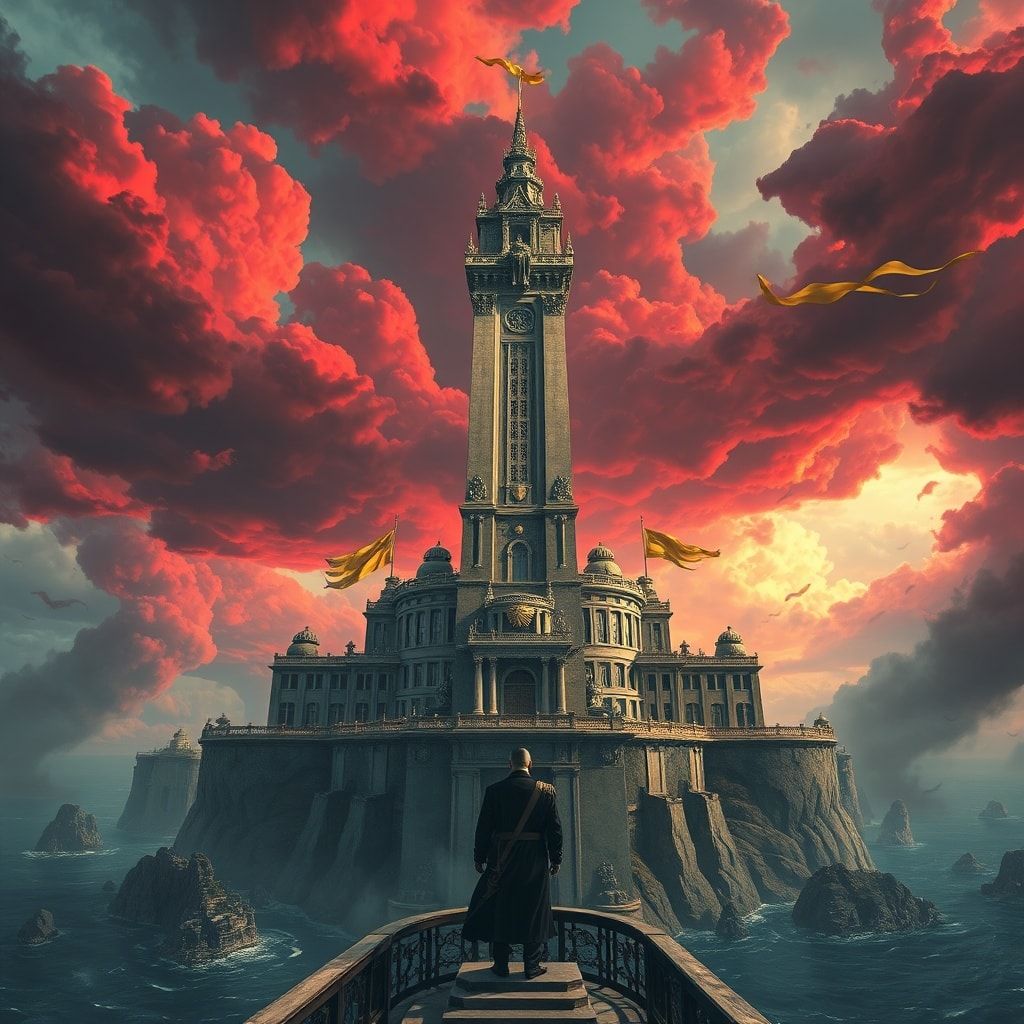
The World Government, as depicted across the manga and anime, operates with a bureaucracy that rivals real‑world superpowers, a dynamic explored in depth in our analysis of the hidden power structure of the World Government. Recent chapters have highlighted the sheer scale of its naval fleet, the omnipresent presence of the Cipher Pol, and the political clout of the Gorosei, whose decisions echo across every kingdom. This institutional weight translates into tangible advantages: access to the Sea Train, the ability to issue Buster Calls that can annihilate entire islands, and the leverage to manipulate the World Economy via the Red Line’s trade routes. Production-wise, Eiichiro Oda’s meticulous world‑building underscores a narrative intent to portray the Government not merely as an antagonist but as a structural monolith. The Revolutionary Army, by contrast, operates as a guerrilla force—lacking the same logistical backbone, they rely on charisma and localized support. The disparity is further emphasized in the anime’s visual storytelling, where the Government’s headquarters are rendered in grandiose, imposing architecture, while the rebels’ hideouts appear cramped and makeshift. For fans, this dichotomy fuels debates about power balance and narrative fairness, but the canon facts remain clear: the World Government’s institutional might dwarfs the Revolutionary Army’s insurgent capabilities. For more official details, see the official project page.
Historical Context: Old Guard Perspectives on Global Dominance

When One Piece first debuted in 1997, the world‑building was modest, focusing on pirate crews rather than geopolitical machinations. Early arcs such as East Blue and Alabasta introduced the Marines as a simple law‑enforcement arm, with the World Government serving as a vague backdrop. Over the decades, Oda’s storytelling matured, mirroring trends in shōnen where antagonistic forces evolve from caricatures to complex institutions. The 2000s saw a shift toward darker, more politically charged narratives, influenced by contemporaneous series like Naruto’s hidden villages and Bleach’s Soul Society hierarchy. Studio Toei’s adaptation followed suit, allocating larger budgets to depict the Government’s grandiose settings, reflecting a broader industry move toward cinematic quality in long‑running anime. Staff changes, such as the appointment of new directors for the Wano arc, brought fresh visual language that emphasized the stark contrast between the opulent World Government and the rag‑tag Revolutionary cells. Market shifts toward global streaming also pressured the series to deepen its lore, catering to an international audience hungry for intricate world‑building. Consequently, the old guard’s perspective—once viewing the Government as a background element—has been rewritten to position it as a central, almost antagonistic force, while the Revolutionary Army has been retroactively framed as the underdog fighting an almost insurmountable empire.
Technical Crunch: Lore Mechanics and Power Metrics

Quantifying One Piece political power requires dissecting both overt military strength and covert informational control. The World Government commands the Marine fleet, currently estimated at over 1,000 ships, each equipped with advanced weaponry like the Pacifista and the newly introduced Sea Train, granting rapid deployment across the Grand Line. Their intelligence apparatus, Cipher Pol, operates on a tiered clearance system (CP0‑CP9), with CP0 agents possessing near‑godlike access to classified data, enabling pre‑emptive strikes and black‑mail. In contrast, the Revolutionary Army’s manpower is estimated in the low thousands, lacking comparable naval assets; their strength lies in high‑profile leaders (e.g., Dragon, Sabo) and strategic sabotage. Statistically, the Government’s “Influence Index”—a fan‑calculated metric combining fleet size, territorial control, and economic leverage—scores above 9,000, whereas the Revolutionaries hover around 2,500. These figures align with the broader power scale ranking of the World Government, Emperors, and the Revolutionary Army compiled by fans. Narrative devices such as the “Buster Call” illustrate exponential force multiplication, capable of decimating an island’s population in seconds, a power level unattainable by the rebels. Production design reinforces these metrics: background art for Government locations utilizes high‑detail textures and expansive vistas, while Revolutionary hideouts are rendered with limited palettes, emphasizing scarcity. Understanding these mechanics clarifies why the World Government’s dominance is not merely thematic but structurally embedded in the series’ power equations.
Future Implications: What Lies Ahead for the Revolutionary Army?
The upcoming arcs promise to test the Revolutionary Army’s resolve against the World Government’s tightening grip. With the revelation of the “Ancient Weapons” and the looming “Final War” hinted in recent chapters, the stakes for both factions have escalated dramatically. If the Revolutionaries manage to secure an alliance with the Kozuki clan or obtain a fragment of the Poneglyphs, they could leverage historical legitimacy to rally the oppressed kingdoms, potentially shifting the balance of power. However, the Government’s recent deployment of the “Celestial Dragons’ Elite Guard” and the activation of a new “World Noble” protocol suggest a preemptive crackdown that could cripple the rebels before they strike. From a franchise perspective, Oda may use this conflict to explore themes of tyranny versus freedom, mirroring real‑world political discourse, thereby attracting a broader, more mature audience. The narrative could culminate in a decisive showdown that either shatters the Revolutionary dream or forces the World Government into a reluctant reform, setting the stage for the series’ final saga.
Listen up, fresh‑out‑of‑the‑egg‑heads: the World Government isn’t just a bureaucratic nightmare—it’s a living, breathing leviathan that eats hope for breakfast. You think the Revolutionaries’ rag‑tag crew can topple an institution that’s been polishing its marble halls for centuries? Spoiler: they’ll need more than a few fireworks and a charismatic leader; they’ll need a seismic shift in the world’s power calculus, and even then, the odds are stacked higher than a Sky Island.
My two‑decade‑long trek through the Grand Line taught me that every time a rebel raises a flag, the Government tightens its grip, deploying new weapons, new policies, and new propaganda. If you want to see the Revolutionaries succeed, you better be ready to watch a slow‑burn saga where sacrifice outweighs spectacle. In the end, the only thing that might tip the scales is the sheer audacity of the pirates who refuse to bow—because when the world’s might is measured in gold and fear, it’s the bold who rewrite the rules.
Related Guides & Further Reading
Check out the One Piece political power archives.