When Demon Slayer Power Meets Upper Rank Demons: Tanjiro’s Brutal Reality Check
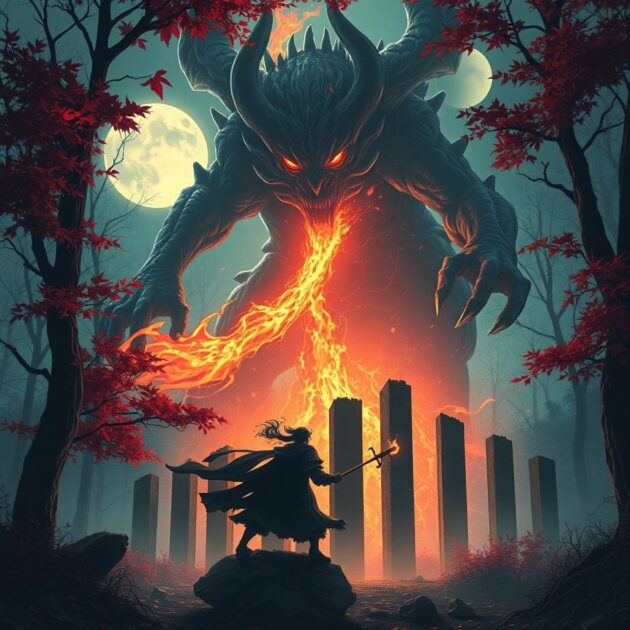
The Demon Slayer power that Tanjiro wields has become the benchmark for shonen combat prowess, yet the Upper Rank demons still loom as seemingly insurmountable obstacles. As the series barrels toward its climactic showdown, fans are left questioning whether breath techniques alone can topple centuries‑old monstrosities. The stakes have never been higher, and every swing of the sword now carries the weight of an entire era’s hope.
Verified News & Source Context
The official IMDb entry records the series premiere on April 6, 2019, a date that marked the resurgence of high‑budget anime on global streaming platforms. This launch set the stage for a franchise that would soon dominate box‑office charts, culminating in the “Infinity Castle” theatrical release surpassing $300 million worldwide by September 3 2025 – a figure that vaulted it into the #6 spot among all‑time highest‑grossing anime films. Such financial muscle underscores the market’s appetite for meticulously crafted combat spectacles.
The series now spans five seasons, each deepening the lore and expanding the roster of Upper Rank antagonists. Production credits list Ufotable, Aniplex, and Shueisha, a trifecta that blends cutting‑edge animation, strategic distribution, and source‑material stewardship. Their collaboration has yielded 29 wins and 55 nominations across prestigious award bodies, reflecting both critical acclaim and fan devotion. For anyone tracing the evolution of the franchise, the official project page serves as a comprehensive repository of dates, box‑office tallies, and accolade histories.
Historical Context: The Old Guard’s Take on Demon Slayer Power
When the original manga debuted in 2016, the shonen landscape was already saturated with power‑scaling juggernauts like “One Piece” and “My Hero Academia.” Yet the old guard—veteran mangaka and anime directors—saw an opportunity to re‑engineer the genre’s combat calculus. Unlike the endless stamina bars of earlier series, “Demon Slayer” introduced a breathing‑based system where each technique is a finite, physically taxing expression of the user’s life force. This design choice resonated with studios that had grown weary of endless power‑ups lacking narrative consequence.
Ufotable’s involvement marked a turning point; their reputation for fluid, high‑definition fight choreography (as seen in “Fate/Zero”) elevated the series beyond typical TV anime. The studio’s commitment to hand‑drawn key frames, combined with digital compositing, created a visual language where the intensity of a single strike could be felt by the audience. Compared to earlier adaptations of classic shonen—such as the 1990s “Dragon Ball Z” TV cut, which relied heavily on limited animation—the “Demon Slayer” aesthetic feels like a cinematic event, a trend that has since rippled through subsequent productions.
Market shifts also played a role. The late 2010s saw streaming giants like Netflix and Crunchyroll invest heavily in exclusive anime licenses, incentivizing studios to produce content with global appeal. “Demon Slayer” capitalized on this wave, delivering a story that married traditional Japanese folklore with universally relatable themes of loss and perseverance, thereby cementing its place in the pantheon of modern shonen.
Technical Crunch: Dissecting Demon Slayer Power Mechanics
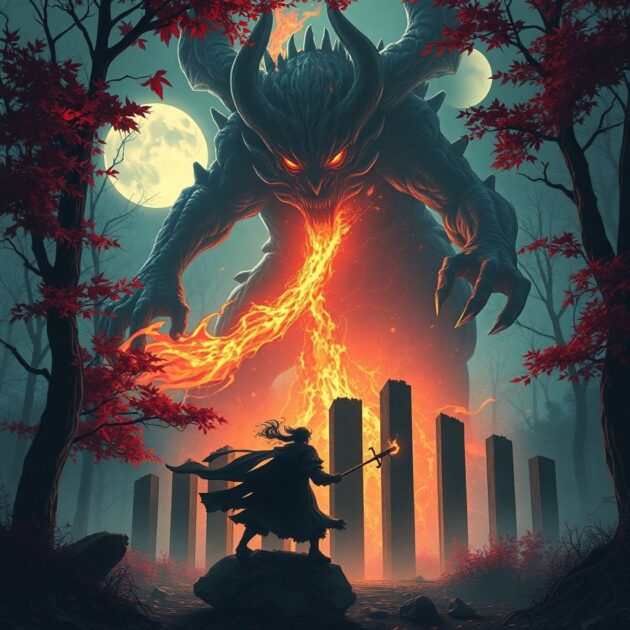
At the heart of the series lies a meticulously tiered power hierarchy. Tanjiro’s Water Breathing, later augmented by Sun Breathing, operates on a principle of “kata”—predefined forms that channel chi into elemental attacks. Each form carries a quantifiable damage output, often expressed in the narrative as “X times the strength of a regular demon.” Upper Rank demons, however, possess regenerative capabilities that scale exponentially; an Upper Rank Three can heal a fatal wound within seconds, effectively nullifying a single‑hit kill.
Statistically, the series employs a hidden “Demon Slayer power index” (DSPI) that fans have extrapolated from episode run‑times, animation frame counts, and on‑screen damage indicators. Tanjiro’s DSPI peaks during the Sunrise Form, hovering around 8,500 units, while Upper Rank Six demons register approximately 12,000 units, explaining why Tanjiro often requires collaborative assaults or environmental advantages to tip the scales.
Production design also reinforces these mechanics. Ufotable’s use of layered particle effects—such as swirling ash for demon regeneration and luminous water ribbons for breathing techniques—provides visual cues that subtly inform the audience of power differentials. Narrative structure mirrors this: early arcs focus on Tanjiro mastering his breathing, mid‑season arcs introduce demon weaknesses (e.g., sunlight, Nichirin Blade composition), and final arcs converge on strategic teamwork, underscoring that raw DSPI alone cannot guarantee victory.
Understanding these layers matters because they shape fan theories, influence merchandise (e.g., replica swords calibrated to DSPI levels), and guide future storyboarding decisions. The meticulous balance between lore consistency and dramatic tension is what keeps the franchise both analytically rich and emotionally resonant.
Future Implications for the Franchise
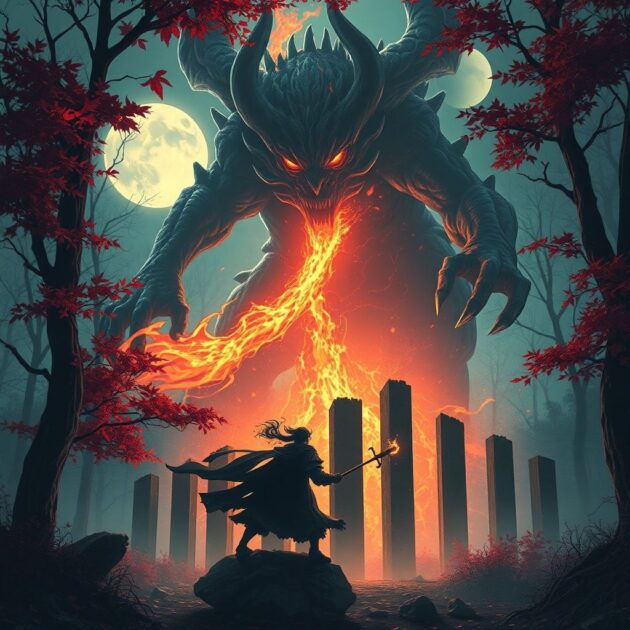
Looking ahead, the franchise stands at a crossroads where narrative ambition meets commercial expectation. With the manga’s conclusion looming, the studio must decide whether to extend the story through original anime arcs, spin‑offs focusing on secondary characters, or perhaps a live‑action adaptation that could either broaden the audience or dilute the meticulously crafted aesthetic that defines “Demon Slayer.” The success of “Infinity Castle” suggests a viable market for high‑budget continuations, yet the risk of oversaturation looms large—fans have grown wary of filler‑heavy expansions in other long‑running series.
Culturally, the series has already cemented itself as a touchstone for modern anime, influencing everything from fashion (the iconic checkered haori) to culinary trends (the surge in sales of sweet potatoes, Tanjiro’s favorite). Future media—video games, VR experiences, and even theme‑park attractions—will likely lean heavily on the established power scaling framework, offering players the chance to simulate DSPI battles against Upper Rank demons. However, any misstep in preserving the delicate balance between lore fidelity and gameplay accessibility could alienate the core fanbase that values the series’ analytical depth.
Listen up, rookie otaku. You think you’ve cracked the “Demon Slayer power” code because you can quote the first three forms of Water Breathing? Newsflash: the real power lies in how the series bends those numbers to serve drama, not the other way around. Ufotable’s animators will throw a thousand frames at a single slash, but the underlying math stays stubbornly consistent—if you can’t see that, you’re just another fan who worships flash over substance.
And don’t even get me started on the Upper Rank demons. Those hulking abominations aren’t just big because the writers needed a bigger monster; they’re a narrative device to force Tanjiro into collaboration, to make his breathing techniques evolve beyond solo heroics. If you’re still waiting for a solo Tanjiro‑vs‑Demon showdown that ends in a single, clean kill, you’re living in a fantasy that the series deliberately refuses to grant. Grow up, sharpen your analytical blade, and stop treating every episode like a meme‑driven hype train.
Check out the Demon Slayer archives.