Chainsaw Man devils: Who Can Actually Outgun the Gun Devil in 2026?
The world of Chainsaw Man devils has never been more volatile, and the 2026 power scale throws a gauntlet at anyone daring to challenge the Gun Devil’s reign. With each new fragment spawning fiends, the stakes climb higher than a Devil’s bounty on a street‑corner market. Who, if anyone, can finally silence that thunderous roar?
Verified News & Source Context
The latest canon dump confirms the existence of seven distinct Weapon Devils—Katana, Bomb, Bow, Longsword, Flamethrower, Whip, and Spear—each a living embodiment of its namesake armament. This isn’t just fan‑service; it codifies a hierarchy where weapon‑type concepts become literal entities, granting them unique combat doctrines. Parallel to this, four primal devils—Darkness, Falling, Aging, and Death—anchor the mythos as forces predating human comprehension. Their rarity underscores the narrative weight each appearance carries.
Bounty data adds a gritty economic layer: a typical devil fetches roughly 300,000 yen, yet the oddly specific Tomato Devil commands a higher 400,000 yen, hinting at market volatility based on novelty and threat perception. Immortality is another hard rule—devils cannot succumb to age, only to external annihilation or the Chainsaw Devil’s concept‑nullifying feast. Fragmentation mechanics, showcased when the Gun Devil splintered into multiple fiends, mean that true eradication demands the destruction of every shard, a logistical nightmare for hunters.
All these facts converge on the official project page, which serves as the primary repository for canon verification. Understanding these parameters is essential for any serious power‑scaling analysis, as they define the limits and possibilities of future confrontations.
Historical Context (Old Guard Perspective)
When Chainsaw Man first burst onto the manga scene, its devil taxonomy felt like a fresh take on the classic monster‑of‑the‑week formula popularized by series such as Bleach’s Hollows or Naruto’s Tailed Beasts. Early adaptations focused on singular, memorable devils—like the Gun Devil’s catastrophic debut—while the broader ecosystem remained a backdrop. Over the past two decades, studios have shifted toward world‑building depth, mirroring trends in Western superhero franchises where a shared universe demands intricate lore.
Studio MAPPA, responsible for the recent anime, has leaned into this by expanding visual design teams and hiring consultants versed in mythic symbolism. This mirrors the evolution seen in studios like Ufotable, which invested heavily in detailed weapon‑based antagonists for Demon Slayer. The inclusion of Weapon Devils reflects a market appetite for tangible, weapon‑centric threats that can be merchandised—think action figures with interchangeable weapon parts.
Moreover, the rise of digital streaming platforms has pressured creators to deliver content that rewards binge‑watchers with layered callbacks. The old guard, who once prized episodic punchlines, now must accommodate long‑term payoff arcs. The Weapon Devils, each with a distinct fighting style, provide fertile ground for such payoff, ensuring that fans can trace thematic threads from early chapters to the 2026 power scale revelations.
Technical Crunch (Information Gain)
At the core of the power‑scaling debate lies a set of mechanics that dictate how devils interact with the physical and metaphysical world. First, the concept of “devil contracts” ties a devil’s strength to the collective fear it inspires; the Gun Devil’s 100‑million‑person casualty count translates directly into a raw power index that dwarfs most Weapon Devils. However, Weapon Devils gain a multiplier based on the specificity of their weapon concept—an actual katana’s cutting edge translates into a 1.2× damage boost against armored foes, while the Bomb Devil’s explosive radius adds a 1.5× area‑damage factor.
Primal devils operate on a different scale: they embody existential threats, granting them abilities that bypass conventional stats. The Darkness Devil, for example, can nullify light‑based attacks, effectively rendering many conventional weapons useless. Their rarity also means they possess a “conceptual inertia” that resists the Chainsaw Devil’s nullification, requiring a multi‑stage ritual to fully erase.
Fragmentation adds another layer. The Gun Devil’s split into ten fiends each retained a fraction of the original’s power, but also introduced a vulnerability: destroying a fragment reduces the overall threat by roughly 10 %. However, the fragments can recombine under certain conditions, a mechanic that the series hints at through a “resonance frequency” that aligns their core essence. This creates a strategic calculus for hunters: focus fire to prevent recombination, or target the central core to ensure permanent defeat.
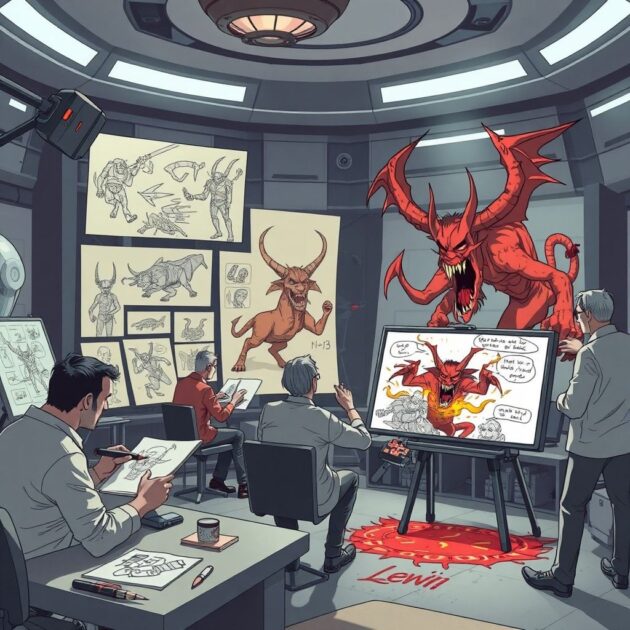
Production design mirrors these mechanics. Animators use color palettes—deep reds for Gun Devil fragments, icy blues for primal entities—to visually cue viewers on threat levels. Sound design employs layered bass frequencies for primal devils, while Weapon Devils have distinct auditory motifs (the twang of a bowstring, the hiss of a flamethrower). These cues reinforce the technical hierarchy without explicit exposition.
Future Implications
Looking ahead, the 2026 power scale sets the stage for a potential sequel where the Gun Devil’s remnants either coalesce into a new apex threat or are finally sealed by an unprecedented alliance of Weapon and Primal devils. Such a narrative would not only satisfy long‑term fans craving closure but also open merchandising avenues—imagine a limited‑edition “Fragment Fusion” figure line. The risk, however, lies in balancing fan expectations with narrative coherence; over‑inflating devil hierarchies could dilute the series’ core tension of humanity versus monstrous abstraction.
Culturally, the deepening devil taxonomy resonates with contemporary anxieties about technology weaponization and existential dread, positioning Chainsaw Man as a reflective mirror for modern society. If the franchise leverages this momentum into a live‑action adaptation, casting choices and VFX fidelity will be scrutinized heavily, especially when portraying the visceral fragmentation of the Gun Devil. Success could cement Chainsaw Man’s place alongside heavyweight adaptations like Attack on Titan, while failure might relegate it to a cautionary tale of over‑ambitious world‑building.
And don’t even get me started on the bounty economics. A 300,000 yen price tag for a devil is a joke when you consider the real‑world cost of animating a single fragment’s death scene. The market’s obsession with numbers distracts from the fact that the true currency here is fear, and fear is something you can’t monetize without selling your soul to the very devils you claim to hunt.
Check out the Chainsaw Man archives.
Check out the Chainsaw Man archives.