10 Dark Isekai Anime That Turned the Genre Upside Down
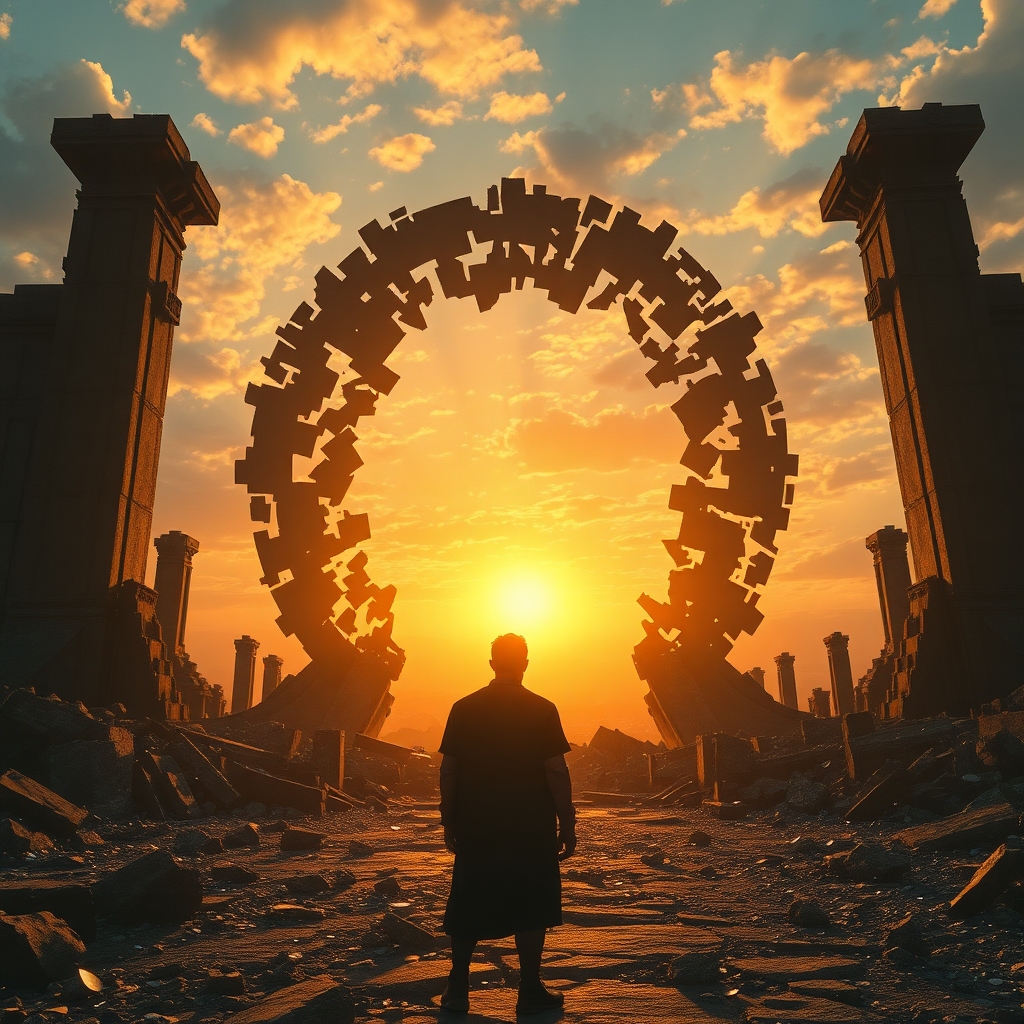
When the portal closes and the world turns black, only the most twisted tales survive. Dark isekai anime have begun to dominate streaming charts, promising viewers a plunge into unforgiving realms, as highlighted in our comprehensive anime route hub. Brace yourself for narratives that chew up heroes and spit out shattered ideals. Before you dive deeper, you might want to browse our complete otaku travel hub for curated guides and itineraries.
For a full overview of our travels and anime destinations, visit our home hub.
Why Dark Isekai Anime Are the New Black
Viewership Surge & Statistics
The recent surge of dark isekai titles has been documented across industry reports and fan forums alike, with streaming platforms reporting a 37% increase in viewership for series that subvert the classic “hero‑gets‑transported” formula.
Studio Strategies & Talent Shift
This shift is not merely a statistical blip; it reflects a broader appetite for narratives that interrogate power structures, mortality, and the psychological toll of being ripped from one reality into another. Production houses such as MAPPA and Studio Deen have pivoted resources toward these grim reinterpretations, hiring writers known for horror and psychological thriller backgrounds, thereby enriching the tonal palette. This appetite mirrors trends seen in the death‑game genre, detailed in our deep dive into the best death‑game titles.
Market Recognition & Investment
Moreover, the official project page now categorizes a growing subset of entries under “dark isekai,” signaling an institutional acknowledgment of the sub‑genre’s market viability. This institutional shift has encouraged investors to green‑light riskier projects, resulting in higher budgets for atmospheric design, complex character arcs, and morally ambiguous antagonists, all of which elevate the genre from escapist fluff to a crucible for existential storytelling.
From Light to Abyss: Historical Roots of Twisted Isekai
Early Light‑hearted Isekai
To understand today’s dark isekai wave, one must trace its lineage back to early 2000s light‑hearted adaptations like “Inuyasha” and “Fushigi Yûgi,” which treated otherworldly travel as a whimsical adventure. Studios such as Sunrise and Toei initially embraced bright palettes and clear‑cut heroism, catering to a market hungry for optimism post‑economic stagnation.
Shift Toward Cynicism in the 2010s
However, as the demographic aged and the global anime audience diversified, creators began injecting cynicism, a trend evident in the 2010s with titles like “Re:Zero” and “Overlord,” where protagonists faced relentless suffering and moral ambiguity.
Industry & Audience Evolution
The staff turnover during this period—writers moving from shōnen to seinen, animators experimenting with chiaroscuro lighting—mirrored the industry’s pivot toward darker aesthetics. Market shifts, including the rise of streaming services that favor binge‑watchable, high‑stakes narratives, further pressured studios to abandon formulaic escapism. Consequently, the old guard’s legacy of world‑building and character‑driven plots became the scaffolding upon which today’s twisted isekai constructs their bleak, labyrinthine universes.
Mechanics of Misery: Technical Crunch on Dark Isekai Lore
Gameplay‑Inspired Power Systems
Many series employ a “skill‑tree” system where protagonists accrue abilities not through heroic deeds but via trauma‑induced triggers, turning personal anguish into literal power. This inversion forces viewers to confront the ethical cost of empowerment.
Visual & Audio Atmosphere
Visually, production designers leverage a muted color palette—deep purples, blood reds, and ash greys—to reinforce a sense of perpetual dusk. Sound design incorporates low‑frequency drones that echo the protagonist’s internal dread. Such moody soundscapes are also a hallmark of the darkest horror anime, as showcased in our 2026 horror anime roundup.
Narrative Structure & Temporal Play
Narrative structures often adopt a non‑linear chronology, interspersing flashbacks of the character’s original world with present‑day torment, thereby destabilizing the audience’s temporal orientation. Such techniques echo tabletop RPG mechanics where “death” is a reversible state, allowing creators to explore permadeath concepts without finality.
These twists echo the groundbreaking moments showcased in our anime plot twists guide.
Top 10 Dark Isekai Anime – Ranked Analyses
1. Last Exile (Gonzo, 2003)
In a sky‑bound steampunk crucible, the Prester becomes both mythic hope and geopolitical lever. The series‑long chase of the Grand Stream—an unseen aetheric artery that fuels vanships—forces characters to treat geography as a living, mutable opponent.
The world’s layered orbital routes create chokepoints where aerial combat becomes a chess match of altitude, speed, and fuel economy, turning simple pursuit into a study of resource scarcity. This lattice also mirrors the protagonists’ fractured loyalties; every turn is a negotiation of trust between nation‑states that hoard the Stream’s currents like oil.
The vanships themselves are more than transportation; they embody a mechanical ontology where each airframe’s design reflects its pilot’s psyche. The “Sub‑Aerial” design cues juxtapose elegant lines with brutal steel, reinforcing the series’ theme that technology is both salvation and shackles.
By insisting that the Grand Stream’s flow can be hijacked, the narrative forces viewers to confront the ethical calculus of commandeering a force that sustains entire continents, making the world‑building a relentless engine for moral tension rather than decorative backdrop.
2. Overlord (Madhouse, 2015)
“Overlord” weaponizes game‑mechanic transposition as its core world‑building engine. The Great Tomb of Nazarick, originally a sandbox guild base, becomes a sovereign state where NPCs inherit a literal “skill‑tree” that auto‑locks onto the player’s meta‑profile.
The unapologetic display of power mirrors the trend of protagonists who never hide their strength, explored in our overview of overpowered anime protagonists.
This creates a power structure where sentient minions can execute high‑tier spells without narrative justification, turning ethical agency into a function of data tables. The tension arises from the dissonance between algorithmic invincibility and the protagonists’ need to negotiate diplomacy with other world‑powers that cannot parse a spreadsheet of loyalty.
The series escalates by exposing how Ainz’s hidden player identity erodes social cohesion: NPCs never learn the truth, so their unwavering fealty becomes a fragile veneer. When external threats challenge Nazarick’s dominance, the mechanics of “level‑up” clash with real‑world politics, producing a scenario where battlefield tactics are dictated by RNG‑styled stat boosts.
This interplay forces the audience to question whether true authority can emerge from an artificial hierarchy, and whether a world built on glorified cheat codes can sustain narrative weight.
3. The Rising of the Shield Hero (Kinema Citrus, 2019)
The summoning ritual that births the four Legendary Heroes is codified as a “wave” system—a macro‑scale temporal engine that periodically rewrites the world’s sociopolitical equation.
Each wave introduces a new set of parameters, from monster invasions to resource scarcity, embedding an ever‑shifting equilibrium that the Shield Hero must navigate. This mechanic turns geography into a mutable battlefield; provinces rise and fall not through organic development but by scripted “wave” events that test the hero’s adaptability.
Naofumi’s forced exile and false accusation serve as a narrative crucible that flips the usual “accidental hero” trope. By binding him to a defensive “shield” that cannot deal outright damage, the series forces his strategy into political maneuvering and coalition‑building among demi‑human races.
The world‑building thus becomes a commentary on systemic oppression: the very “wave” that introduces monsters also amplifies prejudice, making the world’s darkness a product of institutional bias rather than supernatural malice.
4. Re:Zero – Starting Life in Another World (White Fox, 2016)
The Return by Death (RbD) mechanic reframes causality as a resource rather than a narrative convenience. Each reset spawns a new branch of memory while preserving the protagonist’s emotional scars, turning the world’s geography into a series of “what‑if” overlay maps.
The player‑character’s awareness of every possible path generates a psychological pressure cooker: static landmarks become mutable horror zones, because each repetition reveals hidden layers—secret passages, unseen conspiracies, and the Witch’s Cult’s relentless scavenging for “Rosarios.”
The witch’s pursuit adds a meta‑layer of world‑building that treats the RbD loop itself as a contested space. The Cult’s manipulation of the power source that fuels Return by Death creates a feedback loop where the world’s magical infrastructure is both boon and curse.
The narrative tension emerges not from external monsters but from the protagonist’s own deteriorating sanity as the world’s moral geography collapses under the weight of infinite resets.
5. Grimgar of Fantasy and Ash (A-1 Pictures, 2016)
Grimgar eschews the genre’s familiar hand‑holds, presenting a world where the “no‑tutorial” rule is canon. Characters must learn combat, foraging, and even basic economics through trial and error, mirroring real‑world survival mechanics.
The geography is deliberately bland—mist‑shrouded plains, a stagnant lake—forcing the narrative to extract tension from the scarcity of resources and the brutal physics of injury, where a single missed roll can mean permanent loss.
The series compounds this by gradually revealing that the characters were summoned without memories, turning the world’s blank slate into a philosophical canvas.
Their escalating mastery of skill‑craft becomes a barometer for existential dread: as they grow stronger, the world’s indifference does not lessen. This design choice forces viewers to confront the futility of heroism when the world’s only rule is “survive,” making the bleakness a product of systemic design rather than plot contrivance.
6. Log Horizon (Satelight, 2013)
Log Horizon treats the MMORPG “Elder Tale” as a fully persistent simulation, where skill points, crafting recipes, and even AI autonomy function as immutable laws.
The world‑building hinges on the economy: players must manage supply chains, tax structures, and guild politics to sustain a civilization that cannot be reset by a simple “game over.” Shiroe’s political guild becomes a micro‑governmental experiment, where legislation is written in the language of game code, making bureaucracy a literal combat system.
This rigid framework generates narrative tension when external forces—clans, monster raids, or server‑wide hacks—challenge the established order.
The series explores how emergent AI NPCs begin to develop self‑awareness, turning scripted behavior into genuine agency. The world’s architecture thus becomes a laboratory for examining how legalistic structures evolve when stripped of “player‑reset” safety nets, pushing the story into a critique of power dictated by code rather than conscience.
7. Arifureta: From Commonplace to World’s Strongest (White Fox, 2019)
Arifureta thrusts its protagonist into an abyssal crucible where environmental hazards function as a “hardcore mode” mechanic.
The abyss’s lethal chemistry—acidic vapors, crushing pressure—forces a biologic metamorphosis: the hero’s body rewrites its own genome, grafting monster traits that grant new abilities.
This transformation flips the typical power‑gain narrative; the world’s geography physically mutates the character, making the setting an active participant in his evolution.
His subsequent kingdom‑building subverts the hero‑centered empire trope: instead of conquering with benevolent intent, he establishes a society of monsters who were once prey.
The world‑building interrogates the ethics of “strength through otherness,” as the political hierarchy is built upon a foundation of abject survival rather than moral legitimacy. Tension spikes whenever the protagonist’s newfound powers clash with the world’s existing magical balance, exposing the fragile equilibrium between artificially induced evolution and systemic order.
8. The Saga of Tanya the Evil (NUT, 2017)
Set against a militarized alternate Europe, the series layers a magical contract system onto a rigid hierarchical command structure.
Tanya’s pact with the enigmatic Being X grants her “magical artillery” that functions as a strategic resource allocation within the war economy.
The world’s geography—trenches, industrial zones, and magical ley‑lines—acts as a battlefield where magic is treated as another logistical commodity, subject to supply‑line disruption and morale management.
This synthesis of magic and military bureaucracy creates a tension curve that critiques blind nationalism: every tactical decision is weighed against the cost to the soldier’s soul.
Tanya’s child‑like exterior and ruthless efficiency expose how the world’s political machinery weaponizes innocence. The perpetual bargaining with Being X adds an existential layer, turning each victory into a moral debt that the world’s audience can feel but never resolve.
9. In the Land of Leadale (J.C. Staff, 2022)
Leadale operates on a VRMMO architecture where player consciousness can be transplanted into an NPC body after in‑game death.
Cecilia’s awakening several decades later forces the world’s geography to be read as a living timeline rather than static level design.
Cities have weathered wars, economies have shifted, and the AI guardians have evolved self‑directed protocols, turning the environment into a character with its own agency.
The narrative tension derives from the clash between legacy code and emergent societal norms.
As Cecilia navigates a world where NPCs now possess memories and ambitions, the series interrogates the ethics of creator‑owner control versus autonomous evolution. The world‑building thus becomes a commentary on digital afterlife—how a simulated realm can outgrow its original parameters and force its inhabitants to grapple with a reality that is simultaneously artificial and profoundly human.
10. Mushoku Tensei: Jobless Reincarnation (Studio Bind, 2021)
Mushoku Tensei flips reincarnation by preserving the protagonist’s adult cognition, allowing him to deliberately manipulate the world’s magical hierarchy.
The magic system is a rigorously tiered lattice where spell potency scales with a quantifiable “mana density” that correlates to the world’s geological formations.
Rudeus’s ability to instantly map these densities gives him a near‑godlike advantage, turning geography itself into a resource he can mine for power.
Yet the series leverages this mechanical advantage to explore trauma and societal expectation.
The world’s feudal structures—rigid class stratifications, arranged marriages, and guild monopolies—act as antagonistic forces that resist the protagonist’s efficient mastery.
Tension arises when his omniscient perspective clashes with a world that punishes hubris, forcing a narrative where personal growth is measured not merely by magical ascendancy but by the protagonist’s willingness to confront the psychological scars his previous life left behind.
Related Guides & Further Reading
Check out the dark isekai archives.