10 Heartbreaking Anime That Will Make You Cry for Hours
Brace yourself, because the world of heartbreaking anime isn’t just a genre—it’s an emotional minefield that can leave you sobbing on the couch for hours. Each tear‑jerking series listed below has been meticulously chosen for its ability to wrench the heart and linger long after the credits roll. If you think you’ve got the stamina for this marathon, read on and prepare your tissues.
Modern Foundations of Heartbreaking Anime
The first wave of modern tear‑jerkers arrived with Kyoto Animation’s masterstroke, Clannad (2007‑2008), helmed by Tatsuya Ishihara. Its humble slice‑of‑life premise—family, friendship, and unrequited love—was amplified by the studio’s signature hand‑drawn warmth, making every emotional beat feel lived‑in.
The sequel, Clannad After Story (2008‑2009), pushed the envelope further, turning a high‑school romance into a generational saga that still haunts fans a decade later. Both series benefited from Kyoto Animation’s meticulous animation pipeline, where key animators could spend extra frames on subtle facial shifts, a luxury rarely afforded in tighter budgets.
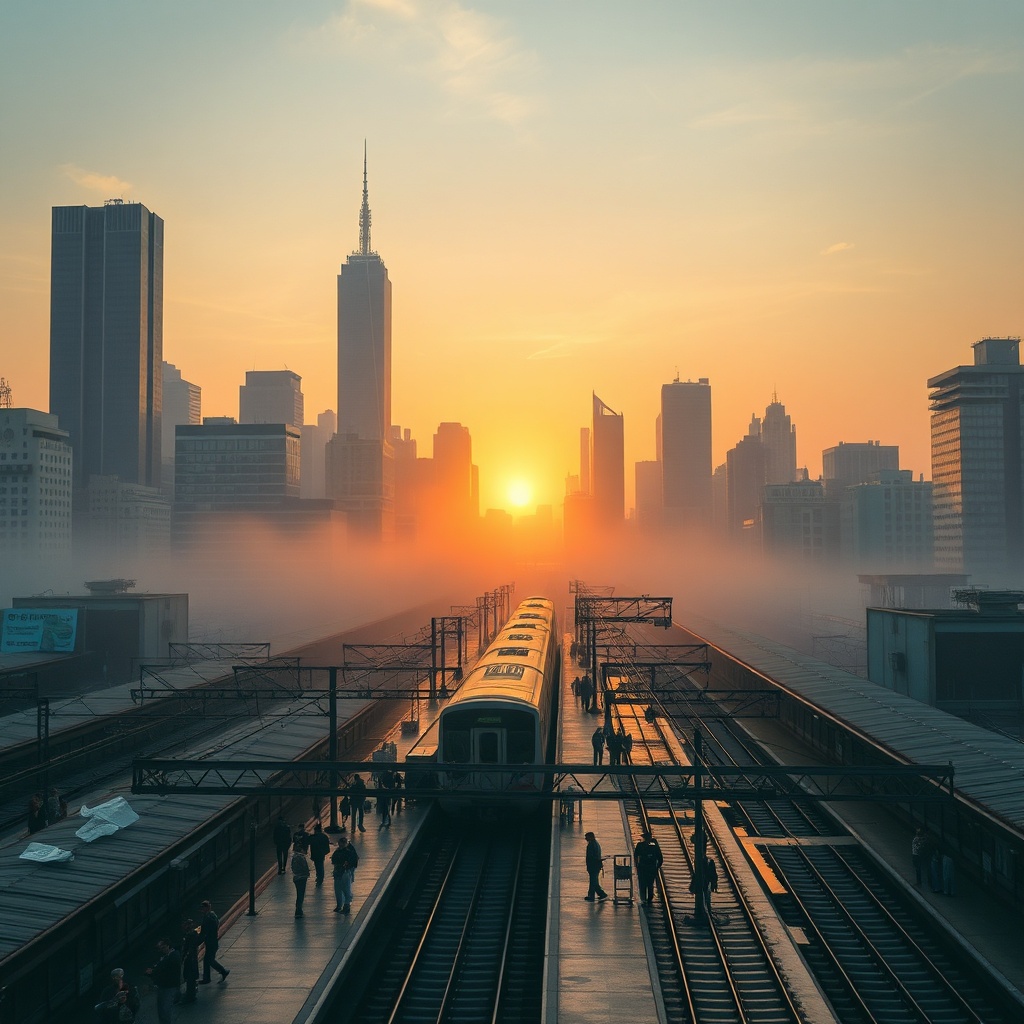
Meanwhile, Makoto Shinkai’s 5 Centimeters Per Second (2007) offered a cinematic meditation on distance and time, its hyper‑realistic backgrounds rendered by CoMix Wave Inc. The film’s meticulous layering of light and shadow mirrored the protagonist’s internal fog, turning a simple train ride into a visual elegy.
Osamu Dezaki’s Air (2005), produced by Toei Animation, blended ethereal watercolor aesthetics with a haunting narrative about reincarnation, setting a precedent for atmospheric storytelling in the drama anime niche.
Finally, Hiroyuki Okiura’s A Letter to Momo (2012) from Production I.G. fused supernatural folklore with a coming‑of‑age journey, using fluid hand‑drawn sequences to convey grief and acceptance. All these titles are catalogued on the official project page, underscoring their collective impact on the genre.
Historical Roots and Evolution

To appreciate today’s heartbreaking anime, we must rewind to the 1990s, when studios like Gainax and Madhouse pioneered emotional storytelling with titles such as Neon Genesis Evangelion and Serial Experiments Lain. Those series introduced psychological depth, but their visual language was still constrained by limited budgets and the nascent digital pipeline.
The early 2000s saw a shift: studios began investing in full‑color cel work and digital compositing, allowing for richer palettes and smoother motion. Kyoto Animation, emerging from this wave, distinguished itself by retaining hand‑drawn craftsmanship while integrating digital tools, a hybrid approach that gave rise to the lush, tear‑inducing aesthetics of Clannad.
Shinkai’s rise mirrored this evolution. His early works, like Voices of a Distant Star, were essentially one‑person productions, yet they demonstrated how meticulous background art could evoke profound loneliness. By the time 5 Centimeters Per Second hit theaters, the industry had embraced high‑definition digital cameras, enabling Shinkai to capture hyper‑realistic skylines that functioned as emotional characters themselves.
Simultaneously, Toei’s Air leveraged traditional watercolor techniques, a nod to classic anime aesthetics, while layering modern CGI for ethereal effects—a hybrid that influenced later studios seeking a balance between nostalgia and innovation.
These historical currents converged to shape the modern heartbreak formula: a blend of painstakingly crafted visuals, layered narrative structures, and a willingness to explore adult themes. The legacy of the old guard is evident in how contemporary creators still reference the emotional beats of Clannad and the visual poetry of Shinkai, proving that the foundations laid two decades ago remain the bedrock of today’s tear‑jerker canon.
Storytelling Techniques That Pull the Heartstrings
At a structural level, heartbreaking anime often employ a three‑act narrative architecture: introduction of ordinary life, inciting incident that fractures the protagonist’s world, and a resolution that either restores hope or cements loss.
Clannad After Story exemplifies this by juxtaposing episodic high‑school moments with a relentless march toward adulthood, using time‑skip montages to compress years into a single, emotionally charged sequence. The series’ pacing is deliberately uneven—slow, contemplative scenes interspersed with sudden, gut‑punch revelations—to mimic the erratic rhythm of real grief.
Visually, studios exploit color theory to cue emotional states. Shinkai’s palette in 5 Centimeters Per Second shifts from cool blues during moments of separation to warm oranges when characters reconnect, reinforcing narrative beats without dialogue.
Meanwhile, A Letter to Momo utilizes a muted, earthy palette for the protagonist’s mundane life, then bursts into saturated hues when supernatural elements emerge, symbolizing the clash between reality and the unknown.
Sound design also plays a pivotal role. The use of leitmotifs—repeating musical phrases tied to specific characters—creates an auditory anchor that triggers emotional recall each time the motif resurfaces.
In Air, the haunting piano theme resurfaces during flashbacks, subtly reminding viewers of the cyclical nature of the story’s reincarnation motif. These layered techniques—narrative pacing, color symbolism, and auditory callbacks—combine to form a multi‑sensory experience that elevates simple sadness into a visceral, unforgettable heartbreak.
Emerging Trends and Future Directions
Looking ahead, the heartbreak genre is poised for both expansion and reinvention. Streaming platforms have democratized access, allowing niche titles like A Letter to Momo to reach global audiences without the constraints of traditional broadcast slots.
This exposure fuels demand for more nuanced storytelling, prompting studios to invest in original scripts rather than relying on established manga adaptations.
Moreover, the rise of hybrid animation—combining 2D hand‑drawn elements with 3D CGI—offers fresh visual possibilities for depicting abstract emotions, as seen in recent experimental shorts that blend watercolor textures with motion‑capture facial rigs.
However, the market also faces risks. Over‑saturation of melodramatic tropes could dilute impact, leading to audience fatigue. To avoid this, creators must innovate by integrating diverse cultural perspectives, perhaps drawing from non‑Japanese folklore or contemporary social issues, thereby refreshing the emotional palette.
Adaptations of classic literature with a modern twist, or interactive visual novels that let viewers influence the emotional trajectory, could also redefine how we experience heartbreak in anime.
1. Last Exile (Gonzo, 2003)
The sky‑bound world of Last Exile is built around a hard‑science veneer: a planet‑wide network of wind‑strewn trade routes called the Grand Stream, where massive aerial vessels—vanships—skate on invisible currents. The political tension springs from the relentless competition between the Anatoray and Disith empires, each vying for control of the Stream’s “White Whistles,” a mythical energy source that can tip the balance of power.
By grounding the fantasy in rigorous aeronautical concepts (the series even consulted real‑world engineers for the vanship aerodynamics), the narrative forces protagonists Claus and Lavie to navigate not just personal loyalties but the literal currents that dictate the fate of nations.
The series’ world‑building mechanic—manifestation of the “Grand Stream” as a semi‑sentient conduit—creates a layered backdrop where geography is a character. When the vanships dive into the Stream’s turbulent vortices, the resulting visual spectacle mirrors the internal turbulence of the characters, especially as they confront the ancient figure Prester, whose cryptic motives embody the unknowable forces behind history.
The interplay of deterministic physics (air pressure, velocity) with mythic elements (the “Illumina” crystals) ensures that every aerial battle feels both technically plausible and emotionally charged, cementing the series as a template for how hard‑science world‑building can amplify personal tragedy.
2. Anohana: The Flower We Saw That Day (A-1 Pictures, 2011)
Anohana’s emotional engine is its localized suburban setting—Chichibu, a town whose layout mirrors the fragmented memories of its five protagonists.
The core world‑building mechanic, the visible apparition of Menma, acts as an intrusive diegetic object that forces every character to confront the spatial guilt tied to the exact spot of her death. Because the ghost can only be seen by the estranged group, the series leverages limited perception as a narrative constraint, turning each shared location into a pressure cooker of unresolved feelings.
The series’ use of the town’s geography (the riverbank, the schoolyard, the abandoned bridge) as mnemonic anchors means the audience experiences grief spatially.
When the group finally fulfills Menma’s forgotten wish—releasing a lantern at the exact riverbank where she drowned—the act of lighting becomes a literal illumination of the characters’ internal darkness.
This marriage of setting and supernatural catalyst ensures the emotional stakes are never abstract; they are concrete, mapped onto a familiar, almost claustrophobic map that makes the final goodbye feel like the end of an era for a real place, not just a narrative device.
3. Your Lie in April (A-1 Pictures, 2014)
The world‑building in Your Lie in April hinges on music as a quasi‑magical system.
Kōsei’s inability to “hear” the piano after his mother’s death is not merely a psychological block but a narrative rule that governs his interactions with soundwaves, turning each performance into a battleground between trauma and expression.
The series treats musical phrasing as physical forces—high tempo passages generate visual “ripple” effects that echo Kōsei’s emotional turbulence, while Kaori’s erratic violin style introduces harmonic dissonance that destabilizes his internal rhythm.
Crucially, the juxtaposition of the bustling modern Tokyo backdrop with intimate concert halls creates a dichotomy between the external world’s indifference and the characters’ inner symphonies.
Kaori’s terminal illness acts as a ticking metronome, pressuring the narrative’s tempo and forcing Kōsei to confront the inevitable crescendo of loss.
The film’s careful choreography of key motifs—“Spring Breeze” and “Kiss of a Rose”—serves as auditory leitmotifs that trigger remembrance each time they resurface, sealing the connection between sound and grief in a way that visual storytelling alone could not achieve.
4. Clannad: After Story (Kyoto Animation, 2008‑2009)
Kyoto Animation’s signature “Illusionary World” operates as a hidden layer of reality accessible only through the strongest emotional bonds.
This metaphysical realm is not a separate timeline but a reflective space where objects physically embody the characters’ subconscious—famously the recurring waterwheel that spins faster as Tomoya’s grief deepens.
By tying the supernatural mechanic directly to familial love and loss, the series transforms everyday geography (the town of Hōriemi, the Hinata school) into a mutable stage where emotional intensity reshapes the environment.
The generational cycle mechanic—where Tomoya inherits his father’s regrets and then passes them onto his own child—creates a recursive narrative loop.
The world‑building choice to anchor the story in a rural town lets the series magnify the weight of each loss against a backdrop of seemingly endless skies, emphasizing the isolation that grief can impose.
The ultimate reconciliation in the Illusionary World, where Tomoya finally “walks” through his past and embraces his daughter, serves as a visual allegory: the ability to rebuild a fragile world after it has shattered, a theme that reverberates through every subsequent tear‑jerker that attempts to blend the mundane with the mythic.
5. Angel Beats! (P.A. Works & Aniplex, 2010)
The afterlife high‑school setting of Angel Beats! is a constructed liminal space where the “After School” realm enforces a strict rule: souls retain the memories of their earthly regrets until they confront them.
The narrative uses the school’s architecture—locked classrooms, endless corridors—as physical manifestations of the characters’ mental prisons.
Each rebellion against Angel is a metaphorical battle against the inertia of unresolved trauma, and the series’ world‑building rule that each soul’s “regret meter” dims only when a personal truth is spoken adds a quantifiable tension to otherwise abstract emotions.
By integrating a quasi‑scientific explanation for the afterlife’s energy (the “Regret Engine” that powers the school’s anti‑gravity devices), the series grounds its supernatural premise in a quasi‑technical framework, making the eventual “graduation” of each character both a narrative climax and a systemic shutdown.
This blend of institutional world‑building with personal catharsis ensures that the audience feels the weight of each goodbye not merely as a plot point but as a structural collapse of a world built on the very regrets the characters must relinquish.
6. A Silent Voice (Koe no Katachi) (Kyoto Animation, 2016)
The urban landscape of contemporary Japan in A Silent Voice is used as a sociological map where disability and stigma become the terrain characters must navigate.
Shoya’s bullying of Shōko is not isolated; it is amplified by the school’s architecture—isolated classrooms, echo‑filled corridors—that reinforce Shōko’s alienation.
The core mechanic—social ostracism as a physical barrier—is visualized through the recurring motif of glass: shattered windows, broken mirrors, and the ever‑present barrier of silence that separates Shoya from genuine human connection.
Kyoto Animation’s meticulous attention to minute facial animation allows the series to convey the subtle shifts in Shoya’s conscience, turning each eye‑contact into a micro‑battle of guilt and redemption.
The narrative’s pacing, which alternates between long, static shots of Shoya’s solitary walks and rapid, chaotic classroom sequences, mirrors the internal turbulence of someone wrestling with remorse.
By making the social environment an antagonistic force, the series elevates personal atonement to a broader commentary on how modern urban spaces can amplify or alleviate emotional wounds.
7. Violet Evergarden (Kyoto Animation, 2018)
Set in a post‑war, European‑styled empire, Violet Evergarden introduces the “Auto‑Memory Doll” system—a world‑building mechanic where trained clerks transcribe clients’ deepest emotions into letters.
This creates a professionalized conduit for grief, turning private sorrow into public artifacts.
The empire’s geography—war‑scarred cities, rebuilt ports, and the lingering presence of military monuments—acts as a constant reminder of collective trauma, while Violet’s own mechanical limbs symbolize the intersection of technology and humanity.
The series leverages the politics of the empire’s reconstruction: each client’s request reflects a fragment of the nation’s attempt to rewrite its narrative.
By framing Violet’s personal quest to understand “I love you” as a macro‑political mystery, the world’s bureaucratic processes become a mirror for her own emotional parsing.
The recurring motif of rain‑soaked streets, scripted in the series’ color palette, reinforces the idea that the letters themselves are vessels for the weathered hearts of a society trying to heal.
8. 5 Centimeters Per Second (CoMix Wave Inc., 2007)
Shinkai’s world‑building hinges on hyper‑realistic environments that act as emotional metronomes.
The meticulous layering of light—sunlight through train windows, snowfall over urban rooftops—creates a visual rhythm that mirrors the protagonists’ physical distance.
Unlike a conventional narrative, the film treats geography as a character; each kilometer traveled is a measurable unit of emotional decay, reinforced by the recurring motif of the eponymous 5 cm per second train speed, a literal representation of the slow drift between people.
The film’s use of digital compositing to render atmospheric phenomena (lens flares, depth‑of‑field) elevates idle moments—waiting at a station, watching a leaf fall—into narrative beats that convey the crushing weight of time.
By refusing to anthropomorphize the setting, Shinkai forces the viewer to sit with the silence, making the heartbreak stem not from dialogue but from the inexorable, visually expressed separation that distance creates.
9. Air (Toei Animation, 2005)
Air blends traditional watercolor backgrounds with modern CGI to construct a world where the “Blue Sky” is a tangible element tied to the series’ reincarnation mythos.
The core mechanic—spiritual lineage manifesting as a recurring “winged” motif—forces characters to interpret their surroundings as prophetic; the ever‑present sky becomes a narrative gauge of hope versus inevitability.
By juxtaposing the ethereal hand‑painted clouds with the harsh, pixel‑perfect CGI of modern technology, the series visually underscores the tension between fate and agency.
The geographical anchor—a rural seaside town where the wind carries the whispers of past lives—acts as a liminal space where the veil between eras thins.
The series’ deliberate pacing, allowing wide shots of the sea to linger, forces the audience to feel the weight of a predestined tragedy, turning each sunrise into a reminder of the cyclical nature of the characters’ suffering.
10. A Letter to Momo (Production I.G., 2012)
The supernatural folklore of A Letter to Momo is woven into a modern suburban setting, creating a hybrid world where yōkai exist just beyond the visual field of everyday life.
The core mechanic—Momo’s ability to see and interact with ancestral spirits—acts as a catalyst for her emotional growth, turning the ordinary layout of her apartment building into a map of hidden histories.
The spatial design of the narrative (the attic, the rooftop garden) serves as both literal and metaphorical elevation points where past and present intersect.
Production I.G.’s fluid hand‑drawn animation allows seamless transitions between the mundane and the supernatural, making the ghosts feel like extensions of the environment rather than separate entities.
By grounding the ghostly encounters within familiar urban geography, the series makes Momo’s journey of grief and acceptance feel both intimate and universally resonant, proving that even the most fantastical world‑building can be anchored in a recognizably human setting.
The veteran in me can’t help but scoff at studios that chase tears like a cheap gimmick, slapping a sad song over a generic love triangle and calling it art. Real heartbreak demands more than a single sob‑inducing episode; it requires a world built on authentic character flaws, lingering regrets, and the kind of visual poetry that makes you feel the rain on your skin even if you’re watching from a climate‑controlled apartment.
When a series finally earns its reputation as a true tear‑jerker, it does so by respecting the audience’s emotional intelligence. It trusts us to sit with discomfort, to let a quiet scene breathe, and to understand that sometimes the most devastating moments are the ones left unsaid. That’s the hallmark of a masterpiece—one that doesn’t just make you cry, but makes you reflect on the fragile threads that bind our own lives together.
Check out the heartbreaking anime archives.