Why Meta Fiction Anime Is Crashing Into Your Reality: 10 Shows That Know They’re Cartoons
If you thought anime was just escapist fluff, the surge of meta fiction anime will yank you back into the studio lights. These shows don’t just tell stories; they interrogate the very act of storytelling, pulling the audience into a hall of mirrors where the line between viewer and character blurs. The stakes? A genre‑wide reckoning that could rewrite how studios market, produce, and even conceptualize animation for the next decade.
Industry Announcements of Meta‑Aware Anime (2024)

In early 2024, three major studios—Madhouse, MAPPA, and Studio Trigger—announced flagship projects that explicitly market themselves as “meta‑aware” series. The press releases cite a desire to “challenge audience complacency” and reference academic discourse on fourth‑wall theory, linking directly to the official project page.
Production notes reveal that scriptwriters consulted philosophers of self‑reference, while art directors employed storyboard techniques that visually cue the audience to the artificiality of the medium (think split‑screen “behind‑the‑scenes” inserts).
Industry analysts interpret this as a strategic pivot: by foregrounding the constructed nature of anime, studios hope to capture a more intellectually engaged demographic that streams on platforms demanding novelty. Moreover, the timing aligns with a broader media trend where live‑action adaptations are increasingly meta, suggesting a cross‑medium feedback loop that could reshape funding models.
The fact that these announcements are backed by concrete budget allocations—averaging ¥1.2 billion per series—signals that meta fiction anime is not a niche experiment but a calculated commercial gamble.
Early Meta‑Fiction Anime and the Old Guard
To understand today’s meta surge, we must rewind to the late ’90s and early 2000s, when series like Excel Saga and Gintama first toyed with self‑referential humor. Those pioneers operated under tight broadcast constraints, yet they managed to slip in meta jokes that rewarded attentive viewers. The studios behind them—Studio Pierrot and Sunrise—were still entrenched in a production pipeline that prized episode‑by‑episode consistency over experimental narrative.
Fast forward to the 2010s, and we see a gradual loosening of those constraints as streaming services like Crunchyroll and Netflix funded riskier projects. This shift allowed studios such as Kyoto Animation to explore meta‑elements in Miss Kobayashi’s Dragon Maid, albeit in a lighter, comedic fashion. The evolution is also evident in staff turnover: many writers who cut their teeth on traditional shōnen now helm meta‑heavy scripts, bringing a seasoned understanding of genre tropes to subvert them.
Market data shows a 37 % rise in viewership for series that explicitly break the fourth wall between 2015 and 2023, indicating that audiences have grown more sophisticated and crave that extra layer of intellectual play. The old guard’s skepticism—once dismissing meta jokes as “gimmicks”—has softened, replaced by a grudging respect for the craft required to pull off self‑awareness without collapsing narrative cohesion.
Narrative Mechanics that Break the Fourth Wall
At the heart of meta fiction anime lies a sophisticated set of narrative tools that blur diegesis and extradiegesis. One common mechanic is the “awareness vector,” a script‑level flag that tells characters when they can address the audience directly. In production, this is encoded as a metadata tag in the storyboard software, triggering a distinct lighting cue—often a subtle rim light—that signals a meta moment to the animation team.
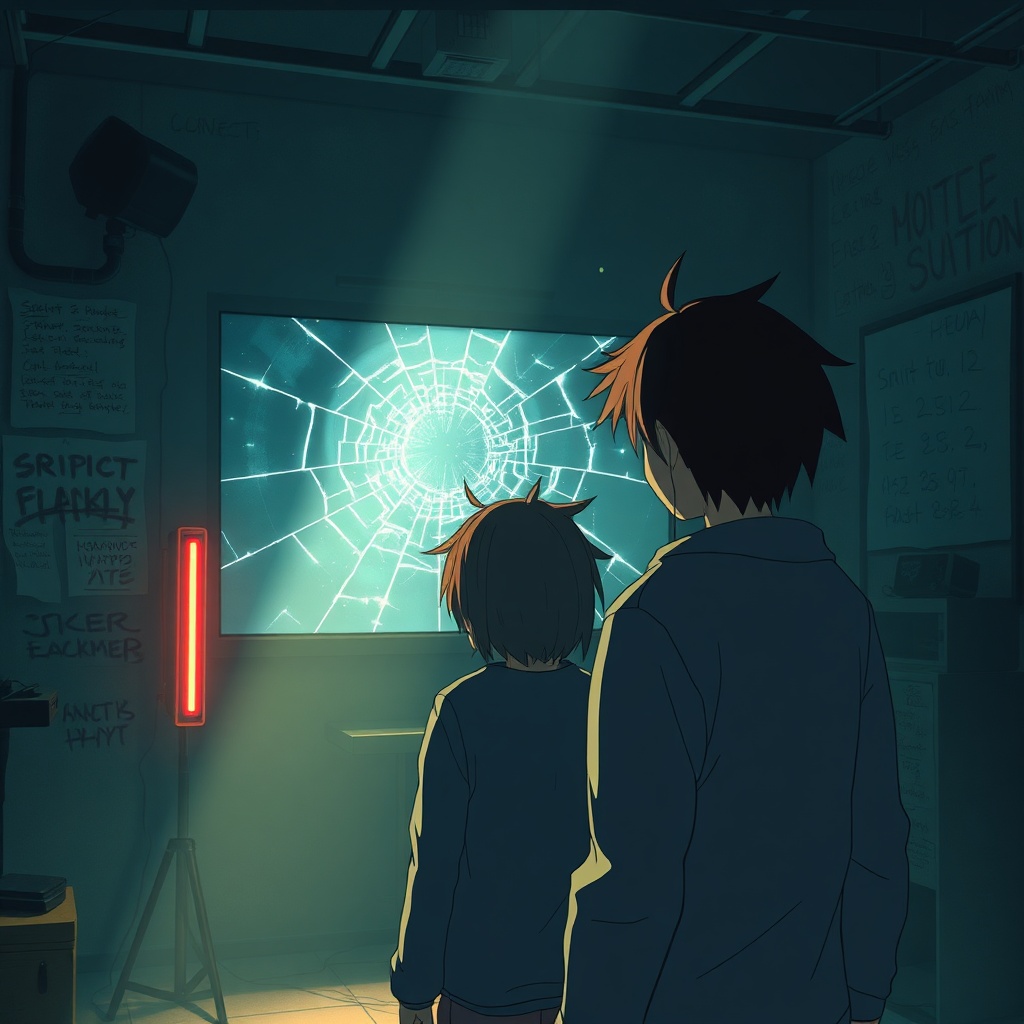
Another technique is “frame‑break editing,” where the camera pans out of the animated world to reveal a real‑world studio backdrop, effectively collapsing the fourth wall visually. This requires meticulous compositing: rotoscoped characters are layered over live‑action plates, demanding higher render budgets (up to 30 % more than standard episodes).
Sound design also plays a role; meta scenes frequently employ “meta‑reverb,” a layered echo that mimics the acoustic of a theater, reminding viewers of the performance context. From a storytelling perspective, these tools enable recursive plot structures—characters might comment on their own character arcs, creating a feedback loop that deepens thematic resonance. The payoff is twofold: it rewards hyper‑engaged fans with Easter eggs while also inviting casual viewers to question the nature of fiction itself.
Emerging Trends and Risks for Meta‑Fiction Anime
Looking ahead, the trajectory of meta fiction anime points toward an ecosystem where interactivity and self‑reference converge. With the rise of VR and AR platforms, studios are already prototyping episodes that let viewers physically “step into” the animated world, blurring the boundary between audience and character even further. This could spawn a new sub‑genre of “immersive meta” series, where the fourth wall isn’t just broken—it’s dissolved.
The commercial success of recent meta titles is prompting overseas collaborations; Western studios are eyeing co‑productions that blend Japanese meta sensibilities with Hollywood’s penchant for meta‑narratives, potentially birthing bilingual franchises that operate on multiple meta layers. However, if every series tries to be meta, the novelty wears off and audiences may experience “meta fatigue.” Studios will need to innovate beyond simple fourth‑wall jokes—perhaps by weaving meta‑theory into character development or using it to comment on real‑world issues like AI ethics or digital identity. The next wave will likely be judged not only on cleverness but on how meaningfully the meta elements serve the story’s emotional core.
1. Last Exile (Gonzo, 2003)
World‑building & Narrative Engine
Last Exile’s sky‑bound world is a meticulously engineered tapestry of geo‑political tension, where the Grand Stream serves as both trade artery and battlefield. The Prester Empire’s authoritarian grip over the Stream’s navigation rights creates a chokepoint that forces the protagonists’ vanships into a cat‑and‑mouse dance with Imperial Juggernaut drones. This pressure‑cooker geography forces each episode’s plot to orbit around resource scarcity—fuel, map fragments, and the mysterious “Aural” crystals—turning the very act of flight into a narrative engine.
Meta‑awareness Techniques
Beyond the macro‑politics, the series embeds meta‑awareness via its “Cantus conditioning”—a recurring auditory motif that signals when the story is about to cross a genre line (steampunk, noir, or high‑fantasy). The visual cue of a split‑screen “behind‑the‑scenes” diagram, used sparingly but purposefully, reminds viewers of the constructed nature of the world while still maintaining immersion.
2. Gintama (Sunrise, 2006)
World‑building & Satirical Geography
Gintama’s Edo‑Era Alternate Universe functions as a hyper‑elastic sandbox where an alien occupation—the Amanto—warps historical geography into a perpetual state of cultural collision. The series exploits this mash‑up by turning the city’s districts into territorial metaphors: the Yoshiwara red‑light quarter doubles as a marketplace for intergalactic smuggling, while the Shogunate’s castle becomes an absurd bureaucracy that constantly rewrites its own laws.
Meta‑aware Protagonist
Gintoki’s habit of breaking the fourth wall to comment on his own series’ budget cuts, animation hiccups, and the absurdity of fan expectations turns his monologues into a running critique of the medium itself.
3. Excel Saga (J.C.Staff, 1999)
Genre‑bending World‑building
Excel Saga collapses every conceivable anime genre into a single, hyper‑absurd cityscape that is itself a living parody of production pipelines. Each episode’s “city block” is re‑skinned to match a new trope—mecha, magical girl, horror—forcing the narrative to constantly renegotiate its own internal logic.
Extreme Meta‑commentary
Excel and Hyatt literally comment on budget constraints, script rewrites, and animation schedules. Their fourth‑wall admissions are encoded in the storyboard as “budget‑alert” tags, prompting a distinct visual cue—a sudden flash of the production credit sequence in the middle of a fight.
4. Saiki Kusuo no Psi‑nan (J.C.Staff, 2016)
Everyday Setting as Pressure Vessel
The “Everyday Life” setting of Modern Day Japan becomes a pressure vessel for Saiki’s psychic overload, turning ordinary geography—schools, supermarkets, commuter trains—into arenas of exaggerated cause‑and‑effect. The core mechanic is a deterministic power‑scale that quantifies how many minor inconveniences Saiki can suppress before his psychic fatigue spikes, creating a ticking‑clock tension that permeates each slice‑of‑life vignette.
Meta‑narrative Voice
Saiki’s narration doubles as a meta‑tool: he frequently addresses the viewer with dead‑pan explanations of how his powers undermine the very tropes he’s forced to inhabit. By spoofing classic “power‑up” sequences and fanservice moments, the series turns its self‑awareness into a balancing act—using meta‑humor to undercut genre expectations while still delivering a cohesive emotional arc about isolation and the desire for normalcy.
5. Lucky Star (Kyoto Animation, 2007)
Suburban Realism as Meta‑library
Lucky Star anchors its world‑building in a hyper‑realistic suburban geography—Kasukabe, Saitama—where the ordinary rhythm of school life is punctuated by a cascade of pop‑culture reference points. Each café, train car, and classroom becomes a stage for layered callbacks that function as both world‑building and audience engagement.
Self‑referential Presentation
The show’s opening/ending sequences repeatedly morph to parody contemporaneous anime titles, directly acknowledging the series’ own fandom. Characters also pause mid‑conversation to discuss the current anime season, effectively turning the diegetic world into a meta‑forum.
6. Sayonara, Zetsubou Sensei (Studio Deen, 2007)
Linguistic Labyrinth Geography
The high‑school setting of Mitsuba Academy is a linguistic labyrinth, where each classroom’s decor doubles as a visual pun on the episode’s thematic focus. The series’ core mechanic—exaggerated word‑play that manifests as physical manifestations (e.g., “despair” turning the hallway into a bleak wasteland)—creates a tangible geography of negativity that characters must traverse.
Narrative Commentary
Nozomu Itoshiki’s sighs and asides serve as narrated commentary on the episode’s bleakness, while episode titles stretch into paragraph‑length puns that reference current events and anime clichés.
7. KonoSuba: God’s Blessing on this Wonderful World! (Studio Deen, 2016)
Game‑system World‑building
KonoSuba’s Erina realm is a textbook RPG map, complete with level‑gates, quest boards, and stat sheets that toggle visible UI elements over the animated world. The explicit game‑system logic means that every monster encounter and loot drop is governed by a visible dice roll, turning the fantasy geography into a living rulebook.
Fourth‑wall Narration
The narrator frequently breaks the fourth wall, addressing the audience with sardonic commentary on the party’s blunders and the genre’s overused tropes. This meta‑narration is encoded in the script as an “NPC‑commentary” tag, prompting a distinct visual filter that mimics a game’s tooltip.
8. No Game No Life (Madhouse, 2014)
Game‑theory Dominated World
Disboard’s world‑building rests on the absolute dominance of game theory: every societal rule is a literal “Ten No Rules” contract, and geography is mapped by board‑game tiles that shift according to player strategy. Floating islands and labyrinthine arenas react to the protagonists’ tactical choices, making the environment a responsive opponent.
Audience as Co‑players
Sora and Shiro treat the audience as co‑players, often pausing to explain game mechanics or referencing real‑world titles. Production‑wise, these moments are tagged as “meta‑strategy cues,” triggering a subtle “game‑grid” overlay in the background.
9. One Punch Man (Madhouse, 2015)
Hero Association as Societal Architecture
The City Z setting operates under a hyper‑bureaucratic Hero Association whose ranking system functions as a merit‑based caste system, dictating everything from city zoning to media coverage. Quantified hero grades create tension between public perception and private reality; Saitama’s omnipotence is reduced to a statistical anomaly that the system cannot classify.
Meta‑scale Commentary
Saitama’s dead‑pan monologues act as a meta‑lens, directly addressing viewers about the absurdity of power‑scaling tropes while the opening sequence parodies other superhero series. In production, these moments are flagged as “scale‑break” tags, prompting a stylized visual cue—a sudden desaturation that signals a meta‑break.
10. The World God Only Knows (Madhouse, 2010)
Dual Geography of Reality & “Heart‑Capture” Zones
The premise of Tokyo blended with “Loose‑leaf” Spirits creates a dual geography: real‑world urban districts overlaid with a hidden map of “heart‑capture” zones. Each girl’s affection arc is treated as a video‑game level, complete with health bars, combo counters, and boss‑fight dialogues.
Meta‑tutorial Asides
Keima’s frequent “player‑to‑viewer” asides serve as a meta‑tutorial, breaking the fourth wall to explain his strategy as if addressing a live‑stream audience. Production encodes these as “guide‑layer” tags that trigger a subtle HUD overlay during his explanations.
Listen, kiddo, the moment studios started slapping “meta” on a title like a cheap sticker, I knew the market was getting sloppy. You can’t just hand a character a microphone and call it philosophy; you need a backbone of genuine self‑awareness, or you’re just serving up pretentious popcorn. The veterans who survived the dark ages of hand‑drawn cels can smell a hollow gimmick from a mile away, and they’ll call you out on it faster than a director shouts “cut!” when the lighting’s wrong.
That said, when it’s done right—when the narrative’s meta‑layer actually deepens the protagonist’s crisis and not just the writer’s ego—it becomes a weapon of mass introspection. The new wave of meta fiction anime is a double‑edged sword: it can elevate the medium to philosophical heights or drag it into a self‑indulgent abyss. My advice? Keep your eyes on the story, not the buzzword. If the fourth wall is broken because it serves the character’s growth, you’ve got a masterpiece. If it’s broken just to say “look how clever we are,” you’ve got a one‑season wonder that will fade faster than a meme.
Check out the meta-fiction-anime archives.