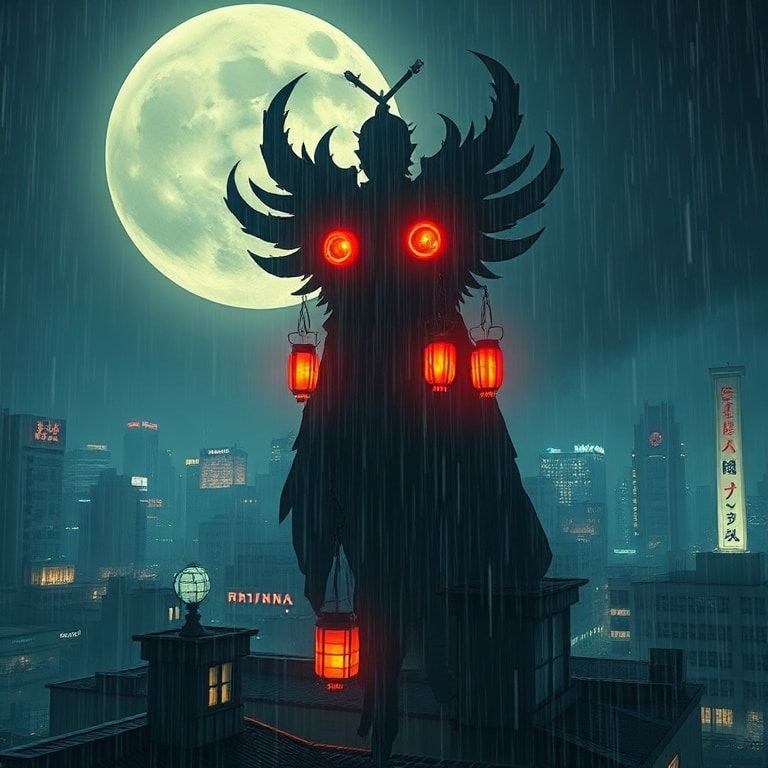
Sukuna Power Scale Unleashed: How Ryomen Sukuna Stacks Up Against Anime’s Deadliest Villains
When the conversation drifts toward the ultimate showdown of anime antagonists, the phrase Sukuna power scale inevitably surfaces, demanding a forensic look at the cursed king’s raw might. Fans argue, critics dissect, and the internet erupts with tier lists that try to quantify the unquantifiable. But what if we stopped treating these numbers as mere hype and actually traced the lineage of power from ink to screen?
Sukuna Power Scale: Verified News & Source Context

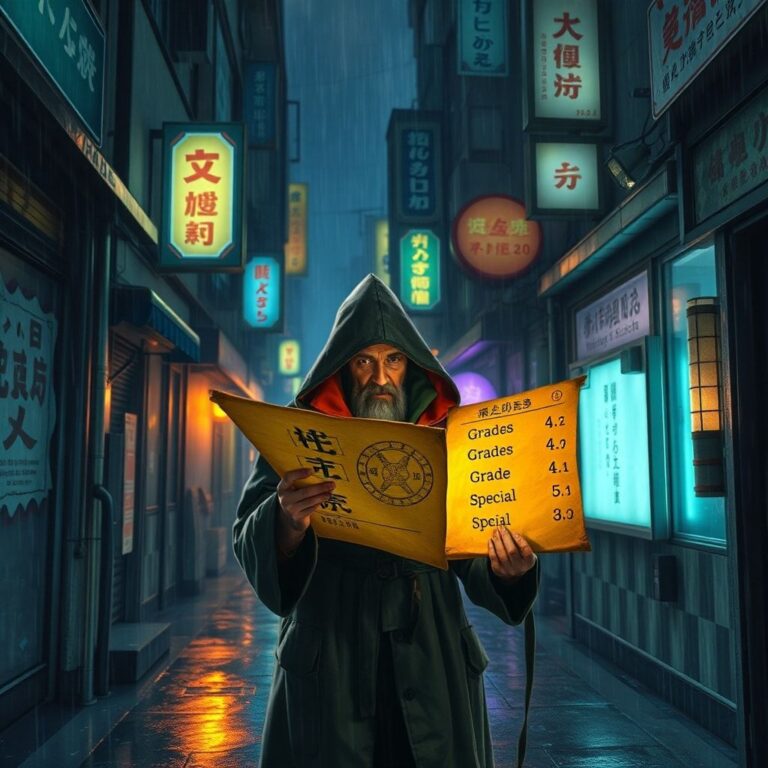
Ryomen Sukuna first slithered onto the manga scene in Jujutsu Kaisen #1 (2018), instantly branding himself as the “King of Curses.” His introduction wasn’t a subtle cameo; Gege Akutami handed him a mythic aura by sealing his cursed energy within twenty dismembered, mummified fingers scattered across the globe. This narrative device does double duty: it fuels the plot’s treasure‑hunt premise while establishing Sukuna as a fragmented, yet omnipotent, threat. The official project page confirms his classification as a Special‑grade cursed object—the apex of cursed‑technique hierarchy, a rank reserved for entities that can rewrite reality with a whisper.
The “Ten Shadows” technique, unveiled in Chapter 212, showcases Sukuna’s ability to summon ten distinct, autonomous cursed spirits—each a mirror of his own malevolence. This isn’t just a flashy move; it reflects a deep mastery over cursed energy manipulation, allowing simultaneous multi‑target assaults without diluting potency. Later, Chapter 236 drops “The slash that cuts the world,” a single strike capable of cleaving dimensions, underscoring his status as a force of existential disruption. Production-wise, the anime’s adaptation of these moments demanded a leap in animation fidelity, prompting MAPPA to allocate premium resources for fluid motion capture and dynamic lighting, cementing Sukuna’s battles as visual landmarks in modern shōnen anime.
Old Guard Perspective: Historical Context of Villainous Titans

To gauge Sukuna’s place on the villain pantheon, we must rewind to the era of early shōnen antagonists—think Frieza’s imperial cruelty in “Dragon Ball Z” or Light Yagami’s moral decay in “Death Note.” Those characters thrived on psychological warfare and world‑shaping ambitions, yet their power displays were bounded by the era’s animation limits. The 1990s ushered in a shift: studios like Sunrise began experimenting with hyper‑realistic mecha battles, paving the way for power scaling as a narrative metric.
When MAPPA took the reins for “Jujutsu Kaisen,” they inherited a legacy of pushing visual boundaries, reminiscent of Ufotable’s work on “Demon Slayer.” Sukuna’s cursed techniques echo the grandiosity of earlier villains while injecting a modern twist—cursed energy as a quantifiable resource, akin to chakra in “Naruto” but with a darker, more visceral aesthetic. Moreover, the market’s appetite for tier lists exploded alongside streaming platforms, turning fan speculation into a quasi‑academic discipline. Sukuna’s fragmented finger plotline mirrors the collectible craze of the 2000s, where physical artifacts (think Pokémon cards) drove engagement, demonstrating how industry trends shape storytelling mechanics.
Technical Crunch: Dissecting Sukuna’s Lore Mechanics

At the core of the Sukuna power scale lies his cursed energy—an omnipresent, malleable force that defies conventional limits. Each of his twenty fingers acts as a sealed reservoir, each containing a fraction of his original might. When a host like Yuji Itadori consumes a finger, the cursed energy integrates with the host’s own, creating a hybrid power level that can temporarily eclipse even Special‑grade sorcerers. This mechanic introduces a dynamic scaling system: the more fingers consumed, the higher the potential output, but at the cost of the host’s autonomy.
The Ten Shadows technique operates on a tiered hierarchy: each summoned spirit inherits a portion of Sukuna’s base cursed energy, yet they can act independently, allowing parallel processing of attacks—a concept reminiscent of multi‑threading in software engineering. “The slash that cuts the world” is a singularity attack, effectively a localized rupture in spacetime, suggesting Sukuna can manipulate the fabric of reality itself. From a production standpoint, animators employed volumetric fog and particle simulations to visualize the distortion, reinforcing the narrative claim that Sukuna’s attacks are not merely physical but metaphysical. Understanding these layers clarifies why Sukuna consistently outclasses foes whose abilities are confined to elemental or martial domains.
Future Implications: What’s Next for the Sukuna Power Scale?
The trajectory of Sukuna’s arc hints at an escalation that could redefine the entire power hierarchy of shōnen anime. With the manga approaching its climax, speculation abounds that Sukua—Sukuna’s potential evolution—might merge all twenty fingers, achieving a god‑like state that eclipses even the primordial curses introduced in early arcs. Such a development would force the series to confront the limits of cursed energy, possibly introducing new mechanics like “Cursed Domain Overload” or a meta‑narrative where the very concept of power scaling collapses under its own weight.
Adaptation-wise, any future seasons or spin‑offs will need to balance fan expectations with narrative coherence. Over‑inflating Sukuna’s power risks alienating viewers who appreciate the tension of a balanced threat. Conversely, under‑delivering could render the “Sukuna power scale” moot, eroding the mythos that has become a cultural touchstone. Studios may opt for a hybrid approach: retain the visceral impact of his attacks while exploring the psychological toll on hosts, thereby enriching the character beyond raw strength.
And let’s not forget the industry angle: MAPPA’s willingness to pour budget into Sukuna’s battles signals a shift toward spectacle‑driven storytelling. If the next arc simply amps up the numbers without deepening the lore, we’ll see a backlash from the veteran otaku crowd who remember when a villain’s menace was measured in dread, not data. My advice? Keep the scale terrifying, but let the narrative weight stay grounded in character stakes. Otherwise, we’ll all be left with a beautifully animated, yet soulless, power ladder.
Check out the Ryomen Sukuna archives.
Check out the Ryomen Sukuna archives.