When the Music Takes Over: 5 Anime Soundtrack Movies That Redefine Cinema
Spirated Away Soundtrack Overview

The Spirited Away soundtrack remains a benchmark for how a score can become the beating heart of an animated feature.
Released on 11 July 2001, the album comprises 20 instrumental tracks plus the ending song “Always With Me,” totaling 21 tracks that run just under an hour—59 minutes 51 seconds of pure orchestral storytelling.
This precise runtime is not accidental; each cue was meticulously timed to align with narrative beats, ensuring that the music never feels superfluous. The original release was issued by Tokuma Japan Communications, and the score earned the prestigious Annie Award for Music in a Feature Production, cementing Joe Hisaishi’s reputation on the global stage.
| Release | Date | Tracks | Runtime |
|---|---|---|---|
| Original soundtrack | 11 July 2001 | 21 (20 instrumental + “Always With Me”) | 59 min 51 sec |
| Image album | 4 April 2001 | 10 | 37 min 20 sec |
| Double‑disc vinyl LP (re‑issue) | 2020 | — | — |
Beyond the initial launch, the soundtrack saw an image album aimed at casual listeners who wanted a taste without the full immersion.
In 2020, a double‑disc vinyl LP re‑issue catered to audiophiles, showcasing the timeless appeal of Hisaishi’s compositions. Vinyl’s warm analog texture adds a new dimension, allowing listeners to experience the same motifs that guided Chihiro’s journey, now with a tactile, nostalgic quality.
The continued re‑releases underscore how the industry treats iconic scores as evergreen assets, capable of generating revenue across formats and generations.
For those seeking the primary source, the official project page offers a comprehensive tracklist, composer notes, and production credits, serving as a vital reference for scholars and fans alike.
The Early Era of Anime Soundtrack Movies
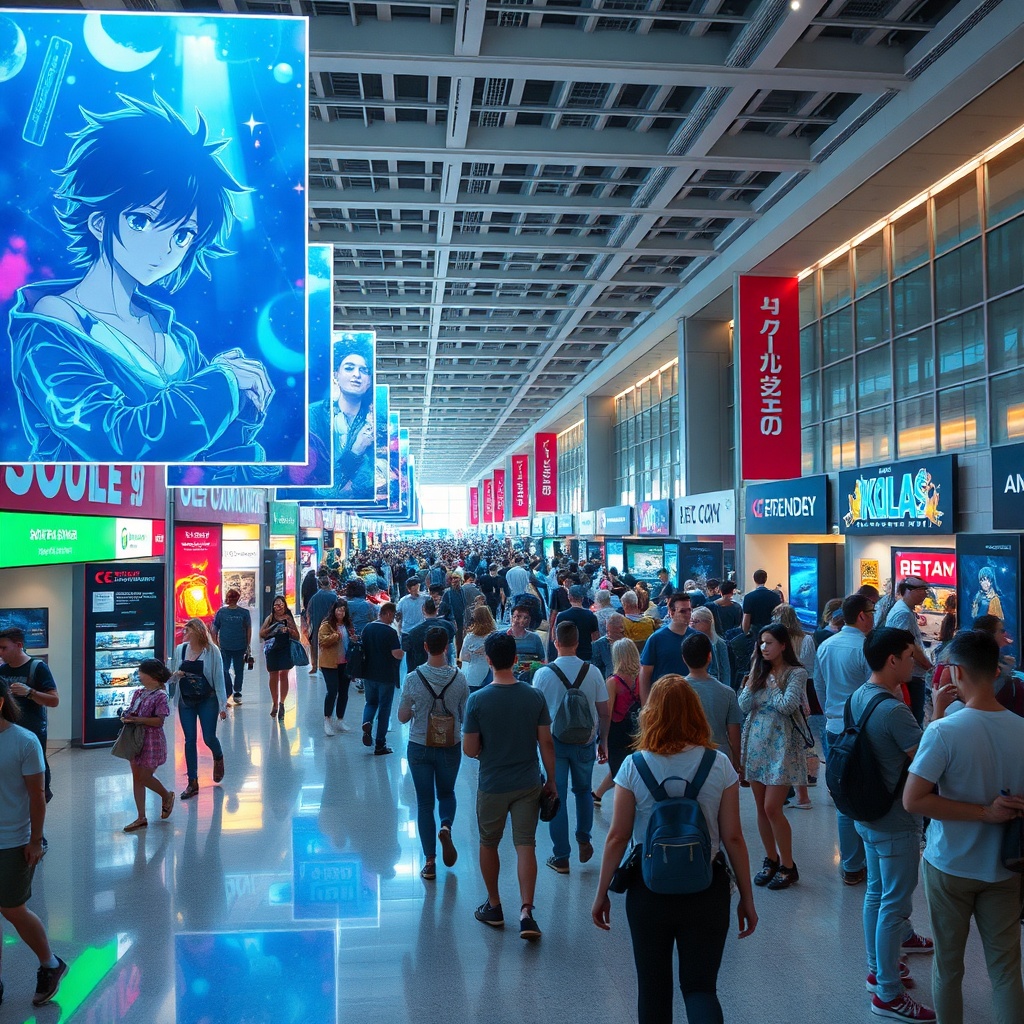
Before Hisaishi’s sweeping melodies dominated the soundscape, anime relied heavily on synth‑heavy, pop‑infused scores that mirrored the techno‑optimism of the 1980s. Films like Akira (1988) and Royal Space Force (1987) employed experimental electronic composers such as Geinoh Yamashirogumi, whose avant‑garde approach set a precedent for integrating sound as narrative propulsion.
However, these early works often treated music as background ambience rather than a co‑author of story.
The 1990s marked a turning point. Studio Ghibli, under Hayao Miyazaki’s direction, began collaborating with Hisaishi, whose classical training introduced leitmotif techniques reminiscent of Hollywood’s golden age. This partnership elevated the perception of anime soundtracks from decorative to structural.
The shift also reflected broader market changes: home video and international festivals demanded higher production values, and a sophisticated global audience began to appreciate nuanced audio‑visual storytelling.
Comparatively, Western animated features like Disney’s The Lion King (1994) were already leveraging orchestral scores to convey emotional depth. Ghibli’s adoption of similar methods signaled a convergence of artistic standards, positioning anime soundtrack movies as serious cinematic experiences rather than niche entertainment.
The experimental daring of the old guard laid the groundwork for the refined, score‑centric masterpieces celebrated today.
How Soundtracks Shape Narrative in Anime Film
From a technical standpoint, a soundtrack’s efficacy hinges on three pillars: thematic consistency, orchestration depth, and synchronization precision.
Thematic Consistency
Hisaishi’s work on Spirited Away exemplifies thematic consistency through recurring leitmotifs—most notably the “River Theme,” which resurfaces whenever Chihiro confronts change. This motif is introduced in a minor key, then subtly shifts to a major mode during moments of triumph, providing an audible cue for character development.
Orchestration Depth
The score employs a full symphonic palette: woodwinds convey the ethereal quality of the spirit world, while low brass underscores the looming threat of Yubaba’s bureaucracy. Percussive elements, such as taiko drums, punctuate action sequences, creating a kinetic rhythm that mirrors on‑screen movement. The meticulous layering results in a rich harmonic texture that can be dissected into over 30 individual stems, each isolated for remixing in live performances.
Synchronization Precision
Precision is achieved through “spotting,” where the composer watches a rough cut and marks exact cue points. In Spirited Away, Hisaishi collaborated directly with editor Takeshi Seyama, aligning musical crescendos with visual peaks—like the moment the bathhouse’s lanterns flare. This tight coupling ensures the audience’s emotional response is guided not just by visuals but by an inseparable auditory thread, turning the soundtrack into a narrative engine rather than a decorative afterthought.
Future Directions for Anime Soundtrack Movies
Streaming platforms now commission original scores that can be dynamically mixed for immersive formats like Dolby Atmos, offering listeners a three‑dimensional sound field that places them inside the story.
The rise of virtual‑reality experiences invites composers to craft adaptive music that reacts to user choices, turning static scores into living soundscapes.
Commercially, the continued re‑issuance of classic soundtracks on vinyl and high‑resolution digital formats signals a lucrative market for nostalgia‑driven collectors.
Simultaneously, emerging composers—trained in both classical composition and electronic production—are blending orchestral motifs with synth textures, creating hybrid scores that appeal to purists and modern audiences alike. This cross‑pollination could usher in an era where anime soundtrack movies not only accompany visuals but also stand alone as concert‑hall experiences, further blurring the line between film and performance art.
1. Last Exile (Gonzo, 2003)
Last Exile is a masterclass in world‑building through aeronautical constraints. The series’ sky‑bound continents float above an endless aether called the Grand Stream, a wind‑tunnel that acts as both highway and hazard. Prester, the iron‑fisted theocratic regime, controls the Grand Stream’s traffic by issuing “White Whistles” – limited‑use navigation permits that force pilots into a choke‑point economy. Vanships, the low‑tech, steam‑powered aircraft, are mechanically simple but must obey the Stream’s unpredictable currents, turning each chase into a calculus of altitude, fuel scarcity, and political permission.
The narrative tension arises from these physical and bureaucratic shackles. When the protagonists’ vanships lose a White Whisper, they’re thrust into a lawless “No‑Fly Zone,” forcing alliances with rogue sky‑pirates who exploit the Grand Stream’s blind spots. The music mirrors this tension: Hironobu Kageyama’s synth‑orchestral score spikes with each gust, while moments of silence echo the terrifying emptiness of the aether. The world‑building thus drives plot as much as any character arc – every gust is a plot point, every permit a ticking clock.
2. Your Name (CoMix Wave Films, 2016)
The body‑swapping mechanic in Your Name is anchored to a literal red thread that stretches across time and space. This thread is not a romantic metaphor but a diegetic conduit tied to a comet’s fragment, which momentarily aligns the quantum fields over the rural town of Miyamizu and the metropolis of Tokyo. The geographic dichotomy—quiet rice paddies versus neon‑drenched skyscrapers—creates spatial tension: each swap forces the characters to navigate a world they have never physically inhabited, requiring the audience to constantly re‑orient.
Radwimps’ soundtrack leverages this tension by juxtaposing traditional Japanese instruments (shakuhachi, koto) with modern rock tropes. The folk‑inspired “Sparkle” motifs play when the protagonists are grounded in their hometowns, while distorted guitar riffs crackle during the comet‑induced “time‑fracture” sequences. The music’s ebb and flow act as an auditory map of the red thread’s tension, reminding us that the world‑building mechanic is not a gimmick but the narrative’s invisible spine.
3. Princess Mononoke (Studio Ghibli, 1997)
Princess Mononoke’s world is a literal clash of industrialization and animistic spirituality. Iron Town, a soot‑caked settlement built around a copper smelter, embodies a feudal‑industrial polity that extracts resources from the surrounding Forest Realm, a living ecosystem guarded by kami and the colossal Shishigami. The forest’s “life‑force” operates as a magical system: its health is measured by the flow of invisible “spirit currents,” which can be poisoned or rejuvenated by human activity. Each act of deforestation triggers a measurable drop in the realm’s aura, visible in the film’s visual palette.
Hisaishi’s score mirrors the duality: Shinto‑inspired chants underscore the forest’s sacred moments, while Celtic string arrangements underscore the human ambition of Iron Town. The leitmotif of the Forest Spirit shifts from minor to dissonant when the deity is wounded, creating an audible representation of ecological collapse. The world‑building forces characters into a moral calculus: the very resources that feed the town also accelerate its own demise, a tension the soundtrack amplifies at every turn.
4. A Silent Voice (Kyoto Animation, 2016)
The film’s world‑building is subtle but ruthless: a contemporary Japanese high school operates as a micro‑society with its own hierarchies, rules, and unspoken codes. Bullying functions as a systemic force, not a series of isolated incidents; the school’s spatial layout—crowded hallways, echoing classrooms—reinforces the feeling of inescapable scrutiny. The protagonist’s deafness introduces a physical constraint that reshapes communication, turning sign language into a visual narrative tool that both isolates and connects.
Kensuke Ushio’s minimalist electronic score reflects this constrained world. Sparse piano notes punctuate moments of silence, forcing the audience to sit with the discomfort of unspoken pain. When the film shifts to sequences where sign language dominates, the soundtrack drops to near‑zero, letting the visual grammar speak for itself. The interplay between auditory minimalism and visual silence demonstrates how world‑building—through architecture and disability—drives emotional tension more effectively than any expository dialogue.
5. Perfect Blue (Madhouse, 1997)
Perfect Blue plunges the viewer into a hyper‑mediated Tokyo where the protagonist’s identity is fractured by the very media that birthed her fame. The city is portrayed as a labyrinth of reflective surfaces—billboards, CCTV, streaming video—creating a feedback loop that blurs reality and performance. This urban environment acts as a psychological pressure cooker: each reflective surface is a narrative trigger that forces the protagonist to confront a version of herself she never authorized.
Masahiro Ikumi’s sound design capitalizes on this pressure. Ambient city noise is mixed with low‑frequency drones that swell as the protagonist’s paranoia spikes, while fragmented pop jingles flicker in and out, mirroring her slipping grip on what’s real. The auditory landscape is deliberately disorienting, turning the city itself into an antagonist. The world‑building—Tokyo as an omnipresent surveillance grid—makes the score an inseparable character, amplifying the film’s commentary on media‑induced identity loss.
The moment you realize a soundtrack is doing the heavy lifting, you know the studio either struck gold or is desperately trying to mask a narrative that can’t stand on its own. Hisaishi’s work on Spirited Away is the gold standard—every note is a plot point, every swell a character arc. Newer titles that claim to be “soundtrack‑driven” often fall flat because they lack that disciplined integration; they’re just pretty background noise for a story that’s already lost its way.
And don’t get me started on the wannabe composers flooding the market with “epic” synth‑driven tracks that sound like a trailer for a video game that never existed. If you can’t weave a melody that feels like it belongs to the world you’ve built, you might as well hand the audience a generic pop song and call it a day. The true art lies in restraint—knowing when silence is louder than any orchestra. That’s the secret sauce that separates a timeless anime soundtrack movie from a forgettable audiovisual gimmick.
Check out the anime soundtrack movies archives.