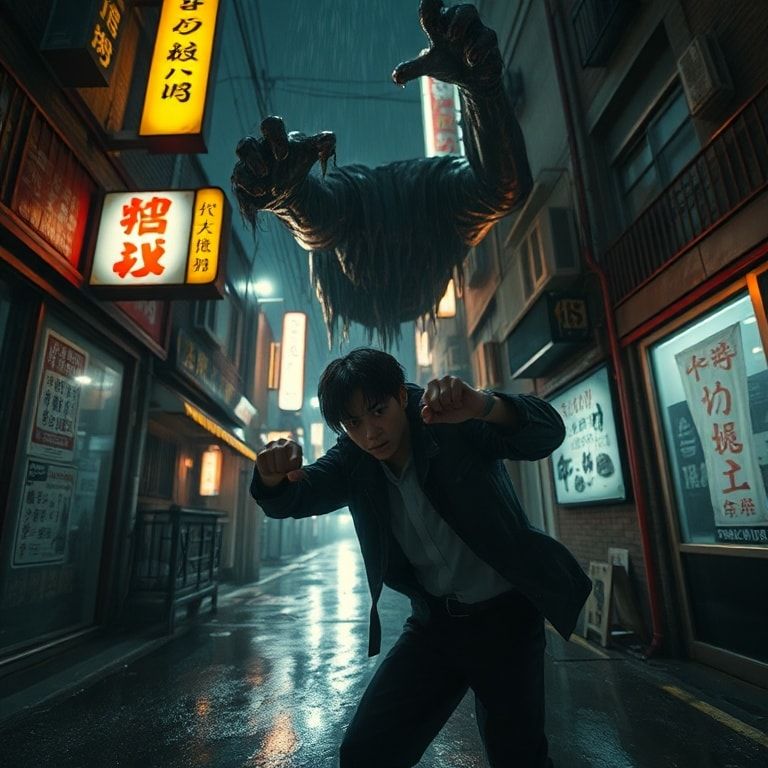
Goku vs Saitama: Who Really Holds the Universe’s Ultimate Power in 2026?
The clash of titans that has ignited forums worldwide finally hits the mainstream in 2026. Goku vs Saitama is more than a meme; it’s a litmus test for power scaling logic across generations. Fans brace for a showdown that could rewrite anime history.
Verified News & Source Context

Goku first burst onto the manga scene in chapter #1 of Dragon Ball, titled “Bulma and Son Goku,” published December 3 , 1984 in Weekly Shōnen Jump issue #51. Created by Akira Toriyama, the character draws heavily from Sun Wukong, the legendary Monkey King of Journey to the West. This mythic lineage gives Goku an archetypal hero’s journey that resonates across cultures, explaining his enduring popularity. His Saiyan heritage—born Kakarot on Planet Vegeta—adds a sci‑fi twist that differentiates him from traditional folklore heroes, allowing the series to explore themes of alienation, evolution, and limitless potential.
In the Japanese anime, Goku is voiced by the legendary Masako Nozawa, whose performance has become synonymous with the character’s indomitable spirit. The English dub has seen a rotating cast—Sean Schemmel, Ceyli Delgadillo, Stephanie Nadolny, and Colleen Clinkenbeard—each bringing a distinct flavor that reflects the franchise’s global reach. Goku’s appearances span multiple adaptations: the original Dragon Ball, the power‑driven Dragon Ball Z, the controversial GT, the multiverse‑expanding Super, and the comedic Daima. This breadth demonstrates how the character has been reinterpreted to suit shifting audience expectations, from pure martial‑arts adventure to god‑level spectacle. The sheer volume of material provides a massive data set for power‑scaling debates, especially when pitted against a character like Saitama, whose own premise is a satire of such escalation.
For primary source verification, consult the official project page. The page aggregates publication dates, voice actor credits, and adaptation timelines, serving as a reliable anchor for any analytical claim.
Historical Context – The Old Guard Perspective

When Dragon Ball first aired, the anime industry was dominated by shōnen titles that emphasized friendship, training arcs, and escalating power levels. Studios like Toei Animation set the visual template for long‑running series, and Toriyama’s art style became a benchmark for dynamic fight choreography. By the early 2000s, the market saw a shift: audiences grew weary of endless power‑up tropes, prompting creators to experiment with meta‑narratives and deconstruction. This environment birthed One Punch Man, a webcomic‑turned‑anime that lampooned the very excesses that Dragon Ball Z had popularized.
The juxtaposition of Goku’s earnest quest for strength against Saitama’s bored omnipotence reflects a broader industry dialogue. While Goku’s evolution mirrors the classic hero’s journey—each saga raising the stakes—Saitama embodies a post‑modern critique, questioning the purpose of ever‑higher power ceilings. Studios have responded by blending reverence with parody; Dragon Ball Super introduced “Ultra Instinct,” a form that feels almost self‑aware, acknowledging the absurdity of limitless escalation. Meanwhile, One Punch Man has experimented with serious arcs, hinting at a possible convergence where satire and sincerity coexist.
From a market perspective, both franchises have proven resilient. Dragon Ball continues to dominate merchandise sales, while One Punch Man commands streaming numbers that rival legacy titles. Their coexistence in 2026 signals a healthy diversification of fan expectations, setting the stage for a showdown that is as much about cultural commentary as it is about raw power.
Technical Crunch: Goku vs Saitama Lore Mechanics
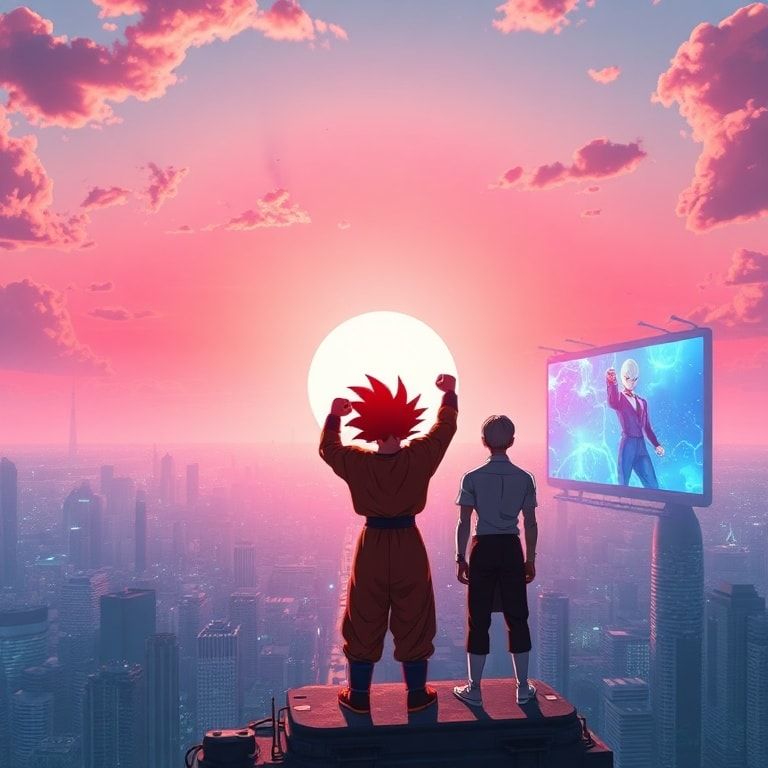
Understanding the mechanics behind Goku’s and Saitama’s abilities requires dissecting two fundamentally different narrative engines. Goku’s power is quantified through a tiered transformation system: base Saiyan, Super Saiyan (multiple levels), Super Saiyan God, Super Saiyan Blue, and Ultra Instinct. Each form introduces new speed, strength, and ki‑manipulation parameters, often expressed in fan‑generated metrics like “damage per second” or “energy output in megajoules.” The series also employs “power scaling” as a plot device, allowing Goku to surpass foes by sheer narrative will, a technique that has been refined over decades of storytelling.
Conversely, Saitama’s power is deliberately undefined. The premise of One Punch Man is that he can defeat any opponent with a single punch, rendering conventional scaling moot. The only measurable aspect is his emotional state; boredom and existential ennui are the true limits. In‑universe, Saitama’s “strength” is treated as a gag, yet the manga occasionally hints at a metaphysical ceiling—his “serious punch” is a rare, calibrated move that suggests hidden depth. This duality creates a paradox when pitting him against Goku: is the battle decided by narrative logic (Goku’s ever‑rising forms) or by the satire‑driven absolute (Saitama’s one‑hit KO)?
From a production standpoint, animators must decide how to visualize these abstract concepts. Goku’s Ultra Instinct is rendered with shimmering particle effects and fluid motion blur, emphasizing reflexive combat. Saitama’s attacks, by contrast, are often shown with stark, minimalist frames—sometimes just a single, clean punch silhouette—to highlight his effortless dominance. The clash of visual styles becomes a meta‑commentary on how power is communicated to the audience, making the technical design as crucial as the lore itself.
Future Implications for the Power‑Scaling Universe
The prospect of an official Goku vs Saitama crossover—or even a collaborative event—carries seismic implications for the anime industry. From a commercial angle, merging two powerhouse franchises could generate unprecedented merchandising revenue, from limited‑edition figures to joint video game DLCs. Streaming platforms would likely vie for exclusive rights, potentially reshaping licensing models and prompting a new wave of co‑production agreements between Toei Animation, J.C. Staff, and the studios behind One Punch Man. Such a partnership would also test the limits of intellectual property negotiations, setting a precedent for future cross‑universe collaborations.
Narratively, the encounter forces creators to confront the philosophical underpinnings of power. Will the story honor Goku’s incremental growth or uphold Saitama’s satirical omnipotence? The answer could influence how future shōnen series handle escalation, perhaps encouraging more self‑aware storytelling that balances earnest heroism with meta‑commentary. Moreover, fan reception will likely dictate whether studios double‑down on deconstruction or revert to classic power fantasies. In any case, the ripple effect will be felt across manga, anime, and even Western adaptations, as creators worldwide observe the market’s response to such a high‑stakes experiment.
But here’s the gritty truth: power scaling isn’t just a numbers game; it’s a cultural barometer. When you pit a character built on endless progression against a parody that kills with one swing, you force the industry to ask—are we telling stories for drama or for the meme‑lords? The answer will shape the next decade of shōnen, and anyone who thinks this is just a fan‑service stunt is missing the forest for the punch.
Check out the Goku vs Saitama archives.
Check out the Goku vs Saitama archives.