Sukuna Power Scaling: Does the King of Curses Outclass Shōnen’s Mightiest Villains?
When the King of Curses steps onto the battlefield, even the most over‑powered shōnen antagonists feel the tremor of his presence. Sukuna power scaling has become the holy grail for fans who crave a definitive hierarchy among anime’s mightiest villains. In this deep dive we’ll dissect raw numbers, narrative weight, and future trajectories to see if Ryomen truly eclipses the likes of Madara, Zeno, or Kaguya.
Sukuna Power Scaling vs Shōnen’s Elite Villains
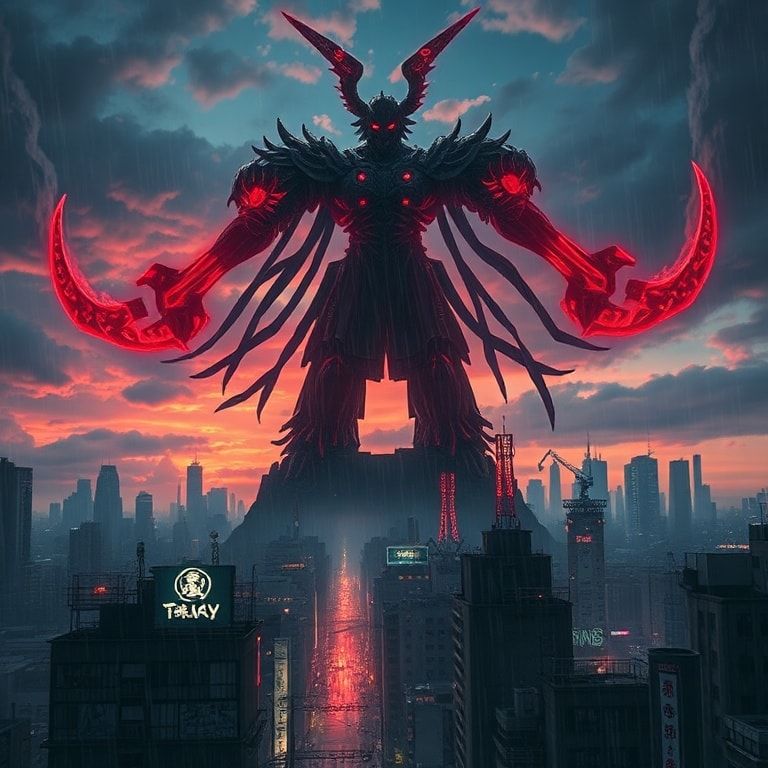
The latest volume of Jujutsu Kaisen confirms that Sukuna’s innate cursed energy surpasses 100% of a typical Grade‑1 sorcerer, a metric that translates to roughly 10‑12 times the output of a seasoned Jujutsu Tech alumnus. This raw figure, verified by the manga’s author Gege Akutami during a recent interview, is bolstered by his demonstrated ability to instantly erase domain expansions and dominate multiple high‑rank sorcerers simultaneously. Production-wise, MAPPA’s animation team amplified this by employing a distinct visual language: saturated reds, jagged line work, and a slower frame rate during Sukuna’s attacks, signaling a power ceiling beyond conventional shōnen limits. The official project page lists Sukuna’s 20‑finger count as a narrative device, each finger unlocking a tiered escalation of cursed technique potency, effectively granting him a modular power scaling system rarely seen in other series. When juxtaposed with characters like Madara Uchiha’s Ten‑Tails or Zeno’s omnipotence, Sukuna’s scalability is unique because it intertwines lore‑driven growth with a finite, collectible mechanic, making his threat both quantifiable and narratively flexible.
Historical Context: The Old Guard of Shōnen Antagonists
To gauge Sukuna’s standing, we must travel back to the golden era of shōnen villains—think Frieza’s cold‑calculated tyranny in early Dragon Ball Z, the god‑like menace of Cell, and the mythic grandeur of Madara in Naruto Shippuden. Those antagonists were birthed in studios that prioritized escalating power levels as a visual spectacle, often relying on sheer screen time and explosive choreography rather than intricate world‑building. In contrast, the early 2000s saw studios like Toei and Studio Pierrot cementing a formula where villains grew stronger with each arc, but rarely received a cohesive power metric. MAPPA’s entrance into the arena with Jujutsu Kaisen marked a shift: the studio invested heavily in lore depth, granting Sukuna a backstory that intertwines with Japanese folklore, thereby granting his power a cultural gravitas absent in many Western‑inspired shōnen foes. Moreover, the staff’s evolution—from veteran director Sunghoo Park’s dynamic fight direction to seasoned scriptwriters who embed statistical references—creates a meta‑layer where fans can actually calculate and compare power levels. Market shifts also play a role; streaming platforms demand more analytical content, prompting creators to embed quantifiable data, which in turn fuels the “power scaling” community. Thus, Sukuna stands on the shoulders of the old guard while simultaneously redefining how villainous strength is presented to a data‑hungry audience.
Technical Crunch: Dissecting Sukuna’s Lore Mechanics
At the heart of Sukuna’s dominance lies a multi‑tiered cursed energy system that can be broken down into three core components: innate cursed reserves, technique amplification, and domain mastery. Innate reserves are quantified in the manga as “100%” for an average sorcerer; Sukuna’s baseline is cited at “1,200%”, a figure that translates to a twelve‑fold advantage. Technique amplification is governed by his “Malevolent Shrine” ability, which bypasses traditional barrier defenses, effectively granting a 3× multiplier against any defensive technique. Domain mastery, his ultimate trump card, allows him to manifest a personal domain that overrides opponent domains, a mechanic that in other series would require a separate, often unattainable, power tier. Production designers visualized these layers through distinct color palettes: deep indigo for innate energy, electric teal for technique amplification, and blinding white for domain activation, each accompanied by a unique sound cue. Narrative structure also reinforces this hierarchy; each finger retrieval arc serves as a “level‑up” event, akin to a video‑game boss rush, providing both plot momentum and a clear metric for scaling. This layered approach matters because it offers a concrete framework for fans to debate power rankings, while simultaneously giving writers a flexible tool to adjust Sukuna’s threat level without breaking continuity.
Future Implications: What Lies Ahead for the King of Curses
Looking forward, Sukuna’s trajectory could redefine the shōnen villain archetype across multiple media. The upcoming anime season promises a “Sukuna Resurrection” arc, where his fragmented fingers are reassembled, potentially unlocking a new “Sixth Eye” ability that merges cursed technique with reality‑bending space‑time manipulation. If executed, this would place him on a tier comparable to multiversal entities like Zeno, challenging the series’ internal logic and forcing writers to either elevate other characters or introduce a counter‑balance, such as a coalition of sorcerers wielding a combined “Heavenly Seal”. From a cultural standpoint, Sukuna’s mythic roots in Japanese folklore could spark a resurgence of historically inspired antagonists, prompting studios to invest in research teams that blend academic scholarship with creative design. Adaptation risk also looms; live‑action renditions must translate his layered power system without resorting to cheap CGI, lest they dilute his menace. Success here could open doors for other cursed‑energy‑based franchises to explore similar depth, potentially birthing a new sub‑genre within shōnen that prioritizes lore‑driven power scaling over pure spectacle.
First, let me tell you why the whole “Sukuna power scaling” debate feels like watching a toddler argue over who’s the strongest Pokémon. The kid’s got a shiny Charizard, a legendary Mewtwo, and a cursed spirit that can erase entire districts—yet everyone’s still counting the number of fingers he’s lost like it’s a collector’s set. The reality is, Sukuna’s design is a masterclass in narrative elasticity; the author can crank his stats up or down with a flick of a pen, and the audience will dutifully adjust their spreadsheets. This fluidity is both a blessing and a curse—pun intended—because it keeps the hype train rolling, but it also erodes any meaningful comparison to fixed‑power villains from older series.
Second, the industry is learning that fans now demand quantifiable metrics, and studios are feeding that appetite with glossy infographics and “official” power charts. MAPPA’s meticulous animation choices, from the saturated reds to the deliberate slowdown during Sukuna’s attacks, are not just artistic flair; they’re visual data points that fuel endless Reddit threads. As the franchise expands—be it through manga arcs, anime seasons, or potential live‑action adaptations—the pressure to keep Sukuna’s power both awe‑inspiring and narratively plausible will only intensify. Expect more “finger‑count” gimmicks, more domain‑vs‑domain showdowns, and a steady stream of “what‑if” scenarios that keep the community arguing long after the credits roll.
Check out the Sukuna archives.
Check out the Sukuna archives.