The Ultimate Fate watch order: Navigate the Holy Grail Timeline Without Getting Lost
If you’ve ever tried to binge‑watch the Fate franchise without a roadmap, you know the pain of jumping into a timeline that feels like a shattered relic. The Fate watch order isn’t just a convenience; it’s a survival skill for any self‑respecting otaku. Miss a single episode and you’ll be left puzzling over why Saber’s sword glows or why a mysterious “Holy Grail” keeps resurfacing. For a one‑stop guide to navigating any anime universe, explore our master anime watch order hub.
Core Productions that Define the Modern Fate Canon
Fate/Zero (2011‑2012)
The Ufotable masterpiece delivered two tightly‑woven seasons totaling 26 episodes, establishing a darker, more political tone that redefined the Holy Grail War. This placement is also highlighted in the definitive Fate watch order guide. Its success paved the way for later productions.
Fate/stay night (2006 TV)
The 24‑episode run introduced the original route but suffered from limited budget and animation constraints, making it a nostalgic footnote rather than a definitive entry.
Unlimited Blade Works (2014‑2015)
Ufotable returned with a bang, splitting the story into two seasons and 25 episodes, showcasing fluid combat choreography and visual fidelity that set a new industry benchmark. The chronology is further broken down in the ultimate 2026 Fate chronology.
Heaven’s Feel Trilogy (2017‑2020)
Helmed by Tomonori Sudô, the three films—Presage Flower (2017), Lost Butterfly (2019), and Spring Song (2020)—each clock just under two hours, delivering a grim, character‑driven climax to the saga.
Fate/Grand Order Mini‑Series (2016‑2021)
Streamed on Crunchyroll, this 26‑episode effort across two seasons adapts popular game events, further expanding the franchise’s multimedia footprint. For a full breakdown, see the official project page.
Early Adaptations and Industry Shifts
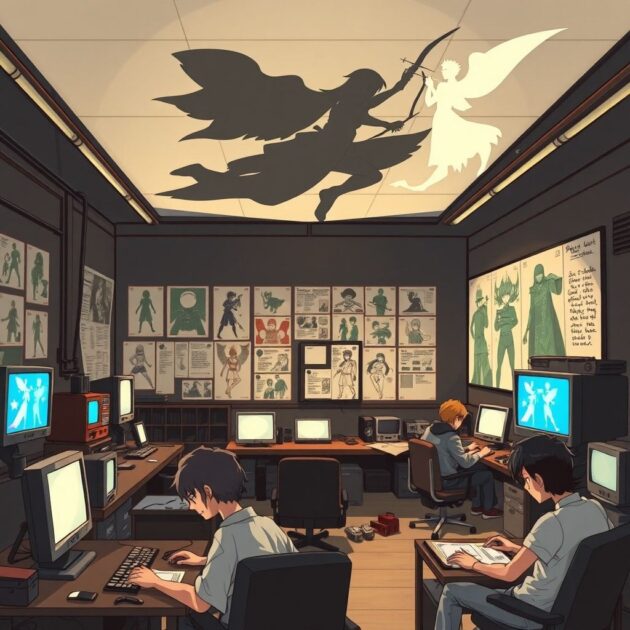
When the first Fate adaptation aired in 2006, the anime industry was still grappling with the transition from cel animation to digital pipelines. The original Fate/stay night series, produced by Studio Deen, reflected those growing pains: uneven color palettes, occasional frame‑drops, and a soundtrack that felt more like a placeholder than a thematic anchor. Yet it introduced a generation to the concept of multiple narrative routes—Fate, Unlimited Blade Works, and Heaven’s Feel—laying groundwork for future retellings.
Fast forward to the early 2010s, and Ufotable emerged as a game‑changer. Their investment in high‑end CGI integration and meticulous key‑frame work turned the Fate franchise into a visual spectacle. This shift mirrored a broader industry trend where studios like MAPPA and Wit Studio began prioritizing cinematic quality over episode count. The success of Fate/Zero demonstrated that audiences were hungry for mature storytelling paired with top‑tier animation, prompting other franchises (e.g., Attack on Titan, My Hero Academia) to up their production values. The old guard, once skeptical of such lavish budgets, now sees the Fate model as a benchmark for franchise longevity.
Impact of Watch Order on Lore Consistency and Production Techniques
Narrative Cause‑and‑Effect
From a lore standpoint, the Fate universe is a labyrinth of parallel worlds, each branching based on the route taken. Watching the series in the correct order preserves the cause‑and‑effect relationship between events: the political machinations of Fate/Zero set the stage for the disillusionment seen in Saber’s arc during Heaven’s Feel. Skipping ahead breaks the narrative scaffolding, leaving viewers confused about why certain Servants appear with pre‑established grudges.
Evolving Animation Assets
Production‑wise, each iteration builds upon its predecessor’s asset library. Ufotable re‑uses character models, background plates, and even battle‑choreography motifs, refining them with each release. Understanding the watch order reveals how the studio iteratively improves—notice the evolution from the rough, hand‑drawn aura effects in Fate/Zero to the hyper‑realistic, particle‑rich spells in Heaven’s Feel. Moreover, the Grand Order mini‑series serves as a testing ground for new animation techniques that later appear in the mainline films, illustrating a feedback loop between short‑form and feature‑length productions.
Looking Ahead: Upcoming Titles and Cross‑Media Strategies
Fate/Strange Fake (2026)
The upcoming anime explores an alternate Holy Grail War in the United States. Its inclusion will likely expand the watch order, interleaving this spin‑off with existing routes and offering fresh entry points for newcomers while rewarding long‑time fans who have mastered the current order.
Hybrid Formats and Marketing
Commercially, the sustained popularity of Fate titles has encouraged studios to experiment with hybrid formats—live‑action adaptations, VR experiences, and even interactive streaming events. As the franchise diversifies, the watch order becomes a strategic tool for marketing, guiding viewers toward cross‑media tie‑ins that maximize merchandise sales and fan engagement. In short, mastering the Fate watch order isn’t just about personal satisfaction; it’s a savvy way to stay ahead of the franchise’s evolving ecosystem.
Listen up, green‑horns: the only thing more chaotic than the Holy Grail War is trying to watch Fate without a proper roadmap. You’ll end up with more unanswered questions than a freshman’s first year in university, and trust me, that’s a fate worse than any cursed artifact.
My two decades on the otaku trail have taught me that a solid watch order is the difference between feeling like a seasoned mage and stumbling around like a clueless servant. So, respect the chronology, keep your eyes on the production credits, and for the love of all that is holy, don’t binge the movies before you’ve seen the groundwork laid in Zero. The payoff? A narrative payoff so satisfying it’ll make you forget the countless sleepless nights you spent scrolling forums for the “right” order.
Related Guides & Further Reading
Check out the Fate watch order archives.