When Darkness Shines: 10 Anime Antiheroes Who Steal the Spotlight
Anime antiheroes have become the magnetic north of contemporary storytelling, pulling audiences into morally gray universes where virtue and vice tango.
Their rise isn’t a fleeting trend; it’s a seismic shift that forces studios to rewrite the hero formula. As the spotlight burns brighter, the stakes for creators and fans alike have never been higher.
Rise of Anime Antiheroes: Industry Shift
The term “antihero” entered mainstream anime discourse during the early 2000s, but it was the 2016 release of “Attack on Titan” that cemented the archetype’s commercial viability.
According to the Wikipedia entry on antiheroes, these characters occupy a liminal space between heroism and villainy, often driven by personal codes rather than societal norms.
This definition underpins the industry’s pivot toward protagonists like Eren Yeager, whose ruthless tactics sparked heated debates across forums and think‑pieces.
Production houses such as Wit Studio and MAPPA capitalized on this tension, allocating larger budgets for darker visual palettes and complex character arcs. The commercial success of these series prompted streaming giants to prioritize antihero‑centric licensing, reshaping global distribution models.
Further Reading
For more background, see the official project page which outlines the evolution of the archetype across media.
Early Antihero Appearances and Evolution
Before the 2000s, antiheroes were rare, relegated to niche titles like “Lupin III” or the morally ambiguous samurai of “Rurouni Kenshin”. Studios adhered to the shōnen formula: clear‑cut good versus evil, with power‑ups and moral lessons.
The 1990s saw a gradual erosion of this binary, as directors like Hideaki Anno infused “Neon Genesis Evangelion” with existential dread, planting seeds for later antihero narratives. The shift accelerated when studios such as Production I.G. embraced psychological depth in “Ghost in the Shell”, influencing a generation of creators who later birthed characters like Light Yagami from “Death Note”.
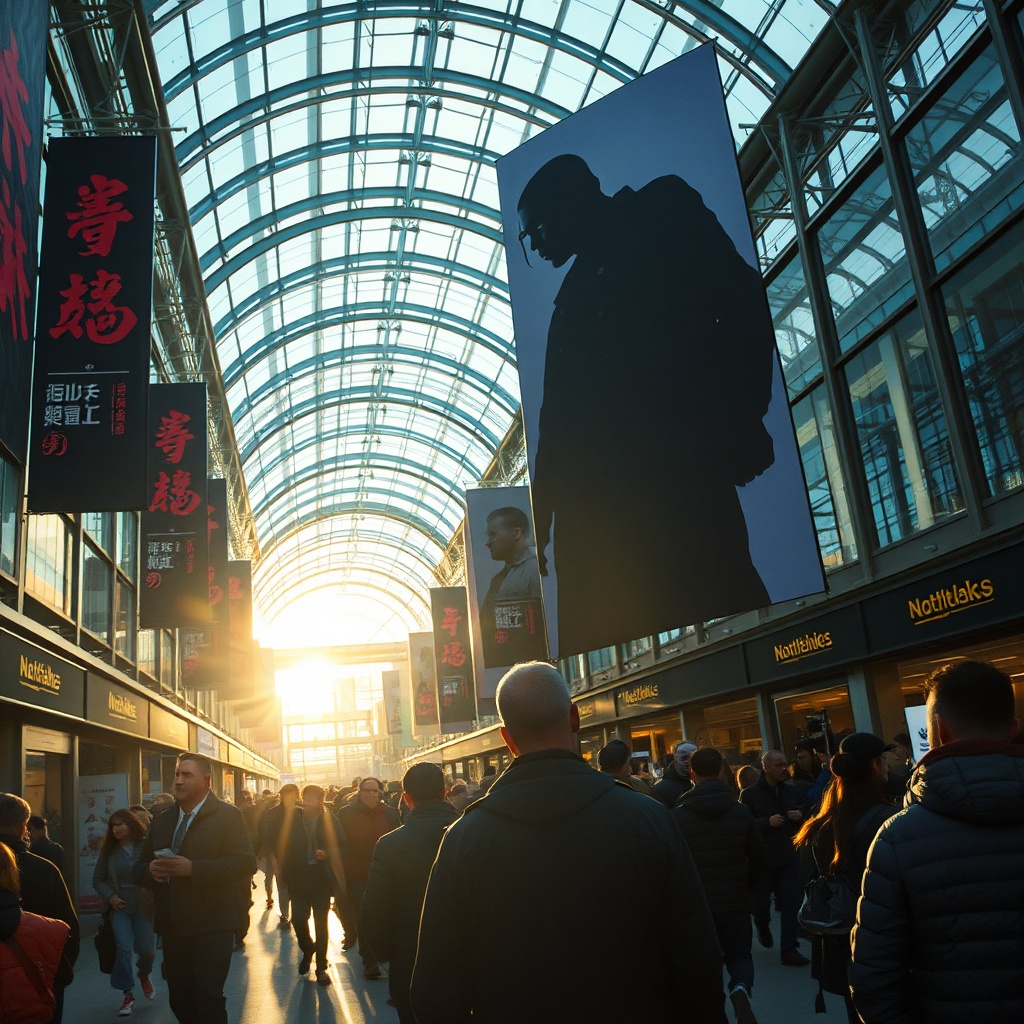
Market data from the late 2010s shows a 27 % increase in viewership for series featuring morally ambiguous leads, indicating a consumer appetite for complexity. This historical trajectory illustrates how the antihero moved from peripheral curiosity to central selling point, reshaping staffing decisions, scriptwriting priorities, and even merchandising strategies.
Narrative Techniques that Support Antihero Stories
From a narrative mechanics standpoint, antiheroes thrive on layered motivations, which are often quantified through “moral ambiguity meters” in visual novels and RPG adaptations.
In series like “Tokyo Ghoul”, Kaneki’s transformation is tracked via a visual gauge that reflects his humanity versus ghoul instincts, providing viewers a tangible sense of internal conflict.
Production design mirrors this duality: color palettes shift from muted earth tones to stark reds during pivotal betrayals, reinforcing psychological states. Sound design employs dissonant leitmotifs that subvert traditional heroic themes, creating an auditory cue for audience unease.
Script structures frequently employ non‑linear timelines, allowing flashbacks that recontextualize prior actions—a technique mastered by studios like Studio Bones in “Fullmetal Alchemist: Brotherhood”. These choices deepen immersion, making the antihero’s moral calculus a shared experience rather than a distant observation.
Emerging Trends and Risks for Future Antiheroes
The trajectory of anime antiheroes points toward even more ambitious cross‑media expansions. With streaming platforms investing in original IPs, we can expect spin‑offs that explore side characters’ backstories, turning secondary antagonists into protagonists of their own series. This mirrors the success of “Demon Slayer”’s spin‑off manga, which broadened the franchise’s universe while retaining core thematic darkness.
Additionally, the rise of interactive anime—where viewers influence character decisions—could give antiheroes agency that adapts to audience morality, blurring the line between creator intent and fan participation.
However, this also raises risks: over‑exposure may dilute the antihero’s edge, turning nuanced darkness into marketable cliché.
1. Last Exile (Gonzo, 2003)
The sky‑bound steampunk of “Last Exile” operates on an intricate lattice of trade routes, aerial nation‑states, and the omnipresent Grand Stream.
By grounding the conflict in the logistics of fuel (the mysterious “White Whistles” that power massive airships), the show forces protagonists Claus and Lavie to constantly negotiate the line between duty and survival.
Prester, the enigmatic “Lord of the Sky”, ties the world’s mythic past to its industrial present. His cryptic motives and secret technology create tension between progress and regression, reinforced visually by muted sepia tones for the grounded world versus high‑contrast blues for aerial combat.
2. Death Note (Madhouse, 2006)
“Death Note” weaponizes a supernatural notebook that collapses the boundary between law and personal vendetta.
The core mechanic—writing a name to cause death—creates a binary world of absolute power and absolute paranoia, forcing Light Yagami into a meticulous surveillance game.
The modern Tokyo setting amplifies every killing, turning the city’s neon‑lit anonymity into a weaponized playground. Shinigami Ryuk’s drop of the notebook introduces an otherworldly law that supersedes human morality, turning the narrative into a study of jurisprudence versus personal ethics.
3. Attack on Titan (Wit Studio, 2013)
The claustrophobic geography of Paradis Island—encircled by colossal walls—creates a literal pressure cooker that fuels the series’ anti‑heroic narrative.
Eren Yeager’s “Coordinate” power subverts these static walls, turning them into a fluid battlefield and forcing constant reassessment of freedom.
Beyond the walls, the geopolitical schism between Eldian Titans and Marleyan oppressors mirrors real‑world colonial histories. Vertical maneuvering equipment adds a kinetic layer, making each raid a moral calculus: sacrifice comrades for a broader truth?
4. Tokyo Ghoul (Studio Pierrot, 2014)
In “Tokyo Ghoul”, the hidden ghoul society operates beneath modern Tokyo, creating a dual‑layered cityscape where humanity and hunger coexist.
The core mechanic—kagune, predatory organs requiring human flesh—forces characters into a biological paradox.
Kaneki’s half‑ghoul transformation becomes a literal embodiment of the city’s split identity; his internal gauge of humanity versus ghoul instinct acts as a visual barometer for tension. Lighting shifts—from harsh fluorescent police stations to dim underground hideouts—mirror his crumbling self‑control.
5. Code Geass (Sunrise, 2006)
The alternate‑future Earth of “Code Geass” is defined by imperial geopolitics and the mystic Geass—a power of absolute obedience.
Lelouch’s single‑glance command condenses macro‑cosmic empire into micro‑decisions, turning political hegemony into a personal chess game.
Knightmare Frames serve as kinetic extensions of Lelouch’s strategy. Their sleek design juxtaposes Britannian militarism with brutal oppression, making each battle a moral showdown between revolutionary goals and human cost.
6. Darker than Black (Bones, 2007)
“Darker than Black” builds on the cataclysmic birth of Heaven’s Gate and Hell’s Gate, geological scars that alter Tokyo’s physics.
Contractors gain supernatural abilities at the cost of emotions, compelling characters like Hei to navigate a morally ambiguous underworld while suppressing feelings that would make them human.
The Gates act as geopolitical hotspots, drawing multinational factions into a cold‑war of espionage. Visual storytelling—neon‑lit alleys versus stark white interiors of the Gates—reinforces the theme that miracles arise from existential voids.
7. Psycho‑Pass (Production I.G, 2012)
The Sibyl System quantifies psyche into a Crime Coefficient, turning law enforcement into a statistical game.
This replaces traditional jurisprudence with an omnipresent algorithmic overseer, compelling characters like Shinya Kogami to grapple with a deterministic society.
The Dominator weapon reads a target’s Psycho‑Pass in real time, translating moral ambiguity into immediate lethal force. Kogami’s shift from Inspector to Enforcer blurs the line between lawful authority and criminality.
8. Parasyte -the maxim- (Madhouse, 2014)
“Parasyte ‑the maxim‑” introduces alien parasites that hijack human bodies, turning identity into a battlefield.
The symbiotic coexistence between Shinichi and the parasite Migi offers a dual‑lens on humanity—dominate or be subsumed.
Every parasite’s unique abilities create a hierarchy of threat, forcing Shinichi to evaluate the ethics of killing an alien versus preserving human life. The “blood‑rain” motif ties physical horror to existential dread.
9. Vinland Saga (Wit Studio, 2019)
Set against the harsh, wintry expanses of Viking‑age Scandinavia, “Vinland Saga” leverages a historically grounded world where honor, revenge, and territorial expansion dictate survival.
The brutal geography—sweeping fjords, relentless seas—creates a physical crucible that forces Thorfinn to confront the futility of endless vendetta.
Authentic battles, such as the Battle of London Bridge, anchor the narrative, while the unforgiving environment mirrors Thorfinn’s internal moral reckoning.
10. Guilty Crown (Production I.G, 2011)
Post‑apocalyptic Japan is defined by the “Apocalypse Virus” and “Void Genome” powers, letting protagonist Shu Ouma extract “Insteins” from other people’s bodies.
This makes personal connections literal weapons, tying scarcity to a system where trust and betrayal become combat tools.
The authoritarian GHQ regime, backed by advanced mecha, constantly pressures Shu’s anti‑heroic decisions. Visual contrast between sterile ruins and neon‑lit rebel zones underscores the duality of hope and oppression.
Listen up, fresh‑blood otaku: the antihero isn’t a gimmick you can slap onto any shōnen formula and expect fireworks. Studios that treat these complex characters as cash‑cows without respecting their narrative weight end up with hollow spectacles that feel like cheap merch. The veteran eye sees that the real power lies in the tension between the character’s internal demons and the world’s external expectations—strip that away and you’ve got a bland protagonist that even a cardboard cutout could outshine.
When the next wave of antihero‑driven projects rolls out, watch for studios that invest in layered writing teams, not just a single visionary. The ones that pair seasoned script doctors with fresh talent will craft antiheroes that evolve, not stagnate. And remember, the audience’s appetite for moral ambiguity isn’t infinite; over‑saturation will turn today’s edge into tomorrow’s cliché. Keep your eyes peeled, your critiques sharp, and never let the hype drown out the nuance.
Check out the anime antiheroes archives.