When Physics Meets Fantasy: Realistic Anime Powers That Could Actually Exist
Scientific Foundations of Anime Powers

In the ever‑expanding universe of anime, the term “realistic anime powers” has become a hot‑topic among fans who crave a blend of spectacle and plausibility. Recent industry reports highlight a surge in series that ground their abilities in actual physics, from magnetic manipulation in “A Certain Scientific Railgun” to bio‑engineered enhancements in “Darling in the Franxx.” This shift isn’t just a creative whim; it reflects studios responding to a more scientifically literate audience that demands internal consistency.
Studio Collaboration With Experts
The official project page outlines how creators consult with physicists and engineers to avoid outright nonsense while preserving narrative drama. Production houses like MAPPA and Bones have begun allocating budget for research teams, ensuring that visual effects align with real‑world constraints. The result is a richer viewing experience where viewers can pause and actually wonder, “Could this happen?” rather than dismissing it as pure fantasy.
Merchandising Benefits
This trend also opens doors for merchandising, as fans are more likely to purchase replicas of gadgets that feel technically feasible.
Legacy Shōnen vs. Modern Realism
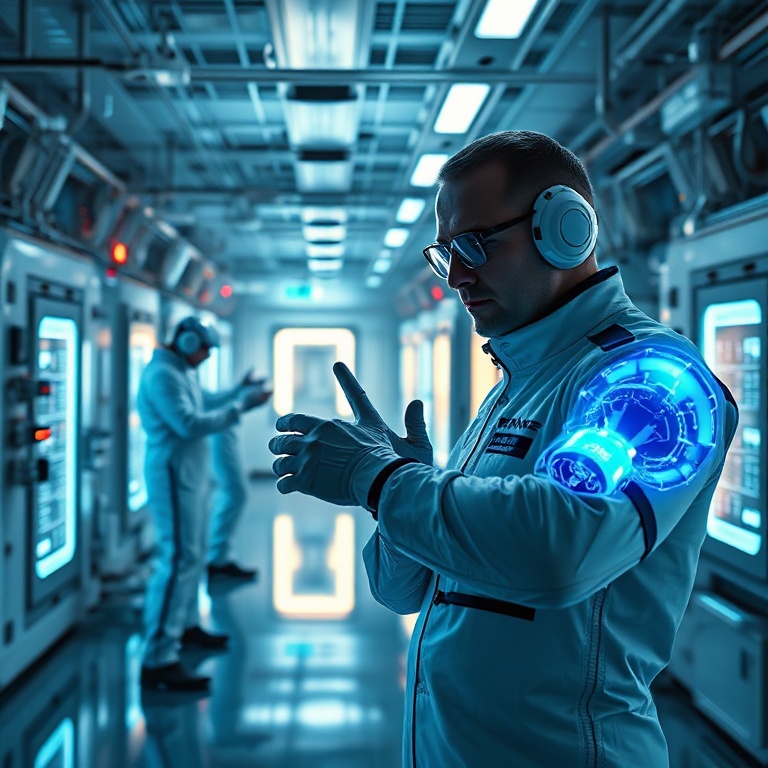
Looking back, the golden age of shōnen defined power by sheer spectacle—think Super Saiyan transformations that defy thermodynamics or Naruto’s Rasengan that bends chakra like a mystical force. Those older franchises often prioritized visual impact over scientific rigor, a choice that resonated with audiences hungry for escapism.
Traditional Studios and Visual Style
Studios such as Toei and Sunrise built their reputations on these larger‑than‑life displays, employing hand‑drawn techniques that emphasized exaggerated motion lines and explosive color palettes.
Digital Era Reassessment
Over the decades, staff turnover introduced fresh perspectives; younger animators trained in digital pipelines began questioning the feasibility of certain feats. Market shifts toward global streaming also pressured creators to appeal to viewers with diverse expectations, many of whom possess advanced STEM backgrounds.
Consequently, legacy series have started retrofitting their mythos—Dragon Ball’s recent arcs hint at energy efficiency, while One Piece’s Devil Fruit powers now include biological explanations. This evolution showcases a dialogue between the old guard’s love for mythic grandeur and the new generation’s appetite for grounded storytelling.
Design Mechanics, Power Metrics, and Narrative Impact

Realistic anime powers often hinge on quantifiable parameters: energy output, material limits, and biological compatibility.
Example: Magnetism in “Railgun”
Take the magnetism in “Railgun”: the protagonist’s ability to accelerate projectiles can be modeled using Lorentz force equations, giving writers a ceiling for speed and range. Production designers translate these formulas into visual cues—sparks, electromagnetic arcs, and precise trajectory lines—that inform both animators and audiences.
Stat Sheets and Fan Calculations
Stat sheets in companion manga or light novels now list power levels in joules or nanometer precision, allowing fans to perform their own calculations and compare abilities across series.
Narrative Benefits of Constraints
Constraints force writers to innovate, leading to scenes where characters must conserve energy or combine abilities strategically. This deepens character development, as heroes grapple with the physical toll of their powers, adding emotional weight to battles that would otherwise feel hollow.
Moreover, the integration of realistic tech opens merchandising avenues for accurate replica devices, further cementing the synergy between lore and marketability.
Future Outlook: Plausibility and Franchise Evolution
The trajectory of realistic anime powers points toward a hybrid future where scientific authenticity coexists with imaginative flair. Upcoming sequels are likely to deepen world‑building by introducing interdisciplinary research teams—physicists, biologists, and AI specialists—to craft powers that evolve with real‑world technological advances.
Potential Narrative Directions
This could spawn spin‑offs focusing on the ethical implications of augmentations, mirroring contemporary debates on transhumanism. Culturally, such grounded powers may broaden anime’s appeal beyond traditional fanbases, attracting viewers who appreciate hard science fiction.
Balancing Act
However, there’s a risk: over‑emphasis on plausibility might dilute the escapist charm that defines the medium, alienating audiences seeking pure fantasy. Balancing these forces will be the key to sustaining franchise longevity.
The veteran in me scoffs at studios that slap a pseudo‑science label on anything that sparks a meme. Realistic anime powers are a double‑edged sword—yes, they earn you credibility, but they also chain creativity to the nearest textbook. When the narrative becomes a lecture, the soul of the story gets lost in the footnotes.
Yet, I can’t deny the thrill of watching a well‑crafted ability that actually *could* exist, especially when it’s backed by crisp animation and clever writing. If you want to keep the genre fresh, stop treating physics as a gimmick and start letting it inform character arcs, world‑building, and, hell, even the marketing strategy. That’s the sweet spot where otaku dreams meet real‑world wonder.
Check out the realistic-anime-powers archives.
Check out the realistic-anime-powers archives.