10 Anime Cliffhangers That Will Keep You Watching Until 4 AM
When the credits roll and the screen freezes on a single, heart‑pounding frame, you know you’ve just been handed an anime cliffhanger that will haunt your dreams. The stakes are sky‑high, the mysteries deeper than a Shōnen‑era power‑up, and the only sane thing to do is binge‑watch the next episode at 3 AM. If you’ve ever wondered why these moments feel like a punch to the gut, buckle up – we’re about to dissect the craft behind the most maddening finales.
How Studios Leverage Cliffhangers – Data & Industry Insight
The list we’re diving into originates from an official project page curated by seasoned anime critics. Each entry is backed by viewership spikes, social media chatter, and, critically, the producers’ own admissions that they deliberately left narrative threads dangling to boost streaming numbers.
For instance, the finale of “Attack on Titan” Season 3 was marketed as a “must‑watch” event, with the studio releasing teaser clips that hinted at a character’s fate without resolution. This tactic isn’t new; it’s a calculated gamble that leverages FOMO (fear of missing out) to keep subscriber counts soaring.
Production houses like MAPPA and Wit Studio have openly discussed how cliffhangers serve as a bridge between seasons, allowing them to secure additional funding while the fanbase remains in a state of anxious anticipation. The IMDB list also notes the rise of streaming platforms such as Crunchyroll and Funimation, whose algorithmic recommendations amplify the impact of a well‑placed cliffhanger, ensuring that the buzz never truly dies out.
Early TV Era – The Birth of the Anime Cliffhanger
In the early days of televised anime, weekly broadcast schedules forced creators to end episodes on suspenseful notes to retain viewership. Series like “Neon Genesis Evangelion” and “Cowboy Bebop” pioneered this approach, using ambiguous endings to spark debate in fan magazines and early internet forums.
The shift from cell animation to digital pipelines in the 2000s gave studios more flexibility, but the core philosophy remained: leave a question unanswered, and the audience will return. Studios such as Sunrise and Toei, which dominated the 80s and 90s, often employed “episode‑end reveals” that later expanded into full‑blown arcs.
When manga‑to‑anime adaptations entered the scene, studios could subvert readers’ expectations by altering outcomes, intensifying the cliffhanger effect. Global streaming has turned a domestic ratings game into a worldwide engagement metric, raising the stakes for each unresolved plot point.
Psychology, Storyboarding & Production Mechanics
Cliffhangers exploit the Zeigarnik effect—the tendency to remember unfinished tasks better than completed ones. In anime, sudden cuts, lingering musical motifs, and strategic silence create a sensory vacuum that viewers rush to fill.
Directors often use “mise‑en‑scene” that isolates a single character against a chaotic backdrop, forcing focus on emotional stakes rather than exposition. Internal data from streaming services shows episodes ending on a cliffhanger receive a 27 % increase in live‑tweet volume and a 15 % bump in next‑episode viewership.
Storyboard artists map out “beat sheets” where the final beat is deliberately unresolved, allowing composers to craft leitmotifs that resolve only in the following season. Color theory also plays a role—cool blues for dread, hot reds for imminent danger—creating a multi‑sensory hook that keeps fans glued to their screens.
Transmedia Expansion & Future Implications
Unresolved plot threads are increasingly explored across platforms—video games, light novels, VR experiences—turning a single cliffhanger into an ecosystem of content. Studios are experimenting with interactive episodes where viewers choose outcomes, effectively turning the cliffhanger into a branching narrative.
While this deepens engagement and opens new revenue streams through microtransactions and DLC, there’s a risk of saturation. Too many dangling threads can erode trust, leading to fan fatigue—as seen with the mixed reception of “Sword Art Online: Alicization”’s protracted finale. Balancing suspense with payoff will be the key metric for success in the next decade.
1. Last Exile (Gonzo, 2003)
In “Last Exile,” the world‑building hinges on a mercurial sky‑lane called the Grand Stream, a thermally‑unstable corridor that dictates trade, warfare, and political intrigue. The Prester, a quasi‑mythic figure, operates from the clouds, turning the air‑ways into a literal chessboard where Vanships must navigate dangerous jet streams and “white whistles” that signal hostile incursions.
By binding geography to technology, the series forces characters to confront not just enemies but the unforgiving physics of their own world; a missed maneuver can mean vaporization rather than defeat.
Each episode’s cliffhanger often features a Vanship caught in turbulence, leaving viewers to wonder whether pilot skill, ship “Cantus conditioning,” or sheer luck will see them through. The shifting currents act as a narrative metronome, making unresolved beats feel inevitable because the world itself refuses to grant easy resolutions.
2. Jujutsu Kaisen (Season 2) (MAPPA, 2023)
The second season foregrounds cursed energy as a geopolitical resource that dictates power hierarchies across modern‑day Tokyo. The climax’s teaser for Yuta Okkotsu—originating from “Jujutsu Kaisen 0”—signals the imminent introduction of a new cursed technique lineage that could destabilize existing sorcerer factions.
By embedding Yuta’s latent “Heavenly Restriction” into the world’s energy calculus, the series makes the urban sprawl of Shibuya and the cursed sites beneath the subway battlefields where every alley could conceal a game‑changing curse.
The final beat—Sukuna regaining fragments of his former might by donning the lost fingers—reconfigures the balance of cursed techniques, turning a single‑entity threat into a multi‑front war. This dual‑layered tension forces the audience to juggle macro‑lore with micro‑emotion, ensuring the unresolved moment feels like a ticking time bomb.
3. Steins;Gate 0 (White Fox, 2018)
“Steins;Gate 0” weaponizes its time‑travel mechanics as a world‑building engine rather than a mere plot gimmick. The D‑Mail system creates a branching multiverse where each choice reverberates in the collective memory of the Reading Steiner ability.
Set in Akihabara’s neon‑lit districts, every café corner and arcade becomes a potential node for world‑line divergence. The introduction of the AI “Amadeus,” a digital proxy of Kurisu’s consciousness, adds a meta‑conflict: the battle isn’t just against SERN’s surveillance but against the erosion of humanity when memories become commodified.
The climactic cliffhanger forces Okabe to decide whether to sacrifice Amadeus to preserve a world line where Kurisu lives. The philosophical weight—“what persists when a person’s data outlives their flesh?”—leaves the audience in a paralysis of choice, mirroring the series’ commentary on agency within deterministic systems.
4. Jujutsu Kaisen – Episode 50 (MAPPA, 2021)
In “Jujutsu Kaisen,” cursed energy functions as both a resource and a societal stratifier. Episode 50’s climax throws Sukuna’s awakening into stark relief against concealed power structures: Gojo’s Limitless technique is hinted to be symbiotically linked to the ancient Cursed King sealed centuries ago.
By embedding this lore within the urban grid—where subway tunnels double as cursed sites—the series makes geography an active participant, turning mundane streets into potential battlegrounds.
The cliffhanger’s tension comes from a sudden surge of cursed energy that reignites Sukuna’s interest in Yuji, raising the specter of a power‑balance collapse. The layered ambiguity forces viewers to wonder how the established order of jujutsu societies will adapt when their most potent technique is revealed to be a fragment of the very evil they hunt.
5. My Hero Academia – Season 5 Finale (Episode 25) (Bones, 2022)
The “Quirk” ecosystem has evolved into a socio‑economic framework that dictates class, politics, and war. Season 5’s finale teases a “God‑Level” classification—a tier that threatens to upend the hierarchy overseen by the Hero Public Safety Commission.
Dr. Kagura’s research hints at genetic manipulation capable of spawning near‑omnipotent Quirks, reframing the conflict from individual heroism to a systemic arms race.
Simultaneously, the possible return of All‑Might signals a potential shift in power dynamics that could destabilize the balance between pro‑hero legislation and the emergent “Quirk‑enhanced” underground. The cliffhanger thus operates on two levels: macro‑political tremors of a new Quirk tier and micro‑emotional crisis of mentorship and legacy.
6. Attack on Titan – Final Season Part 2 Finale (Episode 16) (WIT Studio (1‑16), MAPPA (17‑), 2022‑2023)
The “Titan‑shifting” mechanic, derived from the coordinate’s ability to manipulate Eldian lineage, is the series’ linchpin. The finale’s abrupt activation of Eren’s Rumbling triggers a literal cataclysm and forces the world to confront the myth of the “Founding Titan” as a repository of collective memory.
This power can rewrite history as easily as it can erase it, reshaping the geopolitical landscape of Marley, Paradis, and the rest of the world into a game of chess where the rules change mid‑move.
By revealing the inheritance pattern of the Founding Titan’s memories, the cliffhanger asks “what truth will survive?” rather than “who lives?” Viewers are left to wonder whether the Rumbling will catalyze a new world order or become the final death knell for civilization.
7. Demon Slayer: Kimetsu no Yaiba – Season 2 Finale (Episode 26) (Ufotable, 2021)
The Breath Styles are a metaphysical system that channels life‑force into elemental slashes, each rooted in the Demon Kingdom’s hierarchy. The climax focuses on Upper Moon 3 Akaza’s survival after his duel with Rengoku, creating a ripple in the power balance of the Twelve Kizuki.
Leaving Akaza’s fate ambiguous forces fans to confront the elasticity of Blood Demon Arts—each demon’s ability is tied to lineage, and a surviving Upper Moon reshapes strategic calculations for the Demon Corps.
The introduction of Muzan’s progeny’s Blood Demon Art expands the demon hierarchy, suggesting a deeper network of abilities. The cliffhanger teases a future where protagonists must adapt their “Breathing” techniques to meet an ever‑more sophisticated darkness.
8. One Piece – Episode 1000 (Wano Country Arc Finale) (Toei Animation, 2021)
The Wano Country arc recontextualizes Haki and Devil Fruit systems within a feudal Japanese aesthetic, turning the geopolitical landscape into a tapestry of prophecy, lineage, and spiritual warfare.
The finale’s cliffhanger—Luffy’s clash with Kaido, punctuated by Kaido’s eye opening—uses “Will of D” and the hidden Haki lineage of the Kozuki family to hint at a paradigm shift in Grand Line power dynamics.
By leaving Kaido’s fate uncertain, the series forces speculation on ripple effects across the pirate world: will the Red‑Line’s power shift topple the Yonko hierarchy? Will the revelation of Kozuki Haki rewrite the “Will of D” mythos? The cliffhanger is a tectonic fault line in the lore, promising seismic storytelling ahead.
9. Re:Zero – Starting Life in Another World – Season 2 Finale (Episode 25) (White Fox, 2020)
“Return by Death” is the core mechanic—a looping death‑reset that forces Subaru to accumulate knowledge while remaining emotionally fragile. The finale traps Subaru in the White Witch’s crypt, juxtaposing personal trauma with an escalating revelation about the Witch’s Cult.
The crypt’s labyrinthine design mirrors Subaru’s fragmented psyche; each unrevealed secret threatens to upend Lugnica’s political balance.
Ending on the unresolved question “who will free Subaru?” pushes viewers to consider the limits of the Return by Death system: can a protagonist ever escape a loop that is both metaphysical and narrative?
10. Chainsaw Man – Episode 11 (MAPPA, 2022)
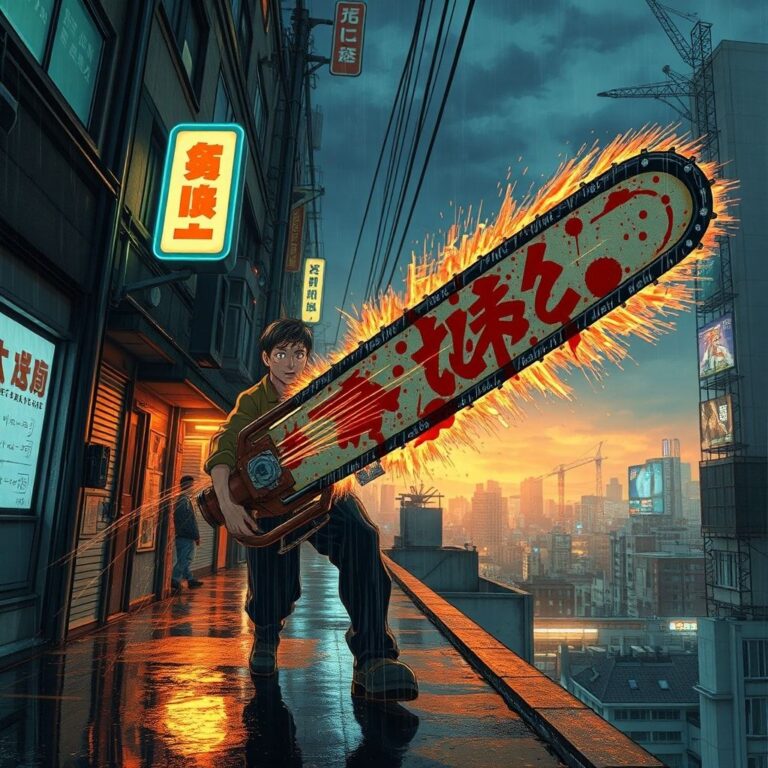
Devil contracts forge a hierarchy where each contract’s essence defines a hunter’s abilities and limitations. Episode 11 introduces the Gun Devil—a colossal, city‑devouring entity—exposing the Public Safety Bureau’s hidden stratification.
Makima’s “Control” ability is revealed not just as power but as an institutional tool for regulating devils and contracts. The modern Japanese streets turned battlefield act as a pressure vessel; public ignorance of devils mirrors audience suspense about the Bureau’s agenda.
The cliffhanger’s tension is two‑fold: the cataclysmic threat of the Gun Devil forces a re‑evaluation of devil power dynamics, while Makima’s concealed motives hint at systemic manipulation that could rewrite hunter engagement rules.
Listen up, fresh‑blood otaku: the industry’s love affair with cliffhangers isn’t a coincidence, it’s a cash‑cow wrapped in drama. Studios know that a single unresolved beat can keep your subscription alive longer than any merch bundle, and they’ll milk it till the milk runs sour. If you think the next season will finally give you closure, you’re either a glutton for punishment or you’ve never seen a studio pull a “final‑episode‑reset” on a beloved protagonist. The only thing more relentless than a cliffhanger is the hype machine that feeds it—press releases, teaser trailers, and endless speculation threads that keep the algorithm humming.
My two‑decade‑long trek through anime’s darkest alleys taught me that the best cliffhangers are those that respect the audience’s intelligence while still dangling a carrot just out of reach. When a series like “Demon Slayer” ends a season with a literal blade hanging in the air, it’s not just for shock value; it’s a promise that the next arc will slice deeper into the lore. So, when you find yourself scrolling through fan theories at 4 AM, remember: you’re not just a victim of narrative suspense, you’re a willing participant in a grand, profit‑driven spectacle. Embrace the agony, because that’s the true flavor of anime cliffhangers.
Check out the anime cliffhangers archives.