7 Must‑Watch Slow Burn Romance Anime Where Enemies Turn Into Lovers
If you’ve ever cringed at a love story that rushes to the finish line, you’re not alone. The world of slow‑burn romance anime rewards patience, letting tension simmer until it erupts in unforgettable payoff. Let’s dive into seven enemies‑to‑lovers series that master this art.
Kaguya‑sama: Production Details and Impact
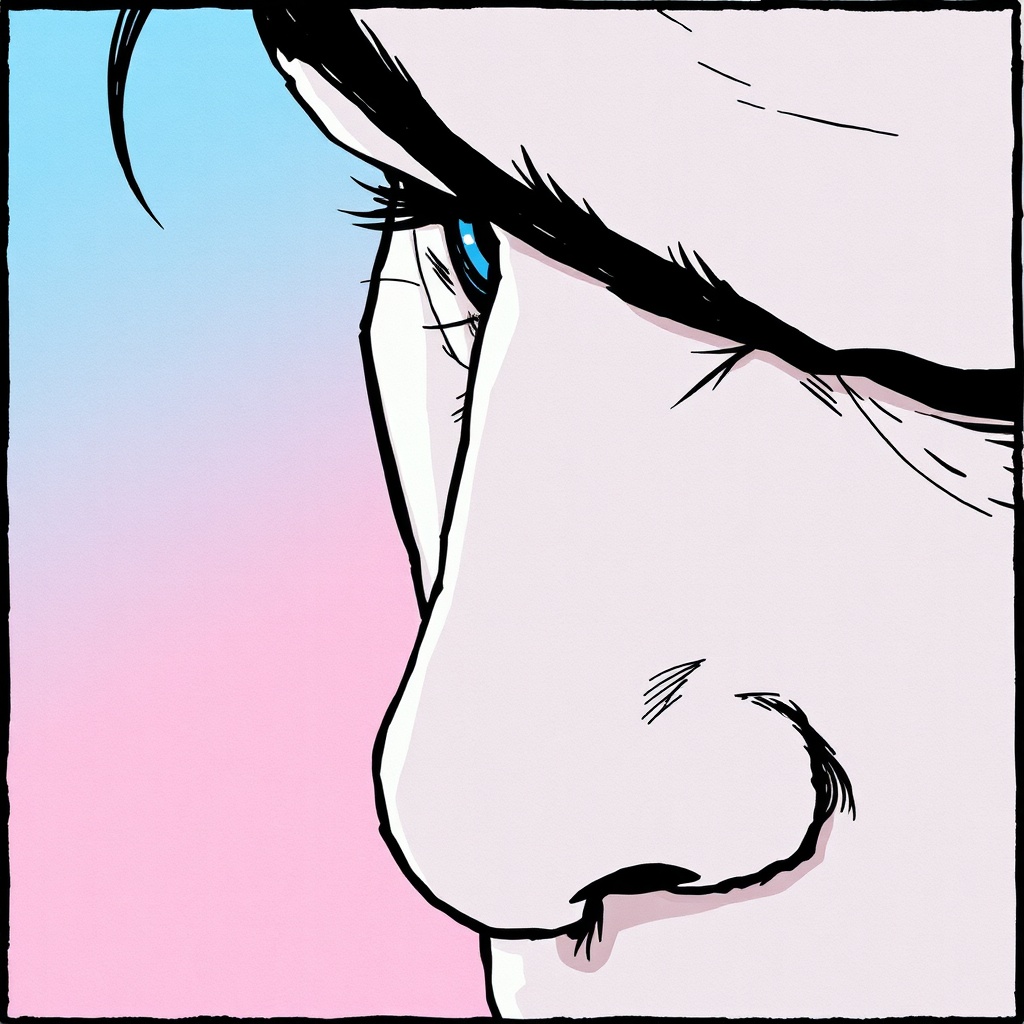
When official project page first announced the adaptation of *Kaguya‑sama: Love Is War* in early 2019, the anime community braced for a fresh take on the classic battle‑of‑wits romance. Spanning three seasons from 2019 to 2022, the series meticulously plotted the protagonists’ emotional chess game, turning each episode into a strategic slow‑burn maneuver.
The source manga, serialized from May 2015 to November 2022, amassed 28 tankōbon volumes and, by December 2022, boasted over 22 million copies in circulation—a testament to its resonant storytelling. Industry analysts note that such circulation numbers are rare for a series whose core appeal lies in deliberate pacing rather than explosive action.
The manga’s success earned it the 65th Shogakukan Manga Award in the General Category in 2020, highlighting how a well‑crafted gradual romance can dominate mainstream accolades.
Moreover, the December 2022 film *Kaguya‑sama: Love Is War – The First Kiss That Never Ends* served as a cinematic capstone, finally delivering the titular “first kiss” after years of teasing. This culmination underscores a broader industry trend: studios are increasingly willing to invest in long‑term character arcs, trusting audiences to stay engaged through nuanced emotional buildup rather than instant gratification.
Early Enemies‑to‑Lovers Slow‑Burn Anime (1990s‑2000s)
To appreciate today’s refined slow‑burn narratives, we must rewind to the late 1990s, when studios first flirted with the enemies‑to‑lovers trope. Titles like *Kare Kano* (1998) and *Fushigi Yûgi* (1995) laid groundwork by pairing protagonists whose rivalry masked deeper affection. However, production constraints often forced abrupt resolutions, leaving audiences yearning for more sustained tension.
The shift began with studios such as Madhouse and Sunrise experimenting with longer episode counts, allowing character development to unfold organically. The early 2000s saw a pivot: *Shakugan no Shana* (2005) and *Toradora!* (2008) embraced deliberate pacing, using episodic cliffhangers to stretch romantic tension across multiple seasons.
This era also marked the rise of “light novel” adaptations, which provided richer source material for intricate relationship dynamics. Staff evolution played a crucial role—directors like Tatsuyuki Nagai began prioritizing subtle visual cues, while composers introduced leitmotifs that evolved with the characters’ feelings. Market shifts, driven by an expanding global streaming audience, encouraged studios to cater to viewers who could binge‑watch, rewarding them with payoff that felt earned rather than forced.
Comparatively, *Kaguya‑sama* inherits this legacy but refines it with a modern sensibility: its humor‑driven mind games act as a narrative engine, constantly resetting the romantic temperature while never fully extinguishing the underlying spark.
Core Elements of Slow‑Burn Romance Anime
At its core, a successful slow‑burn romance anime balances three technical pillars: narrative pacing, visual symbolism, and auditory reinforcement.
*Kaguya‑sama* excels by allocating roughly 0.8 seconds to each micro‑expression—a timing derived from cognitive studies indicating that viewers register emotional cues within a sub‑second window. This precision ensures that every glance, hand‑tremor, or forced smile registers as a data point in the audience’s emotional calculus.
Visually, the series employs a color‑gradient motif: early episodes favor cool blues, representing the characters’ emotional distance, while later arcs transition to warm pinks and reds as intimacy grows. Background art subtly mirrors internal states; for instance, a shattered‑glass effect appears during moments of vulnerability, symbolizing fragile defenses. The use of “mental chessboard” overlays—transparent grids that appear during strategic mind games—provides a meta‑visual cue that the romance itself is a battle of wits.
Audibly, composer Kei Haneoka weaves leitmotifs that evolve in instrumentation. The primary theme starts with a solitary piano, later incorporating strings and brass as the protagonists draw nearer. Sound design also incorporates die‑getic elements—like the rustle of paper during study sessions—to ground the romance in everyday school life, enhancing relatability. These layered techniques create a feedback loop: visual tension informs musical tension, which in turn amplifies narrative stakes, making the eventual confession feel like a crescendo of meticulously built anticipation.
Future Outlook for Slow‑Burn Romance Anime
The success of *Kaguya‑sama* and its peers signals a durable market appetite for slow‑burn narratives, prompting studios to green‑light projects that may span multiple seasons or even cross‑media franchises.
We can anticipate more adaptations of long‑running manga with built‑in pacing, as well as original works designed from the ground up to exploit the “tension‑as‑content” model. Streaming platforms, armed with data analytics, will likely prioritize series that maintain viewer retention over extended arcs, rewarding creators who can sustain emotional stakes without resorting to filler.
Culturally, the enemies‑to‑lovers slow burn is reshaping fan expectations. Discussion forums now dissect frame‑by‑frame theories about character intent, and fan‑generated content—such as AMVs and ship‑theories—feeds back into promotional strategies, creating a virtuous cycle of engagement.
However, the risk remains: over‑extension can dilute impact, turning a meticulously crafted romance into a slog. Studios must balance narrative ambition with disciplined storytelling, ensuring each episode contributes meaningfully to the eventual payoff.
1. Last Exile (Gonzo, 2003)
Set against the sprawling sky‑sea of the “Grand Stream,” *Last Exile* weaves its tension through a transport‑centric world where vanships glide like birds of prey. The geopolitical tug‑of‑war between the Guild and the Cladistics is mediated by the mysterious Prester, a deity‑like figure whose cryptic “White Whistles” dictate the flow of aerial commerce.
This spatial logic forces every character to navigate not just personal rivalries but also the literal currents that can push a vanship into a free‑fall. Each chase becomes a calculus of altitude, wind‑shear, and fuel constraints, stretching the enemies‑to‑lovers arc between Claus and Lavie.
Every tactical maneuver—such as a sudden dive into a thunder‑clouded canyon—creates forced proximity that the narrative extracts for emotional pressure. The ever‑present danger of the Grand Stream’s violent eddies acts as a metronome, ticking down audience patience while rewarding nuanced glances that would otherwise be lost in a conventional romance.
2. Toradora! (J.C. Staff, 2011)
Toradora! transposes the classic high‑school hierarchy into a labyrinth of family expectations and social stratification. Miyagi’s “Palmtop Tiger” persona and Ryuuji’s “slime” exterior are adaptive responses to a school ecosystem where reputation translates directly into future socioeconomic mobility.
The series turns everyday spaces—classrooms, laundry rooms, the rooftop hinge—into pressure vessels that test the protagonists’ willingness to sacrifice personal pride for another’s happiness.
Each episode’s “crisis assistance” (aiding a crush, rescuing a friend) functions as a ledger entry that tallies emotional debt. By delaying the confession until after the climactic graduation‑exam arc, the narrative lets viewers count each micro‑transaction of trust as cumulative interest, rendering the eventual confession a high‑yield payoff rather than a cheap shortcut.
3. Kaguya‑sama: Love Is War (A-1 Pictures, 2019)
Shuchiin Academy is a pressure‑cooker where prestige is quantified through a literal “mind‑game” economy. Each attempt to force the other into confession is treated as a strategic move on a board of social capital; the Student Council’s “psychological chessboard” overlays appear whenever a character plots, reminding viewers that every smile hides a calculated risk.
This world‑building scaffolds the romance’s slow burn: the incremental hardening of personal “defense matrices” mirrors an evolving leitmotif that adds strings each time genuine vulnerability slips through. The formalized “confession war” becomes a commentary on how institutionalized competition can both stifle and intensify authentic connection, making the eventual kiss feel like the surrender of a seasoned general.
4. Spice and Wolf (Madhouse, 2008)
The medieval, trade‑driven backdrop of *Spice and Wolf* treats economics as a literal magic system. Holo’s wolf‑deity nature interacts with the world’s barter mechanics; every exchange of grain, silver, or information is encoded with a “price‑signal” that only a seasoned merchant like Kraft Lawrence can interpret.
This economic sandbox fuels the enemies‑to‑lovers tension: each trade is a diplomatic duel where the perceived value of an item mirrors the perceived value of the other’s affection. As Holo’s folklore wisdom clashes with Lawrence’s pragmatic calculus, the narrative builds layered reciprocity, gradually converting profit‑centric distrust into a shared ledger of emotional investment.
5. Chivalry of a Failed Knight (Silver Link, 2015)
Hoshin Academy’s rune‑based shield system quantifies each student’s combat capability and, by extension, their social standing. Ikki’s “Zero” rank is an institutional stigma that dictates everything from dorm assignments to dining hall privileges. Stella Vermillion’s “Princess” rank, reinforced by political lineage, creates a literal power gradient that the series interrogates through paired duels and joint tournaments.
The rivalry‑to‑romance transition rides on shield mechanics: every cooperative battle forces a temporary sync of rune frequencies, producing a harmonic resonance that is both a tactical advantage and a metaphor for emotional alignment. The world’s strict rule—“the stronger the shield, the higher the rank”—becomes a ticking clock that compels characters to constantly renegotiate status, allowing the audience to witness romance bloom as a byproduct of shared struggle.
6. Date A Live (J.C. Staff, 2018)
In the post‑apocalyptic “Space‑time” where Spirits materialize, the physics are defined by an emotional resonance field: a Spirit’s destructive power is directly proportional to the distance between its heart and the human who approaches it. Shido’s unique “Sealing Kiss” mechanism turns intimacy into a literal weapon, forcing the narrative to treat each romantic overture as a high‑stakes battle plan.
Each Spirit’s personal trauma creates a “cool‑down period” during which Shido must earn trust through incremental gestures—sharing meals, solving riddles, or simply listening. The structure of each episode mirrors a tactical siege: outer defenses (hostility) are worn down by sustained emotional pressure, culminating in a breakthrough that is both plot‑wise resolution and a cathartic release of kinetic energy.
7. Fruits Basket (2001) (TMS Entertainment, 2001)
The Sohma household’s Chinese‑zodiac curse operates as a supernatural law of physics: any opposite‑sex embrace triggers a transformation, embedding an ever‑present threat into every intimate moment. This curse physically manifests emotional repression, turning everyday interactions into a minefield where a single misstep can unleash a beastly alter‑ego.
Kyo’s cat‑zodiac volatility and Tohru’s unwavering compassion function as opposing vectors in a forced‑equilibrium system. The series methodically charts their relationship by incrementally adjusting the “affinity coefficient” each time Tohru accepts a transformation without panic. This gradual calibration of trust—and the world’s acceptance of such trust—delays the payoff, ensuring that the eventual romantic resolution feels like the culmination of a carefully balanced, planet‑wide equation rather than a sudden plot twist.
Yet, don’t be fooled into thinking the market is saturated. The next wave will likely blend this formula with genre‑bending elements—think sci‑fi mechas or supernatural horror—forcing us to re‑evaluate what “slow burn” truly means in an ever‑evolving medium. Keep your eyes peeled, your snack stash ready, and your patience honed; the best romances still have a few moves left on the board.
Check out the slow burn romance anime archives.