Why the Chainsaw Man ending Shatters Expectations and Redefines Shōnen Horror
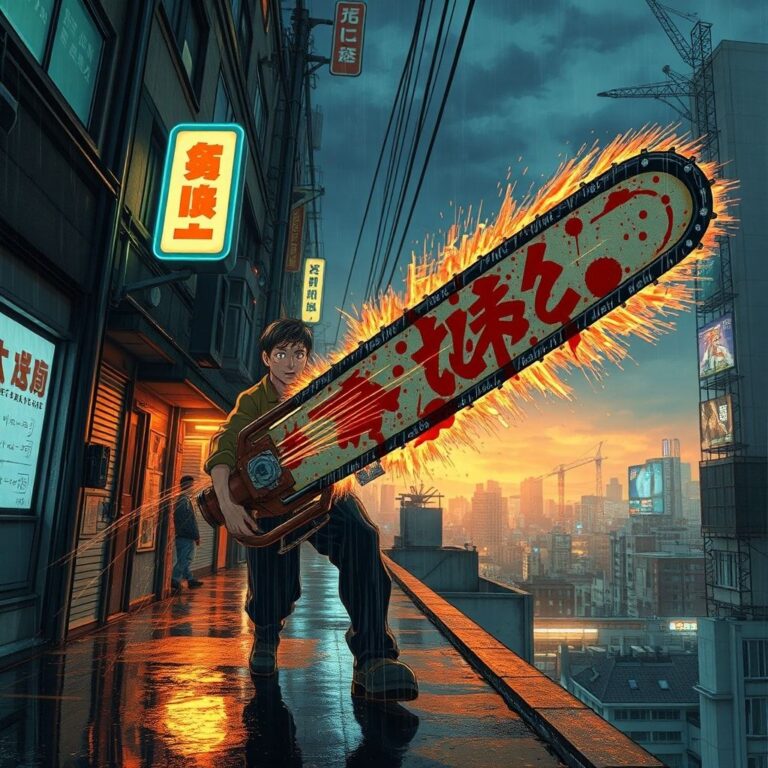
The Chainsaw Man ending dropped like a guillotine on the shōnen landscape, leaving fans scrambling for meaning while industry execs whispered about its market shockwaves. As the final panels flickered, Denji’s reality fractured, forcing us to question what a “happy ending” even means. Now, with 35 million copies sold and a new timeline hinted, the series demands a second look beyond the blood‑splatter, echoing our deep‑dive on why the ending redefines shōnen tragedy.
Verified News & Source Context
The second arc of Chainsaw Man wrapped its chaotic narrative on March 25, 2026, concluding serialization on Shōnen Jump+. That milestone coincided with the release of volume 23, cementing the series as a 23‑volume juggernaut by February 2026. Sales figures exploded past 35 million copies worldwide by January 2026, a testament to its cross‑cultural resonance. The finale itself is a meta‑twist: Pochita, the ever‑loyal Chainsaw Devil, consumes his own heart, triggering Denji’s awakening in a brand‑new reality—a clean‑slate timeline that erases the original arc’s trauma. Simultaneously, Nayuta, the reincarnation of the Control Devil, steps into Public Safety, recruiting Denji and Power as official Devil Hunters, effectively resetting the power structure while planting seeds for future conflicts. This narrative reset is not just a plot device; it reflects Shueisha’s strategic push to extend the franchise’s longevity through spin‑offs and multimedia adaptations. For deeper verification, consult the official project page which chronicles the publication timeline and sales milestones.
Historical Context – Chainsaw Man ending Through an Old Guard Lens
When the original manga debuted in 2018, the anime adaptation that followed in 2020 set a visual benchmark for visceral shōnen horror. Compared to contemporaries like Jujutsu Kaisen or Attack on Titan, Chainsaw Man’s early arcs leaned heavily on shock value over long‑term world‑building. The old guard—studio MAPPA’s veteran staff—pushed for kinetic fight choreography, a decision that paid off in viewership but left narrative threads dangling. The 2026 finale, however, marks a departure from that kinetic focus, opting for a philosophical reset reminiscent of classic shōnen epilogues such as Dragon Ball’s “Peaceful Aftermath” or One Piece’s “New World” reveal. This shift mirrors a broader industry trend where long‑running series are forced to reinvent themselves to survive in an oversaturated market. Studios now prioritize legacy planning, ensuring that a franchise can spawn sequels, games, and live‑action adaptations without exhausting its core mythos. The Chainsaw Man ending, therefore, is both a narrative gamble and a strategic alignment with the evolving expectations of global audiences hungry for continuity and expansion.
Technical Crunch – Information Gain from the Finale’s Lore Mechanics
The finale’s core mechanic hinges on the concept of devil contract self‑consumption. By having Pochita devour his own heart, the narrative introduces a recursive loop: the contract’s source becomes its own terminus, effectively erasing the original timeline’s causal chain. This meta‑twist not only reshapes the story’s internal logic but also mirrors a broader conversation about how controversial twists can reinvigorate a series. Nayuta’s emergence as the Control Devil’s reincarnation adds another layer: control over fate is now personified in a character who can manipulate the very fabric of the new world’s devil hierarchy. Statistically, this grants Denji a power ceiling that surpasses his previous “chainsaw” limits, positioning him as a potential “meta‑devil” capable of influencing contract outcomes. Narrative structure-wise, the arc employs a three‑act reset: (1) cataclysmic sacrifice, (2) world‑building in the new timeline, (3) foreshadowing of future conflicts via Nayuta’s recruitment. This scaffolding not only provides closure but also seeds future story arcs, ensuring that information gain from the finale is not wasted but rather repurposed for long‑term storytelling.
Future Implications – What the Chainsaw Man ending Means for the Franchise
The reset opens a Pandora’s box of franchise possibilities. With Denji now operating under a new reality, spin‑off manga focusing on Nayuta’s origins or Power’s post‑reset adventures become viable, expanding the universe without retreading old ground. From a commercial standpoint, the ending paves the way for a second‑season anime that can explore the fresh timeline’s aesthetics, potentially attracting a new wave of viewers while retaining the original fanbase. Moreover, the meta‑narrative of timeline alteration aligns perfectly with upcoming video game adaptations, where players could toggle between original and reset worlds, offering divergent gameplay experiences. However, the risk lies in audience fatigue; if future content leans too heavily on the reset gimmick without substantive character development, the series could lose its gritty charm that originally set it apart. Culturally, the ending reinforces the shōnen genre’s evolution toward more complex, morally ambiguous storytelling, influencing upcoming creators to experiment beyond traditional hero arcs.
Listen up, rookie otaku: the Chainsaw Man ending isn’t just a shock‑value finale; it’s a masterclass in resetting a franchise without pulling the rug out from under its own mythos. The writers tossed a narrative grenade, blew up the timeline, and then handed us a clean slate—exactly the kind of bold move that separates a cash‑grab from a legacy‑building gamble.
But don’t get complacent. The real test will be how studios and publishers milk this new reality. If they churn out half‑baked spin‑offs or lazy merch, the whole thing collapses faster than Denji’s heart after a devil contract. Keep your eyes peeled, because the next wave of adaptations will either cement Chainsaw Man as a timeless horror‑shōnen hybrid or relegate it to a cautionary tale about over‑cooking a good thing.
Related Guides & Further Reading
Check out the Chainsaw Man archives.
Check out the Chainsaw Man archives.