Cairo budget guide: Surviving Manshiyat Naser’s Garbage City on a Shoestring
Ever wondered how far a few Egyptian pounds can stretch in the most unlikely corners of Cairo? Our complete Egypt budget guide gives you a country‑wide perspective before you zoom into the capital. The Cairo budget guide dives headfirst into Manshiyat Naser, a sprawling district where trash becomes both a livelihood and a labyrinth. Buckle up, because navigating this urban jungle on a shoestring will test your wits, your wallet, and your tolerance for the unexpected. Before you dive in, you might want to explore our comprehensive Cairo budget hub for a broader view of costs across the city.
Verified News & Source Context for Manshiyat Naser
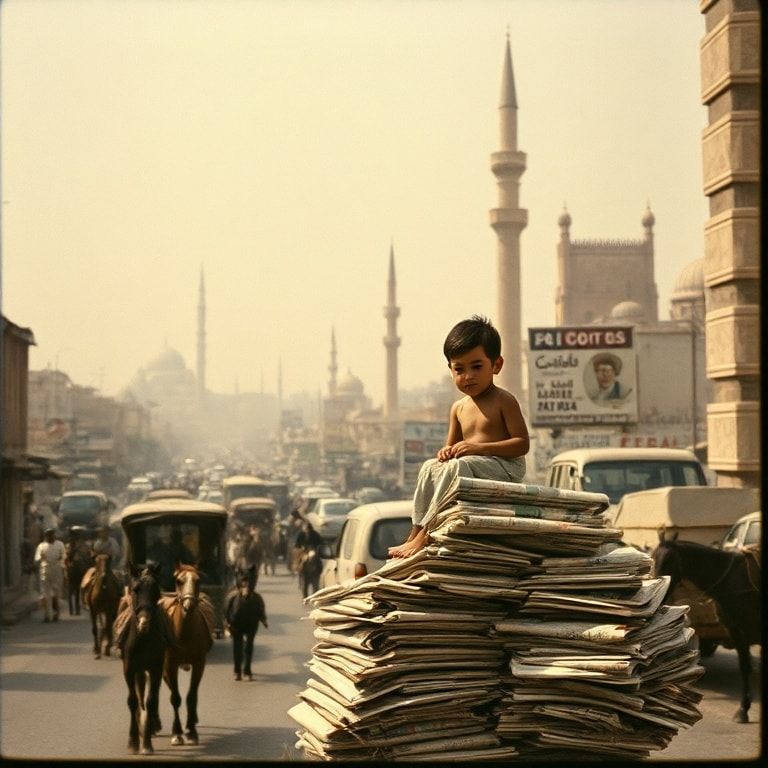
The official district office sits on First Air Street – Autostrade, a deceptively ordinary address that anchors a population of 3,222,036 residents as of April 2023. This figure, sourced from the General Department of Information & Documentation, underscores the sheer density of a district that spans 1,492.26 km² overall, yet only 63.19 km² is inhabited. In practical terms, that means over 50,000 souls per square kilometre, a pressure cooker of human activity that fuels both the informal recycling economy and the chaotic traffic that defines the area.
Contact numbers (23418781, 25117780, 23418780) and municipal e‑mail addresses ([email protected], [email protected]) are publicly listed, reflecting a bureaucratic transparency that is rare for such a sprawling informal settlement. For travelers, these channels become lifelines when navigating permits, waste‑tourist permits, or simply seeking clarification on local safety protocols. The official page official project page aggregates these details, offering a digital foothold in a district that often feels physically uncharted.
Understanding these statistics isn’t just academic; they shape the economics of a budget traveler. With a high population density, street food stalls proliferate, driving down prices for staples like falafel, koshary, and cheap tea. Conversely, the sheer volume of waste creates a unique market for recycled goods, meaning you can barter for a night’s stay in a local’s home using empty plastic bottles or aluminum cans. The district’s administrative openness also hints at potential safety nets—municipal services, albeit limited, can intervene in emergencies, a crucial factor when you’re operating on a shoestring budget.
Old Guard Perspective: Historical Context of Cairo’s Garbage City

To grasp Manshiyat Naser’s present, we must rewind to the 1970s, when Cairo’s rapid urbanization outpaced municipal waste management. The district emerged as a haven for informal recyclers—known locally as “Zabbaleen”—who turned the city’s mounting trash into a thriving cottage industry. This grassroots movement predates the modern gig economy, embodying a self‑sustaining model that has persisted for decades.
In the early days, the Zabbaleen operated without official recognition, their makeshift settlements sprouting alongside official neighborhoods. Over time, the government’s attempts to formalize waste collection clashed with the Zabbaleen’s entrenched networks, leading to a series of policy oscillations. The 1990s saw a brief period of privatization, but the resilience of the informal sector forced a re‑integration of the Zabbaleen into the city’s waste hierarchy.
These historical ebbs and flows mirror broader trends in Egyptian cinema, where gritty realism gave way to glossy productions as the market globalized. Just as filmmakers adapted to shifting audience tastes, Manshiyat Naser adapted to the push‑pull of state interventions and market forces, carving out a niche that remains vital for Cairo’s sanitation ecosystem. For the budget traveler, this history translates into a living museum of adaptive ingenuity—every alleyway, every makeshift workshop, tells a story of survival against bureaucratic tides.
Technical Crunch: Numbers, Lore & Logistics in a Cairo budget guide

Let’s break down the hard data that will dictate your itinerary—our Cairo budget guide on roaming the city on a shoestring without losing your mind—and consider the figures from our detailed solo cost breakdown, with 3,222,036 residents packed into 63.19 km² of inhabited land, the average daily waste output is estimated at 1.5 kg per person, translating to roughly 4,833 tons of trash each day. The Zabbaleen’s recycling rate hovers around 80%, meaning a massive flow of reusable materials circulates through informal markets.
From a budgeting perspective, this density drives competition among street vendors, slashing food prices to as low as 5 EGP for a falafel sandwich. Following the advice in our budget-friendly accommodation guide, accommodation can be negotiated for 30‑40 EGP per night if you’re willing to stay with a local family in exchange for a few kilograms of sorted recyclables. Transportation within the district is best tackled on foot or via shared “micro‑buses” that charge a flat 2 EGP per ride, a stark contrast to the 20‑30 EGP fares of Cairo’s metro.
Safety metrics, while not quantified in official reports, can be inferred from crime statistics of adjacent districts. Petty theft rates rise during peak market hours, so keeping valuables concealed and traveling in small groups is advisable. The district’s official contact numbers become crucial if you encounter health issues—particularly respiratory concerns from dust and landfill fumes. Knowing the municipal e‑mail addresses allows you to request emergency assistance or clarifications on local regulations, a small but vital advantage for any low‑budget explorer.
Future Implications & Survival Tactics – A Cairo budget guide Outlook
The trajectory of Manshiyat Naser points toward a hybrid future where informal recycling coexists with emerging green technologies. Recent pilot projects aim to integrate solar‑powered compactors, reducing manual sorting labor and potentially reshaping the local economy. For budget travelers, this could mean new eco‑tourism opportunities—guided tours of recycling hubs, workshops on upcycling, and even volunteer stints that offset accommodation costs.
However, the district also faces pressures from urban expansion and governmental attempts to relocate informal settlements. Should large‑scale redevelopment proceed, the cultural fabric that makes Manshiyat Naser a unique budget destination could erode, pushing the Zabbaleen to peripheral zones and inflating costs. Staying informed via the municipal e‑mail channels and monitoring local news will be essential to adapt itineraries on the fly.
Listen up, green‑horns: the moment you step into Manshiyat Naser, you’ll be hit with a wall of smells, sounds, and sights that would make a seasoned otaku gag and gasp in equal measure. The Zabbaleen have turned trash into an art form, and if you think you can waltz through with a five‑dollar budget and a selfie stick, you’re in for a rude awakening. Respect the hustle, barter with a smile, and never—ever—assume the municipal office will rescue you from a busted water bottle; they’re more likely to hand you a form in Arabic you can’t read.
Pro tip from a two‑decade veteran: pack a reusable water bottle, a sturdy pair of shoes, and a handful of empty plastic bottles. The locals will trade you a night’s stay or a hot cup of tea for those, and you’ll earn street‑cred faster than you can say “anime marathon.” Keep your wits sharp, your budget tighter, and remember that the real treasure here isn’t the cheap kebab, but the stories you’ll collect from the people who turn waste into wonder.
Related Guides & Further Reading
Related Guides & Further Reading
Check out the Cairo budget guide archives.