Master the Chaos: The Definitive Fate watch order for 2026 and Beyond
Before you set out, swing by our home hub and check out our master anime hub for an overarching guide to every franchise. Ever wondered why diving into the Fate multiverse feels like stepping into a labyrinth with no map? The Fate watch order is your compass, guiding you through tangled timelines, contradictory adaptations, and the ever‑shifting power dynamics of heroic spirits. Miss the right sequence and you’ll be left puzzling over why a character’s backstory feels half‑told, jeopardizing both your enjoyment and the series’ thematic payoff. For a broader perspective across anime series, explore our complete anime watch order hub.
Verified News & Source Context
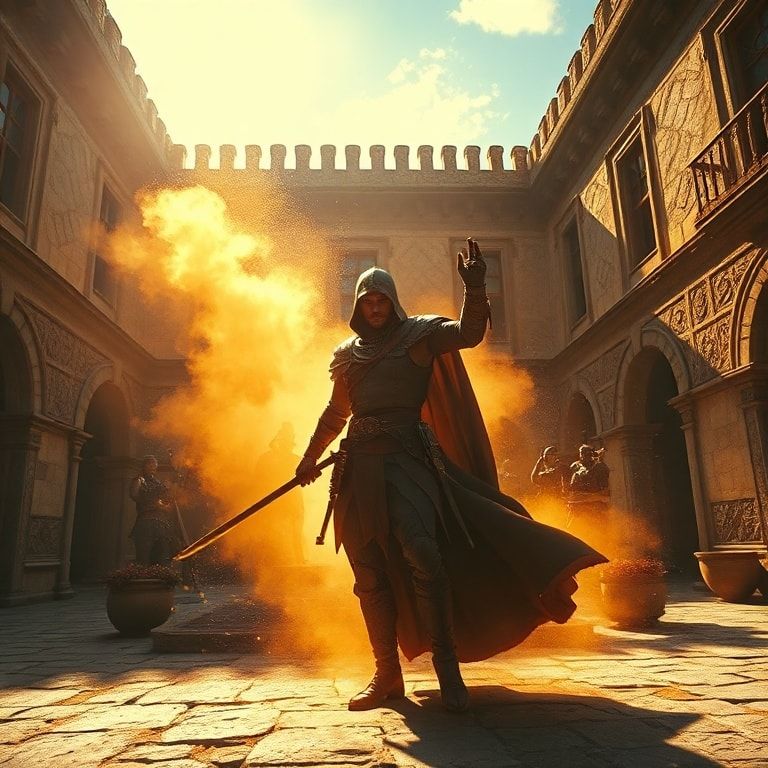
Let’s start with the hard facts that anchor our watch‑order compass. The inaugural Fate/stay night TV anime, birthed by Studio Deen, aired 24 episodes from January 7 2006 to June 17 2006. This adaptation, while ambitious, suffered from budget constraints and a rushed schedule, leading to uneven animation and a truncated narrative that only skimmed the three canonical routes. Fast forward to October 4 2014, when a second Fate/stay night series—this time under the meticulous eye of Ufotable—premiered, delivering a visual feast and a more faithful retelling of the “Unlimited Blade Works” route.
Ufotable’s involvement didn’t start there. This early work set the stage for the kind of over‑powered heroics we catalogued in our 7 Overpowered Anime Protagonists Who Never Hide Their Strength (2026 Update) guide. Their adaptation of Fate/Zero aired from October 2011 to June 2012, a prequel that redefined the franchise’s tonal maturity. Production approval came in December 2010, a rapid green‑light that reflected Type‑Moon’s confidence in Ufotable’s CGI‑enhanced pipeline. The first Blu‑ray box set of Fate/Zero shattered expectations, moving 43,000 copies in its debut week—a testament to both fan anticipation and the studio’s reputation for cinematic quality. Meanwhile, the light novel source material for Fate/Zero rolled out on December 29 2006, March 31 2007, July 27 2007, and December 29 2007, establishing a tight publication cadence that kept the narrative fresh in readers’ minds.
All these milestones converge on the official project page, which archives release dates, staff rosters, and sales figures, offering a reliable reference point for anyone constructing a chronological viewing plan.
Historical Context (Old Guard Perspective)

When you compare Fate’s evolution to older franchises like Neon Genesis Evangelion or Mobile Suit Gundam, a clear pattern emerges: early adaptations often grapple with limited budgets and a nascent fanbase, resulting in compromises that later iterations rectify. Studio Deen’s 2006 run mirrors the early Evangelion TV series—ambitious storytelling hampered by production bottlenecks. By contrast, Ufotable’s entrance in 2011 signaled a paradigm shift akin to Sunrise’s revitalization of Gundam with Mobile Suit Gundam: Iron‑Blooded Orphans, where cutting‑edge CGI and a tighter narrative focus re‑engaged lapsed fans. For a deep dive into the chronology, see our Fate watch order expose that breaks down the 2026 timeline.
Staff evolution also tells a story. The original Deen team featured director Kazuya Murata and writer Takashi Takeuchi, whose limited experience with large‑scale magical battles led to static fight choreography. Ufotable recruited veteran director Takahiro Miura and visual director Takahiro Sakazume, both of whom honed their craft on titles like The Garden of Sinners. Their synergy birthed fluid combat sequences that feel more like live‑action set pieces than traditional anime, raising the bar for subsequent adaptations. This level of power puts these heroes among the ranks of the over‑powered protagonists we highlighted in our 7 Overpowered Anime Protagonists Who Never Hide Their Strength (2026 Update) article.
Market shifts further contextualize the watch order. The mid‑2000s saw a surge in DVD sales, prompting studios to prioritize quantity over quality. By the 2010s, streaming platforms demanded higher production values to retain subscribers, incentivizing studios like Ufotable to invest heavily in CGI pipelines. This economic pivot explains why the 2014 Fate/stay night: Unlimited Blade Works series enjoys a crisp visual fidelity that the 2006 counterpart could never achieve.
Technical Crunch: Lore Mechanics & Production Design
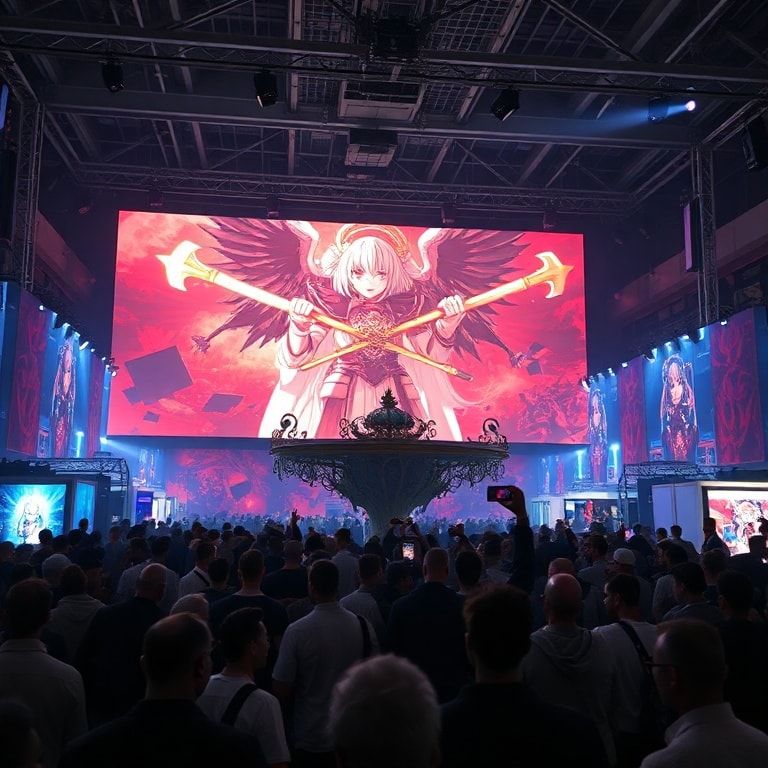
Beyond production trivia, the Fate franchise thrives on a dense mythos that intertwines the Holy Grail War’s mechanics with real‑world mythological archetypes. Understanding the “Servant” classification—Saber, Archer, Lancer, Rider, Caster, Assassin, Berserker—is crucial for appreciating narrative stakes. Each class adheres to a distinct set of command spells, Noble Phantasms, and compatibility matrices, which Ufotable visualizes through meticulous character designs and symbolic color palettes.
Take the “Unlimited Blade Works” route: its core concept revolves around the projection of countless swords, a literal manifestation of the protagonist’s internal conflict. Ufotable’s use of particle simulation to render the blade storm not only dazzles the eye but also reinforces the thematic motif of endless possibilities versus deterministic fate. In contrast, the “Heaven’s Feel” route, later adapted into a film trilogy, leans heavily on psychological horror, employing low‑key lighting and claustrophobic framing to convey the protagonist’s descent into madness.
From a production standpoint, Ufotable’s hybrid approach—combining hand‑drawn key frames with 3D models—optimizes both fluidity and detail. The studio’s proprietary “Ufotable Engine” allows for real‑time compositing, meaning background plates can be dynamically lit to match character actions, a technique evident in the rain‑soaked battle scenes of Fate/Zero. This technical prowess not only enhances immersion but also influences how viewers perceive the lore: a well‑animated Noble Phantasm feels weightier, making the stakes feel genuine. Fans interested in how these visually striking characters rank among anime’s strongest can explore our Clash of Titans: Ranking the Strongest Anime Characters in 2026 analysis.
Future Implications of the Fate watch order
Looking ahead, the franchise’s trajectory suggests a continued diversification of media formats. Spin‑offs like Fate/Grand Order have already proven that mobile gaming can expand the narrative universe, introducing alternate timelines that may later be adapted into anime. Moreover, the success of Ufotable’s cinematic style has encouraged other studios to experiment with hybrid animation, potentially leading to a new wave of high‑budget, short‑form series that fill narrative gaps between major releases. For a parallel example of integrating movies, specials, and TV episodes, see our My Hero Academia watch order guide, which maps out a similarly layered franchise.
The watch order itself will likely evolve as new adaptations—such as the upcoming “Fate/Strange Fake” series—enter the canon. Fans will need to reassess chronological placement, especially as prequels and side stories receive higher production values that rival mainline entries. This fluidity underscores the importance of a flexible viewing strategy: prioritize narrative coherence over strict release order, and remain open to re‑watching earlier, less polished entries for contextual depth.
Listen up, fresh‑bloods: the Fate multiverse isn’t a linear novel you can skim. It’s a sprawling, interwoven tapestry where each thread—be it a 2006 Deen episode or a 2023 CGI masterpiece—carries its own weight. Skipping the gritty origins because they’re “old school” robs you of the gritty foundation that makes the later, glossy spectacles hit harder. The early adaptations plant the seeds of tragedy, ambition, and moral ambiguity that later adaptations harvest with cinematic flair.
And don’t think the franchise will sit still. With Type‑Moon’s aggressive expansion into games, novels, and even stage plays, the next wave could see a live‑action adaptation that finally tackles the “Heaven’s Feel” arc in full. Expect higher stakes, bigger budgets, and a watch order that might need a fresh rewrite. Keep your eyes peeled, your schedule flexible, and your critical mind sharp—because in the world of Fate, the only constant is change, and the only guarantee is that the next Servant will be more over‑the‑top than the last.
Related Guides & Further Reading
Related Guides & Further Reading
Related Guides & Further Reading
Check out the Fate series archives.