Chainsaw Man ending lore: The Dark Truth Behind Denji’s Final Fate
Chainsaw Man ending lore has become the talk of every otaku bar, and for good reason. The series wrapped up its first season with a punch that left fans reeling, while the looming sequel promises to deepen the mystery. As we dissect the finale, the stakes aren’t just about Denji’s survival—they’re about how manga‑to‑anime adaptations can finally get it right. For a comprehensive breakdown, see our Chainsaw Man ending hub.
Season 1 Broadcast Details & Production Insight
Air dates and episode length
The first season of official project page aired from October 12 to December 28, 2022, delivering twelve tightly‑paced episodes. Notably, episodes 1 and 10 stretch to 25 minutes, while the rest sit at a lean 23 minutes, a rhythm that mirrors the manga’s rapid‑fire storytelling.
MAPPA’s solo production model
MAPPA’s decision to shoulder the entire production solo—eschewing the traditional multi‑company committee—granted them unprecedented creative freedom, allowing a near‑verbatim translation of Tatsuki Fujimoto’s chaotic climax. This autonomy manifested in the series’ faithful recreation of Denji’s final showdown, preserving the visceral gore and existential dread that many adaptations dilute for broader appeal.
Post‑season releases
The decision also signaled a shift in industry economics: studios are increasingly willing to gamble on niche, high‑risk properties if they can retain full artistic control, betting on dedicated fanbases rather than mass‑market safety nets. The subsequent Reze Arc film, released September 19, 2025, directly continued the TV narrative, confirming MAPPA’s commitment to a serialized, canon‑first approach.
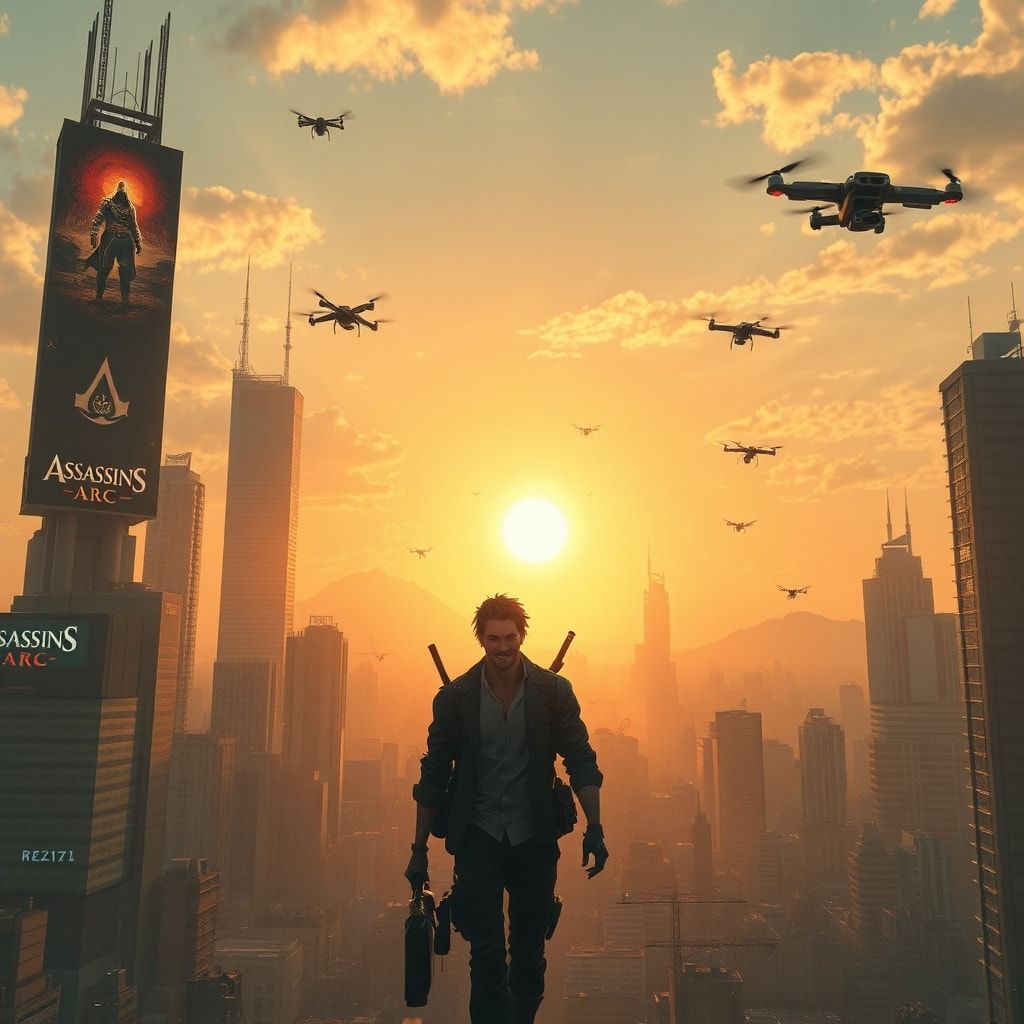
Jump Festa ’26’s announcement of the “Assassins Arc” further cements this trajectory, promising that the story will not stall at the TV finale but will push deeper into the manga’s darker territories. This continuity strategy not only satisfies existing fans but also positions Chainsaw Man as a long‑term franchise, potentially influencing how future shōnen adaptations handle cliffhangers and sequel planning.
MAPPA’s Evolution & Chainsaw Man’s Place in Adaptation History
From conventional pacing to darker narratives
When you compare Chainsaw Man to earlier MAPPA triumphs—like “Jujutsu Kaisen” (2020) or the more experimental “Dororo” (2019)—a clear evolution emerges. The studio’s early 2010s work, such as “Kuroko’s Basketball” (2012), adhered to conventional pacing and visual flair, often compromising narrative depth for spectacle. By the time they tackled “Attack on Titan: The Final Season” (2020), MAPPA demonstrated a willingness to embrace darker, morally ambiguous material, a trend that finds its apex in Chainsaw Man.
Industry‑wide production‑committee shift
Industry veterans recall the 2000s era where adaptations were shackled by production committees demanding market‑friendly edits. The original “Dragon Ball Z” (1996) and “One Piece” (1999) suffered from filler arcs and sanitized violence to appease broadcasters. Chainsaw Man’s solo production model flips that script, echoering the auteur‑driven approach of studios like Madhouse during its “Paprika” (2006) era, where creative vision trumped commercial compromise.
Staff turnover and visual style
Moreover, the staff turnover at MAPPA—bringing in veteran key animators from the “Gurren Lagann” (2007) team—infused the series with a kinetic energy reminiscent of early 2000s action anime, yet refined with modern CGI integration. This blend of old‑guard dynamism and new‑school tech underscores why the ending feels both nostalgically brutal and freshly innovative, setting a benchmark for future shōnen adaptations.
Lore Mechanics & Animation Techniques
Devil contracts and fusion
At the heart of the finale lies a web of devil contracts that function as both plot devices and world‑building mechanics. Denji’s pact with the Chainsaw Devil is not merely a power source; it’s a binding contract that rewrites his very biology, granting regenerative abilities proportional to his blood loss. This mechanic is visually encoded in the series’ recurring motif of blood‑filled gauges, a design choice that mirrors RPG stat bars, allowing viewers to intuitively grasp his stamina and risk.
Furthermore, the series introduces the concept of “Devil Fusion,” where multiple devil essences can co‑exist within a single host, amplifying abilities but also destabilizing the host’s psyche. The Reze Arc film expands this by showcasing how hybridization can lead to emergent traits—like Reze’s ability to manipulate fire while retaining human empathy—adding layers to the lore that the TV ending only hinted at.
Hybrid animation pipeline and sound design
From a production standpoint, MAPPA employed a hybrid animation pipeline: hand‑drawn key frames for intense combat, complemented by 3‑D rigs for the chainsaw transformations. This approach allowed for fluid, high‑speed motion without sacrificing the gritty texture of the original manga panels. The sound design—particularly the visceral revving of Denji’s chainsaw—was mixed using a combination of real chainsaw recordings and synthesized metal distortion, creating an auditory signature that reinforces the lore’s brutal aesthetic. The technical choices are further broken down in our look at Denji’s final arc lore.
Assassins Arc Outlook & Franchise Expansion
Narrative themes and sociopolitical commentary
The announcement of the “Assassins Arc” signals a bold narrative expansion that could redefine the franchise’s thematic scope. By moving beyond Denji’s personal struggle to a broader conflict involving multiple devil‑infused assassins, the series is poised to explore sociopolitical commentary on power structures, echoing the manga’s critique of capitalist exploitation. This shift may attract a wider demographic, positioning Chainsaw Man alongside heavyweight titles like “Attack on Titan” in cultural relevance.
Commercial potential and cross‑media opportunities
Commercially, the continued investment in sequels—both film and TV—suggests MAPPA and its partners view Chainsaw Man as a long‑term IP with merchandising, gaming, and cross‑media potential. The success of the Reze Arc film could pave the way for a video‑game adaptation that leverages the established combat mechanics and devil‑contract system, offering fans an interactive deep‑dive into the lore.
Listen up, fresh‑blood fans: the Chainsaw Man ending isn’t just a cliff‑hanger; it’s a masterclass in how to treat source material with reverence while still delivering a punch that knocks the wind out of you. MAPPA didn’t sugarcoat the brutality, and that rawness is why the finale still haunts you weeks later.
But don’t get complacent. The next arcs will test whether the studio can keep that razor‑sharp edge without slipping into fan‑service quicksand. If they manage to balance the grotesque with genuine character growth, we’ll witness a paradigm shift where anime adaptations finally stop fearing the source and start embracing its chaos. Buckle up, because the ride’s far from over.
Related Guides & Further Reading
Check out the Chainsaw Man archives.