From Angst to Awe: 7 Anime Depression Heroes Who Turned Their Pain into Power (2026 Update)
Anime depression heroes have become the reluctant backbone of modern storytelling, turning inner turmoil into battlefield valor. As the industry wrestles with mental‑health stigma, these protagonists prove that darkness can forge the brightest warriors. Their journeys demand our attention, because the stakes are not just fictional—they echo real‑world battles.
Shinji Ikari – Genesis of the Anime Depression Hero
Shinji Ikari first burst onto the scene in the inaugural episode of Neon Genesis Evangelion, “Angel Attack” (1994), a bold entry that instantly set a new bar for psychological depth in mecha anime. Director Hideaki Anno admitted the character was a direct mirror of his own four‑year depressive slump following Nadia: The Secret of Blue Water, embedding personal anguish into the narrative fabric.
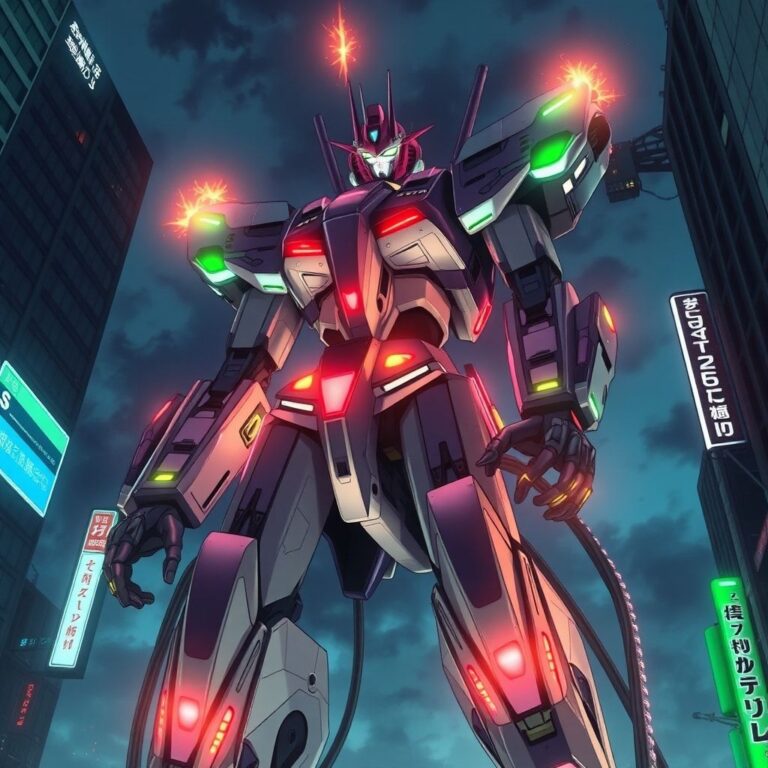
At a tender 14, Shinji pilots the monstrous Evangelion Unit‑01, a paradoxical blend of childlike insecurity and world‑saving responsibility, positioning him as a reluctant hero whose courage is measured in quiet breaths rather than roaring battle cries. Designer Yoshiyuki Sadamoto emphasized that Shinji’s lack of enthusiasm is a distinct brand of heroism, redefining bravery as the willingness to act despite crippling self‑doubt.
The Rebuild films, particularly “Evangelion: 2.0 You Can (Not) Advance,” chart a noticeable shift: Shinji emerges with a steadier resolve, suggesting a narrative arc where depression is not a static endpoint but a hurdle that can be surmounted. This evolution resonates with audiences craving authentic portrayals of mental health, and it has sparked scholarly debate about the responsibility of creators to depict recovery realistically.
For deeper reference, see the official project page which chronicles production notes and Anno’s own commentary.
How Shinji Redefined Mecha Hero Archetypes
Before Shinji’s introspective turmoil, the mecha genre was dominated by archetypal pilots—stoic, hyper‑confident, and often unflinchingly heroic. Series like Mobile Suit Gundam (1979) and Macross (1982) presented protagonists whose personal conflicts were secondary to grand‑scale war narratives.
The 1990s, however, witnessed a seismic shift as studios like Gainax began interrogating the psyche of their leads. This pivot aligned with a broader cultural movement in Japan, where the “lost decade” fostered a collective introspection about purpose and societal pressure. Anno’s decision to embed his own depressive experience into Shinji was both a daring artistic gamble and a reflection of a market hungry for authenticity.
While contemporaries such as Serial Experiments Lain explored isolation through cyber‑punk lenses, Evangelion’s raw emotional palette set a precedent that would influence later titles like Puella Magi Madoka Magica (2011) and Re:Zero (2016), both of which feature protagonists wrestling with despair before embracing agency. The industry’s gradual embrace of mental‑health themes can be traced back to this watershed moment, marking Shinji as a catalyst for a new generation of “anime depression heroes.”
Narrative Mechanics Behind Shinji’s Struggle
From a narrative mechanics standpoint, Shinji operates as a living barometer for the series’ thematic temperature. Each Angel encounter is not merely a combat scenario; it is a psychological trial encoded in the EVA’s sync ratio, a quantifiable metric that spikes when Shinji’s self‑esteem falters.
The sync rate, displayed as a percentage on the HUD, directly correlates with his willingness to trust others—a clever visual metaphor for depression’s impact on interpersonal connections. Production design further amplifies this: Unit‑01’s organic, almost flesh‑like texture contrasts starkly with the sterile, angular cityscape of Tokyo‑3, symbolizing the clash between internal chaos and external order.
Composer Shirō Sagisu’s score employs dissonant strings during moments of self‑doubt, transitioning to soaring brass when Shinji makes a decisive move, reinforcing the auditory cue that emotional breakthroughs are as epic as any battle. These layered choices—statistical sync, visual juxtaposition, and adaptive music—create a feedback loop that immerses viewers in Shinji’s mental state, making his eventual growth feel earned rather than scripted.
The technical scaffolding thus serves a dual purpose: it advances plot while simultaneously educating audiences on the nuanced reality of battling depression.
Emerging Trends for Depression‑Focused Protagonists
The ripple effect of Shinji’s archetype is already manifesting in upcoming projects slated for the next decade. Studios are green‑lighting series that place mental‑health narratives at the forefront, often blending them with genre staples like sci‑fi and fantasy to broaden appeal.
This trend suggests a commercial viability that could encourage more creators to tackle depression without resorting to melodrama, instead opting for nuanced character arcs that mirror real‑world recovery processes. Moreover, the rise of streaming platforms provides a global stage, allowing culturally specific stories about anxiety and hopelessness to resonate across borders, potentially normalizing conversations about mental health in regions where stigma remains entrenched.
Veteran Otaku’s Cautionary Take
From a veteran’s salty perspective, the industry’s flirtation with “anime depression heroes” is both a blessing and a curse. On one hand, it’s refreshing to see studios finally give us protagonists who bleed, sweat, and question their purpose—finally, some depth beyond the usual power‑up clichés.
On the other hand, the market’s appetite for tragedy can turn genuine struggles into cheap click‑bait, diluting the very authenticity that made Shinji a beacon. If creators keep treating depression as a plot device rather than a lived experience, we’ll see a glut of half‑baked heroes who never truly evolve, leaving audiences jaded and the genre stagnant. The key will be balancing raw honesty with hopeful resolution, ensuring that future “anime depression heroes” aren’t just tragic mascots but living testaments to resilience.
1. Last Exile (Gonzo, 2003)
World‑Building and Psychological Metaphor
The sky‑bound archipelago of “Prester” is a masterclass in world‑building restraint. By confining the narrative to a lattice of floating continents connected by the Grand Stream—a perpetual aetheric current—director Koichi Chigira forces every conflict to revolve around navigation, trade routes, and the politics of aerial supremacy.
The Vanships, sleek wind‑driven craft, become extensions of their pilots’ psyche: a fragile hull battling an unforgiving wind mirrors the protagonists’ own emotional turbulence. The series leverages this geography not merely as backdrop but as a kinetic engine; each sortie across the Grand Stream is a high‑stakes gamble where miscalculations spell instant annihilation, amplifying the tension between duty and self‑preservation.
Narrative Meter of the Grand Stream
Beyond the visual flair, the Grand Stream functions as a diegetic narrative meter. Its unpredictable turbulence dictates pacing, compelling characters like Claus and Lavie to confront personal betrayals in the midst of literal storms. Thematically, the steam‑driven world underscores the series’ meditation on industrial progress versus human cost—every boom of the aetheric engine is a reminder that technological marvels often mask deeper societal fractures.
2. March Comes in Like a Lion (MAPPA, 2016)
Shogi Tournament Structure as Emotional Pressure Cooker
“March Comes in Like a Lion” builds its emotional pressure cooker around the professional shogi tournament hierarchy, a world‑building mechanic that quantifies success in rank points, promotion battles, and sponsor expectations. Each match is treated as a micro‑battlefield where Rei Kiriyama’s internal monologue is externalized through the board’s 9×9 grid, turning every pawn movement into a psychological decision point. The rigidity of the tournament structure mirrors Rei’s own sense of entrapment, while the seasonal cadence of league play provides a rhythmic ticking clock that forces him to confront grief on a regular, unforgiving schedule.
Visual Contrast Between Public and Private Spaces
Visually, the muted urban palette of modern Tokyo contrasts sharply with the intimate, candle‑lit interiors of the Kawamoto household, highlighting how communal warmth can act as a counter‑force to the isolating world of competitive shogi. By anchoring Rei’s depressive spiral to tangible metrics—ELO shifts, demotion threats, and match‑day pressures—the narrative makes his incremental healing feel earned, as each earned point becomes a small victory over the inertia of his trauma.
3. Welcome to the NHK (Studio Deen, 2006)
Urban Labyrinth as Antagonist
The series weaponizes social isolation as its core world‑building engine, turning Tokyo’s neon‑lit sprawl into a labyrinth of invisible walls. Satō’s belief in an omnipresent “NHK” conspiracy functions as a diegetic feedback loop: every perceived surveillance intensifies his withdrawal, which in turn fuels more elaborate delusions. The urban setting is not merely a backdrop; it is an active antagonist that amplifies the protagonist’s depressive spiral by constantly reminding him of the world he refuses to engage with.
Gamified Recovery Through Structured Tasks
When Misaki introduces structured “tasks”—small, measurable social interactions—the narrative uses the mechanics of goal‑setting to puncture Satō’s self‑imposed isolation. Each completed task is logged like a mission objective, translating intangible emotional progress into concrete milestones. This gamified approach underscores the series’ thesis: even the most entrenched hikikomori can rebuild agency when the surrounding world is reframed from hostile to procedural.
4. A Silent Voice (Kyoto Animation, 2016)
School Hierarchy as Social Pressure
“A Silent Voice” constructs its tension around the school’s bullying hierarchy and the communication barriers introduced by Shōko’s deafness. The classroom’s spatial layout—rows of desks that enforce visual dominance—serves as a physical manifestation of social pressure, while the absence of sign‑language infrastructure amplifies isolation. By making the act of listening a literal barrier, the series forces Shōya Ishida’s guilt to echo through every silent pause, turning each classroom scene into a study in unspoken oppression.
Cathartic Public Speech
The film’s climax pivots on a public graduation speech, a narrative mechanic that forces Shōya to confront his past before an audience that once marginalized him. The speech functions as a release valve, where the previously suppressed noise of his remorse finally finds a channel. This moment demonstrates how institutional settings—school assemblies, parent‑teacher meetings—translate internal remorse into external resolution, underscoring that personal redemption often requires confronting the very structures that enabled the trauma.
5. Re:Zero − Starting Life in Another World (White Fox, 2016)
Return by Death as Narrative Engine
“Return by Death” is the engine that drives Lugnica’s world‑building, turning the fantasy realm into a ticking time‑loop laboratory. Each death resets the environment while preserving Subaru’s memories, turning personal trauma into an iterative experiment. The mechanic forces the narrative to treat every subplot—political intrigue, monster incursions, interpersonal betrayals—as variables that can be re‑tested, amplifying tension as Subaru’s desperation mounts with each reset.
Psychological Impact of the Loop
The loop’s reset point is not a neutral button but a psychological crucible: the trauma of dying repeatedly erodes Subaru’s optimism, making every subsequent choice a battle against learned helplessness. When Subaru finally decides to act out of love rather than fear—protecting Emilia at the cost of his own safety—the world‑building mechanism validates his growth, turning a metaphysical reset into a character‑driven moral victory.
6. Erased (A‑1 Pictures, 2016)
Temporal Tether and Scarcity
The “Revival” ability embeds a temporal tether into early‑2000s Matsumoto, making every mundane street corner a potential flashpoint for salvation. Unlike a generic time‑travel trope, the mechanic imposes a hard limit: each jump shortens Satoru Fujinuma’s lifespan, creating built‑in scarcity that forces him to prioritize which tragedy to intervene in. The suburban topology—schoolyards, narrow alleys, the local train station—becomes a map of emotional trauma, each location echoing a forgotten fear that must be faced anew.
Dual Resolution of Crime and Creativity
By tying the protagonist’s creative confidence to the success of his interventions, the series makes the resolution doubly satisfying: solving the serial‑killer case not only restores the victims’ lives but also rekindles Satoru’s artistic spark. The world‑building thus operates on two levels—external crime‑solving and internal self‑actualization—showcasing how a well‑crafted time‑loop can heal both community and creator.
7. Natsume’s Book of Friends (Brain’s Base, 2008)
Name‑Binding as Moral Barometer
The titular Book of Friends is the narrative linchpin that transforms modern rural Japan into a living repository of yokai contracts. Each name sealed within the book represents a binding pact, and Natsume’s choice to release or retain those names becomes a moral barometer that directly shapes his social isolation or integration. The rural setting, with its mist‑shrouded forests and ancient shrines, amplifies the feeling that the unseen world is always hovering just beyond the human eye.
Progressive Liberation and Self‑Worth
As Natsume gradually frees spirits, the series uses the mechanic of “name liberation” to parallel his own journey from loneliness to belonging. The yokai’s reactions—sometimes gratitude, sometimes resentment—serve as narrative feedback, reminding viewers that empathy is a two‑way street. This world‑building choice ensures that each episode’s tension is not merely about supernatural threat but about the protagonist’s evolving self‑worth.
8. Your Lie in April (A‑1 Pictures, 2014)
Music Club Schedule as Emotional Metronome
The series leans on the high‑school music club’s performance schedule as a structural metronome, turning concert seasons into markers of emotional rhythm. Kōsei Arima’s synesthetic association between the piano and his deceased mother makes each recital a lived flashback, while the competitive culture of school festivals creates a pressure cooker that amplifies his depressive withdrawal. The music itself—visualized through color‑coded notes and kinetic animation—acts as a world‑building device that externalizes his internal discord.
Duet as Harmonizing Healing
When Kōsei is forced to accompany the free‑spirited violinist Kaori, the narrative uses the duet’s harmonic tension as a proxy for his struggle to let go of the past. Each shared performance incrementally recalibrates his emotional tempo, demonstrating how a meticulously crafted artistic environment can serve as both antagonist and catalyst for healing.
9. The Tatami Galaxy (Madhouse, 2010)
Club‑Selection System as Parallel‑Timeline Engine
“The Tatami Galaxy” constructs its reality around the semester‑long club selection system at a university, a bureaucratic mechanic that forces the protagonist into endless parallel timelines. Each “what‑if” path is dictated by his choice of club, turning the campus’s labyrinthine layout into a visual representation of his indecision. The series treats recurring landmarks—tatami‑floored dorm rooms, coffee shops, the library—as anchor points that shift subtly with each timeline, amplifying the sense of déjà vu and existential dread.
Dialogue‑Heavy Style Mirrors Mental Chatter
The narrative’s rapid, dialogue‑heavy style mirrors the protagonist’s mental chatter, while the recurring motif of the “purple light” serves as a diegetic cue indicating moments when his self‑sabotage peaks. By tying his depressive inertia to an institutional decision‑making process, the series critiques how rigid social structures can trap youth in cycles of regret, and how a single act of self‑acceptance can rewire the entire world‑building framework.
10. Komi Can’t Communicate (OLM, 2021)
Class‑Ranking System as Anxiety Meter
The high‑school’s class‑ranking system functions as a quantitative barometer for social anxiety, turning every point‑based interaction into a tactical encounter. Komi Shōko’s inability to speak transforms ordinary hallways into minefields, where the simple act of greeting becomes a high‑stakes maneuver. The series leverages the school’s club system as a world‑building mechanic: each club’s thematic focus—music, sports, art—offers a distinct communicative challenge that forces Komi to confront different facets of her anxiety.
Confidence Meter Visualized
When Tadano becomes her informal liaison, the narrative treats his “talking” as a resource that can be allocated to different social quests. Each successful interaction increments an invisible “confidence meter,” which the series visualizes through subtle changes in background color and ambient sound. This mechanic demonstrates how structured social environments can both exacerbate and alleviate depression, underscoring that recovery often hinges on incremental, community‑driven victories.
Check out the Shinji Ikari archives.