How to Conquer a San Francisco Budget Adventure in One Day for Under $50
Ever wondered if you could soak up the iconic fog, the rolling hills, and the tech‑savvy vibe of the Bay without blowing your wallet? The San Francisco budget challenge is real, and the stakes are high: stay under $50 while still tasting the city’s soul. Check out our comprehensive San Francisco April hub before you dive in. For a full breakdown of budget‑friendly routes, visit our San Francisco budget hub. Miss the mark and you’ll be paying for a souvenir that’s just a cheap keychain; nail it and you’ll have a story that even a veteran otaku nomad would brag about.
San Francisco budget: Mastering the Caltrain Money Hack
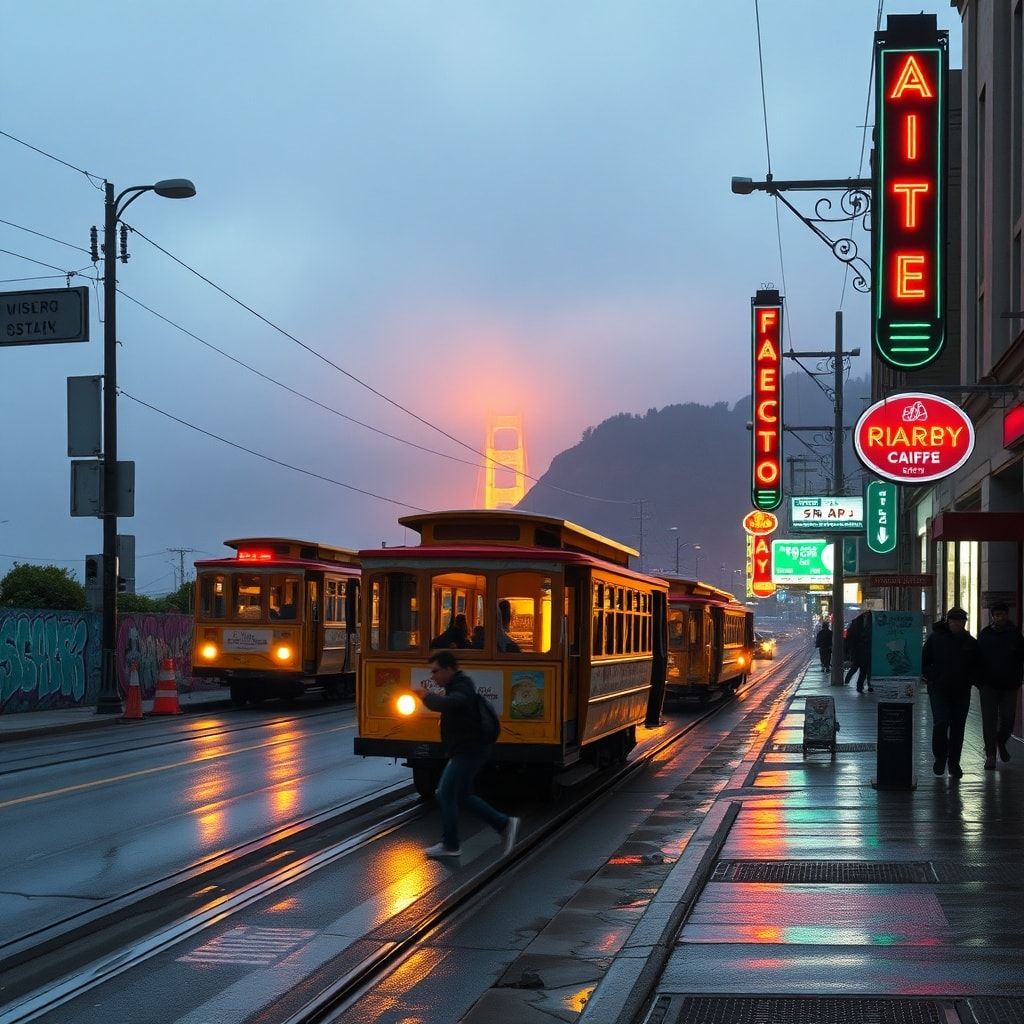
Caltrain is the backbone of any low‑cost Bay Area itinerary, and the fare structure is deceptively simple yet packed with savings opportunities. An adult one‑way ride for a single zone—say, San Francisco to Millbrae—costs $4.00 if you buy it at a ticket machine or through the Caltrain Mobile app, but drops to $3.45 when you tap a Clipper card, shaving off a tidy 13.75% discount. Youth travelers (18 and under) enjoy a flat $1.00 fare regardless of distance, and a $2.00 Day Pass grants unlimited rides for 24 hours, making family outings practically free after the initial pass purchase.
For the adult explorer aiming to hop between neighborhoods, the Day Pass options are crucial. A three‑zone Day Pass (San Francisco ↔ Palo Alto) runs $17.00, while a single‑zone pass is $8.00. Both can be loaded onto a Clipper card, purchased via the app, or bought at the station kiosk. The schedule is generous: northbound locals depart from 22nd Street at 6:01 am on weekdays, run roughly every half hour, and the final train leaves at 11:42 pm, ensuring you can chase sunrise over the Golden Gate and still catch a nightcap in the Mission. All these figures are corroborated on the official project page, which also outlines upcoming fare changes—most notably the slated removal of the Clipper discount on 1 Jan 2026, meaning future travelers will face uniform pricing across all payment methods.
Old Guard Perspective: Budget Travel Then vs. Now
Back in the early 2000s, budget guides to San Francisco were thick, paper‑bound tomes that listed cheap hostels, free museums, and the occasional “pay‑what‑you‑can” dinner. Those guides rarely mentioned public transit intricacies because the Muni‑only mindset dominated; Caltrain was seen as a commuter’s tool, not a tourist’s ally. If a single day sparks your wanderlust, the 5‑day backpacker blitz guide shows how to stretch the shoestring budget across an entire week. For an expanded itinerary, see our budget‑friendly 5‑day adventure guide. Fast‑forward to today, and the otaku nomad community has turned the city into a living RPG board, where each zone is a level and the Clipper card is your power‑up. Studios like Crunchyroll and Funimation have even featured San Francisco as a backdrop in anime‑inspired travel vlogs, and you can explore the city through an anime‑themed lens in our anime‑inspired San Francisco April guide, cementing the city’s pop‑culture cachet.
The shift mirrors broader market trends: the rise of “micro‑budget” tourism, where travelers aim for sub‑$50 days, has forced transit agencies to be more transparent and tech‑savvy. Caltrain’s mobile app, real‑time schedule feeds, and Clipper integration are direct responses to a generation that expects instant data and frictionless payment. Moreover, the youth fare model—flat $1.00 regardless of distance—reflects a societal push toward inclusivity, echoing the democratizing ethos of early anime fandoms that championed access for all. In short, the old guard’s paper guides have been eclipsed by dynamic, data‑driven itineraries that treat the city as a living, breathing narrative.
Technical Crunch: Decoding Fare Mechanics and Time Savings
Let’s break down the math for a typical $50 day. Start with a single‑zone Day Pass at $8.00—this covers all trips between downtown and the airport or Millbrae. Add a three‑zone Day Pass ($17.00) if you plan to venture to Palo Alto for a quick tech‑tour or a hike in the Peninsula. That brings the transit total to $25.00, leaving $25 for food, attractions, and incidentals.
Food can be stretched by targeting neighborhoods known for budget eats: the Mission’s taquerias (average $8 per taco combo), Chinatown’s dim sum (≈ $10 per person), and the Ferry Building’s “food truck alley” where a hearty bowl of ramen sits at $12. By mixing three meals at $9 each, you spend $27, nudging the total to $52—just over budget. The trick is to replace one sit‑down meal with a free‑entry museum (de Young’s free Tuesdays) or a park picnic (Golden Gate Park’s sprawling lawns). Subtract $5 for the free museum, and you’re back under $50.
Time efficiency is equally vital. The 30‑minute headway of Caltrain means you can schedule two‑hour blocks for each zone without fearing missed connections. For example, depart SF at 8:00 am, arrive at Millbrae by 8:30 am, grab a quick breakfast, then head back for a midday stroll at the Embarcadero. Later, catch the 2:00 pm train to Palo Alto, explore Stanford’s free campus tours, and return by 5:00 pm. The schedule’s predictability eliminates the need for pricey rideshares, preserving both cash and sanity.
Future Implications: Scaling the $50 One-Day Model
The upcoming removal of the Clipper discount on 1 Jan 2026 will homogenize fare prices across all payment methods, effectively raising the cost of a one‑zone Day Pass from $8.00 to $9.45 (the $3.45 single‑zone fare plus the $1.00 youth flat rate applied universally). While this sounds like a budget buster, it also creates a predictable pricing landscape that can be baked into future itineraries. Our broader 5‑day budget masterplan dives deeper into keeping each day under $50 while adding extra experiences. Travel planners and budget‑focused apps will soon have a static fare table, allowing for more accurate cost‑forecasting and potentially encouraging the development of bundled “city pass” products that combine transit, attractions, and dining discounts.
Inflation and the rising cost of living in the Bay Area will inevitably pressure the $50 ceiling, but the model’s resilience lies in its flexibility. As ride‑share prices climb, public transit’s relative cheapness becomes more attractive, nudging both locals and tourists toward Caltrain, Muni, and BART. Moreover, the growing emphasis on sustainable travel dovetails with budget constraints, making low‑cost, low‑carbon options a cultural imperative. For the seasoned otaku nomad, this evolution means the next generation of guides will need to weave in climate‑conscious tips, such as biking the Golden Gate Bridge or using electric scooters, while still keeping the wallet happy.
Listen up, green‑horns: the Bay isn’t going to hand you a free lunch just because you’ve got a Clipper card. The real magic is in timing—catch that 6:01 am northbound train, watch the sunrise over the Bay, and you’ll feel like you’ve hacked the system before the city even knows you’re there. Don’t waste your precious yen on overpriced coffee near Union Square; instead, hit the farmer’s market at the Ferry Building early, snag a bagel for $2, and let the salty sea breeze be your caffeine. The city’s a living manga panel—each street a storyboard, each tram a moving frame. If you treat it like a side‑quest, you’ll collect more experiences than a loot‑box ever promised.
Now, brace yourself for the future: the Clipper discount is vanishing, and the fare tables are getting as stiff as a samurai’s armor. That means you’ll have to be sharper, plan tighter, and maybe even barter a few ramen coupons for a seat on the last train. The budget traveler of tomorrow will be the one who can juggle a Day Pass, a free museum slot, and a midnight taco run without breaking a sweat—or a bank. So sharpen your wits, keep that Clipper card ready, and remember: a $50 day in San Francisco isn’t a myth, it’s a test of your otaku ingenuity. Fail, and you’ll be stuck in a tourist trap; succeed, and you’ll have a story worth retelling at every anime convention.
Related Guides & Further Reading
Check out the San Francisco budget archives.