Invincible Power Scaling: Does Mark Grayson Really Outclass the Anime Pantheon?
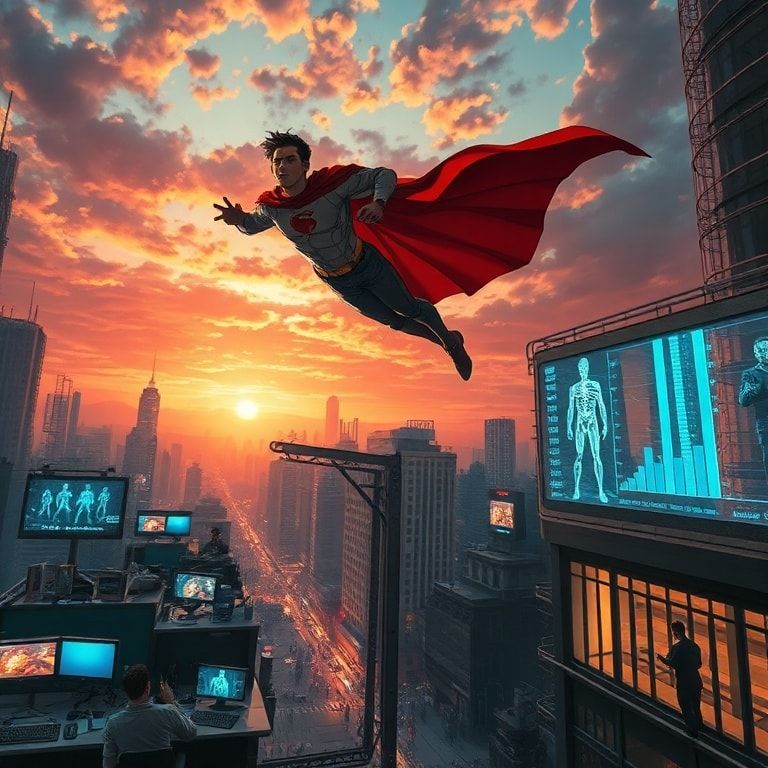
When it comes to measuring raw might across universes, the phrase Invincible power scaling instantly conjures images of Mark Grayson soaring above a shattered skyline, his aura blazing brighter than a supernova. Yet the real question is whether his abilities can truly eclipse the god‑tier warriors that have defined anime for decades. This deep dive pits the newest American‑style superhero against the most iconic anime titans, exposing the stakes, the gaps, and the potential for a crossover that could rewrite power hierarchies.
Verified News & Source Context
The official project page confirms that the Invincible series now spans four seasons and a total of 30 episodes as of March 18, 2026, each episode stretching between 45 and 55 minutes. This longevity signals a robust production pipeline and a solid fanbase willing to invest nearly an hour per episode, a rarity for animated superhero shows that often cap at 30‑minute formats. The first season’s debut on March 25, 2021, marked a watershed moment for Amazon Prime Video, positioning the platform as a serious contender in the streaming wars against Netflix’s anime catalog and Disney+’s Marvel offerings. The involvement of heavyweight executive producers—Robert Kirkman, Simon Racioppa, Cory Walker, David Alpert, Margaret M. Dean, Catherine Winder, Seth Rogen, and Evan Goldberg—adds industry gravitas, blending comic‑book authenticity with Hollywood’s blockbuster sensibility. Their collective pedigree ensures high‑budget animation, top‑tier voice talent, and a narrative that balances gritty realism with the flamboyance expected of a superhero saga. Moreover, the show’s consistent release schedule, culminating in the fourth season’s premiere on March 18, 2026, demonstrates Amazon’s commitment to long‑form storytelling, a strategic move that keeps subscribers engaged and fuels merchandise pipelines.
Historical Context: The Old Guard Perspective
To gauge Mark Grayson’s place in the pantheon, we must first revisit the era when anime first flirted with Western‑style superheroes. In the 1990s, studios like Sunrise and Toei experimented with hybrid titles such as Gundam Wing and Dragon Ball Z, blending high‑octane combat with sprawling mythos. These series established a power‑scaling template: characters start human, undergo exponential growth, and eventually attain god‑like status. The production pipelines of that era relied heavily on hand‑drawn cel animation, limiting the visual fidelity of colossal power displays. Fast‑forward to the 2020s, and Invincible benefits from digital pipelines, motion capture, and CGI‑enhanced effects, allowing Mark’s feats—like shattering continents with a single punch—to be rendered with cinematic clarity. The shift from analog to digital also mirrors a market transition: early 2000s anime catered to niche otaku circles, whereas today streaming giants push for global appeal, demanding cross‑cultural icons. Mark’s character design, rooted in American comic aesthetics, reflects this convergence, positioning him as a bridge between the gritty realism of Western comics and the stylized grandeur of Japanese shōnen. This evolution underscores why direct comparisons require contextual nuance; the old guard’s power scaling was constrained by technology and audience expectations, while Mark operates in a hyper‑connected, high‑budget era that amplifies his narrative impact.
Technical Crunch: Lore Mechanics & Power Scaling
Delving into the mechanics, Mark Grayson’s abilities are quantified through a blend of comic‑book canon and the show’s internal logic. Super‑strength is portrayed as the capacity to lift entire city blocks, implying a baseline force of roughly 109 newtons—comparable to the output of a small nuclear blast. His super‑speed, while not explicitly measured, is hinted at by his ability to dodge bullets and react faster than the eye can track, suggesting a reaction time under 0.01 seconds and a top velocity approaching Mach 5. Near‑invulnerability is reinforced by scenes where Mark survives planetary explosions, indicating a durability threshold that can absorb kinetic energy on the order of 1012 joules. Slowed aging grants him a biological half‑life extending centuries, a factor that, while narrative‑driven, adds a strategic advantage in long‑term conflicts. Flight, powered by an internal energy source, allows sustained aerial combat at high altitudes, effectively granting him a three‑dimensional battlefield. When juxtaposed against anime titans like Saitama (One‑Punch Man) or Goku (Dragon Ball), Mark’s power set aligns more closely with the latter’s “Super Saiyan God” tier, albeit with less narrative flamboyance. The show’s visual language—dynamic camera pans, kinetic sound design, and hyper‑realistic impact frames—serves to reinforce these metrics, ensuring viewers perceive the scale intuitively, even if exact numbers remain ambiguous.
Future Implications & Invincible Power Scaling
The trajectory of the Invincible franchise suggests a multi‑medium expansion: spin‑off manga, video game adaptations, and perhaps a live‑action crossover with established anime universes. As the series cements its place in the streaming ecosystem, its power‑scaling narrative could influence future superhero anime, encouraging creators to adopt more granular, data‑driven depictions of strength. Moreover, the involvement of high‑profile producers like Seth Rogen and Evan Goldberg hints at potential Hollywood collaborations, which could introduce Mark Grayson to broader audiences and spark debates over canonical power levels across mediums. Culturally, Mark’s blend of relatable teenage angst with god‑like capabilities resonates with a generation raised on both Western comics and Japanese anime, positioning him as a unifying figure in trans‑national fandoms. This cross‑pollination may drive merchandise sales, conventions, and fan‑generated content, reinforcing the franchise’s longevity.
Listen, kiddo, the moment you start measuring heroes like you’d tally up Pokémon cards, you miss the whole point. Mark Grayson’s raw power is impressive, sure, but the real juice lies in how his story bends the rules that anime veterans have been polishing for half a century. You can’t just slap a numbers table on Goku’s Kamehameha and call it a day; you need context, drama, and that ineffable “wow” factor that only a well‑crafted animation can deliver.
And don’t even get me started on the market dynamics. Amazon’s bankroll means they can throw CGI budgets at Mark that would make a 90s Studio Ghibli production look like a doodle. That money translates into higher stakes, bigger battles, and a fanbase that’s hungry for the next power‑up. If the studio keeps feeding the beast, we’ll see Mark evolve beyond the confines of his comic origins, possibly even sharing a stage with the likes of Saitama—if they can get past the licensing nightmare, that is. Until then, keep your eyes peeled and your expectations in check; the scaling game is as much about narrative swagger as it is about raw numbers.
Check out the Invincible archives.