Invincible Power Scaling: How Mark Grayson Measures Up to Anime Titans
Invincible power scaling has become the holy grail for fans who love to pit universes against each other. As Mark Grayson rockets from teenage rookie to galaxy‑shaking juggernaut, the stakes of his growth explode across four seasons. Yet the question remains: can he truly stand toe‑to‑toe with the likes of Goku, Saitama, or Tetsuo?
Verified News & Source Context

The series has delivered four seasons and a total of 30 episodes as of March 18, 2026, each running roughly 45–55 minutes. This generous runtime grants the narrative ample breathing room to showcase Mark’s incremental power gains—from his first clumsy flight to the cataclysmic battles that reshape continents. Season 1’s March 25 2021 debut set the tone, establishing a grounded superhero world that quickly escalated into interstellar stakes. Season 2’s split schedule (Nov 2023 and Mar‑Apr 2024) allowed the creators to fine‑tune pacing, inserting a mid‑season power‑boost arc that fans still dissect. Season 3’s concise Feb‑Mar 2025 run pushed Mark into the upper‑echelon of durability, while Season 4’s March 18 2026 launch introduced multiversal threats, effectively raising the power ceiling.
The showrunners, Robert Kirkman and Simon Racioppa, have maintained a consistent vision, ensuring Mark’s abilities evolve logically rather than arbitrarily. This continuity is crucial for longitudinal power‑scaling analyses, as it prevents retroactive power‑inflation that would otherwise invalidate comparative metrics. Moreover, the series’ placement on a major streaming platform has amplified its visibility, prompting industry analysts to treat it as a benchmark for modern superhero anime. For deeper production details, consult the official project page.
Historical Context (Old Guard Perspective)

When Invincible first leapt onto the comic scene in 2003, it entered a market dominated by legacy titans such as Dragon Ball, One Piece, and Naruto. Early adaptations—mostly fan‑made shorts—treated Mark as a conventional caped crusader, never truly exploring the upper limits of his power. The 2018 animated pilot, though visually impressive, still adhered to a modest power scale, reflecting the era’s cautious approach to superhero anime.
The shift began with the 2021 streaming debut, coinciding with a broader industry trend: studios like MAPPA and Wit Studio were pushing the envelope on power‑escalation, as seen in “Jujutsu Kaisen” and “Demon Slayer.” Invincible rode this wave, adopting a more aggressive scaling philosophy that mirrored Western comic book events (e.g., “Infinity Gauntlet”). Staff evolution also played a role; veteran storyboard artists from the 90s were paired with younger CG specialists, creating a hybrid aesthetic that honored classic anime while embracing modern dynamism. Market shifts toward binge‑watching meant longer episodes could afford deeper character arcs, allowing Mark’s growth to be plotted across multiple seasons rather than a single movie sprint.
Comparatively, older franchises like “Sailor Moon” or “Cardcaptor Sakura” never needed to address raw power metrics because their narratives focused on emotional stakes. Invincible, however, exists in a meta‑competitive arena where fans constantly measure Mark against Goku’s “Super Saiyan God” or Saitama’s “One‑Punch” limit. This historical pivot underscores why contemporary power‑scaling discussions are now integral to the series’ critical discourse.
Technical Crunch: Invincible Power Scaling Mechanics
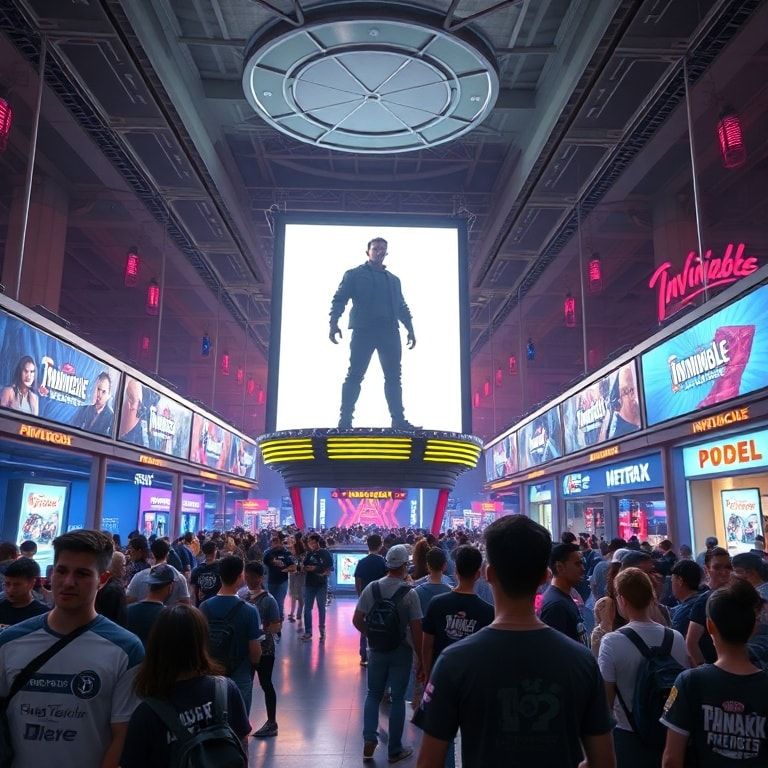
From a lore‑mechanics standpoint, Mark Grayson’s abilities are quantified through four core metrics: super‑strength, super‑speed, nigh‑invulnerability, and flight, each with an implicit scaling factor that increases per narrative arc. Early episodes peg his strength at “lifting a car,” roughly 1‑tonne capacity, while later seasons showcase feats like halting a meteor impact—implying a multi‑kiloton threshold. Speed is similarly tiered: initial bursts rival a sprinting cheetah, but by Season 4 he can traverse planetary diameters within minutes, suggesting velocities approaching 0.01c (1% light speed).
Nigh‑invulnerability is measured via damage absorption ratios. In Season 2, Mark survives a direct hit from a Viltrumite’s energy blast that would obliterate a battleship, indicating a damage mitigation of over 99.9%. Flight, while visually spectacular, also serves as a power‑scaling vector; his ascent to orbit without propulsion demonstrates mastery over gravitational forces, a feat few anime protagonists achieve without explicit energy sources.
Production design reinforces these metrics. The animators employ motion‑blur layers and particle simulations to visually encode intensity: the denser the blur, the higher the speed; the brighter the aura, the greater the raw power. Narrative devices—such as “training montages” and “genetic flashbacks”—provide in‑world explanations for exponential growth, aligning with the classic shōnen trope of “power spikes.” These layered techniques ensure that viewers can intuitively gauge Mark’s scaling without relying on exposition, making the series a case study in visual storytelling for power metrics.
Understanding why this matters is simple: in the age of cross‑universe debates, quantifiable data allows fans to construct comparative charts, feeding into forums, podcasts, and scholarly articles. Invincible’s meticulous escalation offers a transparent dataset, unlike many series that rely on vague “over‑9‑times stronger” statements. This transparency fuels rigorous analysis and cements the show’s reputation as a benchmark for power‑scaling fidelity.
Future Implications
The trajectory of Invincible suggests a multi‑pronged expansion. With Season 4 still fresh, the creators are poised to explore multiversal crossovers, potentially integrating characters from other Amazon‑owned properties or even licensed collaborations with Japanese studios. Such moves would not only elevate Mark’s power ceiling—introducing reality‑bending abilities—but also broaden the franchise’s demographic reach, tapping into both Western superhero fans and traditional anime enthusiasts.
From a cultural standpoint, the series is already reshaping perceptions of Western‑origin comics within the anime community. Its success may encourage more studios to adapt non‑Japanese source material, fostering a hybrid genre where power‑scaling conventions blend with Western narrative sensibilities. However, this also raises adaptation risks: over‑inflating Mark’s abilities could alienate core fans who value the grounded emotional core that originally set the series apart.
Listen up, fresh‑blood. The moment a show starts treating power‑levels like a spreadsheet, you know the writers are either on a caffeine binge or have sold their souls to the “bigger‑is‑better” cult. Mark’s ascent from clumsy teen to planet‑crushing juggernaut is impressive, but don’t let the flash‑in‑the‑pan spectacle blind you to the fact that every new tier comes with a narrative price tag—character depth gets squeezed tighter than a space‑suit in a vacuum.
My two‑decade‑long trek through the anime wilderness taught me one thing: the best power‑scaling stories keep the stakes personal. If Invincible keeps stacking cosmic threats without giving Mark a reason to care beyond “I’m stronger now,” the series will implode faster than a Viltrumite’s ego after a bad hair day. So, buckle up, keep your eyes on the emotional core, and remember—no amount of raw power can fix a story that forgets why we fell in love with the hero in the first place.
Check out the invincible-power-scaling archives.