
Surviving the Chaos: The Ultimate Hanoi Budget Guide to Live Like a Local Under $30 a Day
Ever wondered if you could actually survive Hanoi’s traffic, street food frenzy, and night‑market madness without selling a kidney? The Hanoi budget guide proves you can, as long as you know where the cheap buses run and how to haggle for a bowl of pho. Miss the memo and you’ll be paying for a taxi ride that could fund a small island nation. For a full breakdown, visit our Hanoi budget hub. For a quick snapshot of all budget tips, check out our master Hanoi budget hub.
Verified News & Source Context for the Hanoi Budget Guide

According to the Vietnam Tourism official site, standard public bus fares in Hanoi range from 5,000 VND to 10,000 VND per ride, a price bracket that translates to roughly $0.22‑$0.44 USD. This tiny cost is the backbone of the Hanoi budget guide, because every kilometer you save on transport frees up cash for a night market snack or a cheap hostel bunk. Bus line #7, for instance, offers a direct link from Noi Bai International Airport to Cau Giay, crossing the iconic Thang Long Bridge. It’s a lifeline for travelers who refuse to splurge on taxis, and it showcases how the city’s infrastructure is deliberately tiered for low‑cost mobility. Travelers looking for more detailed tips can consult our comprehensive budget playbook for Hanoi.
Line #17 mirrors this philosophy, also departing from the airport but veering through Chuong Duong Bridge before winding into the Old Quarter. The redundancy isn’t accidental; it creates competition that keeps fares low and service frequent. Meanwhile, line #09 stops right at Hoan Kiem Lake, the beating heart of Hanoi’s historic and tourist districts. A single ticket can drop you within walking distance of the Ngoc Son Temple, the bustling night market, and countless cheap eateries. All tickets are sold on board by a fare collector, demanding cash and exact change—meaning you must carry small‑denomination VND notes. Forgetting this detail can leave you stranded at a stop, forced to negotiate a pricey informal ride. For the full official breakdown, visit the official project page.
Old Guard Perspective: Historical Context of Budget Travel in Hanoi
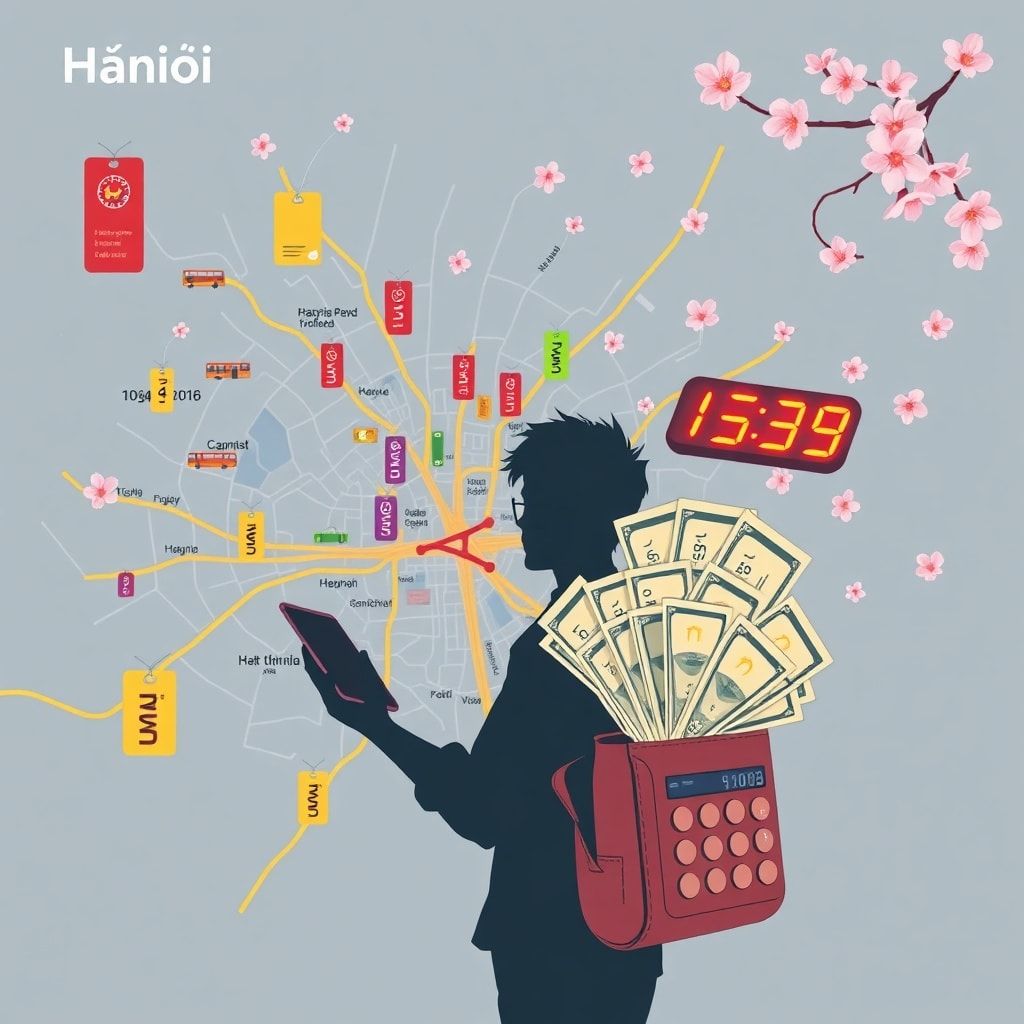
Back in the early 2000s, budget travel guides were thick, paper‑bound tomes filled with hand‑drawn maps and cryptic symbols for “cheap eats.” Those old‑guard publications treated Hanoi as an exotic puzzle, often overlooking the city’s evolving public‑transport matrix. The modern Hanoi budget guide, by contrast, leans on real‑time data, government‑published fare tables, and crowd‑sourced route reviews. This shift mirrors a broader industry trend: the migration from static guidebooks to dynamic, community‑driven platforms like Hostelworld and Rome2rio.
Studio trends in travel media have also pivoted. Where once travel shows glorified luxury hotels and private car hires, today’s content creators—especially those with anime‑inspired aesthetics—celebrate the gritty authenticity of hopping on a city bus with a half‑filled water bottle. The staff behind these guides have diversified, incorporating local Vietnamese writers who understand the nuance of cash‑only fare collection and the cultural etiquette of boarding a crowded bus. Market shifts toward sustainable tourism further reinforce the relevance of public transport, making the Hanoi budget guide not just a money‑saving tool but an eco‑conscious manifesto.
Technical Crunch: Numbers, Routes, and Real‑World Savings

Let’s break down the arithmetic that keeps you under the $30‑a‑day ceiling. A typical day in Hanoi includes three bus rides: airport‑to‑city, a short hop to a museum, and a night‑time return to the hostel. At the maximum fare of 10,000 VND per ride, you spend 30,000 VND (~$1.30) on transport. Add a modest hostel bed at $5, a street‑food breakfast for $2, a bowl of pho for $3, and a cheap beer for $1.5. That totals $12.80, leaving roughly $17.20 for attractions, souvenirs, and occasional splurges. If you want another perspective on stretching your dong, see our guide on how to roam Hanoi on a shoestring budget.
Why does this matter? Because the cost structure reveals hidden leverage points. By timing your rides to avoid peak hours, you can sit on a less‑crowded bus, reducing the risk of being jostled off and forced to buy a pricey tuk‑tuk. Moreover, the cash‑only system incentivizes you to plan your daily cash withdrawal, avoiding ATM fees that can erode your budget. The layered savings cascade: transport savings free up food budget, which in turn allows you to sample more local dishes rather than resorting to tourist traps. In essence, the technical crunch of the Hanoi budget guide transforms a simple fare table into a strategic playbook for maximizing every dong.
Future Implications: How the Hanoi Budget Guide Shapes Travel Trends
The ripple effect of a well‑crafted Hanoi budget guide extends far beyond the backpacker’s wallet. As more travelers adopt cash‑only bus travel, the city’s municipal authorities receive data indicating high demand for certain routes, prompting potential expansions or increased frequency on lines #7, #17, and #09. This feedback loop can lead to a more robust public‑transport network, which in turn attracts even more budget‑conscious tourists—a virtuous cycle of sustainable tourism.
On the cultural front, the guide’s emphasis on authentic, low‑cost experiences fuels a growing appetite for “slow travel” narratives in anime and manga, where protagonists explore cities on foot and bus, discovering hidden alleyways and local legends. Content creators will likely spin off spin‑off series, podcasts, and even VR tours that replicate the exact experience of boarding a Hanoi bus with a half‑filled wallet. The long‑term risk, however, lies in overtourism; if the guide becomes too popular, the very cheapness it champions could inflate prices, forcing future travelers to adapt once more.
Related Guides & Further Reading
Check out the Hanoi archives.