The 10 Strongest Anime Characters of All Time: A 2026 Power‑Scaling Showdown
When you talk about the strongest anime characters, the conversation instantly spirals into a vortex of fan theories, power charts, and heated debates. The sheer variety of universes, from shonen battlegrounds to cosmic odysseys, makes any ranking feel both inevitable and impossible. Yet, in 2026, a fresh look at power scaling forces us to confront the legends that truly redefine what “strong” means.
Verified News & Source Context for Saitama’s Unmatched Might
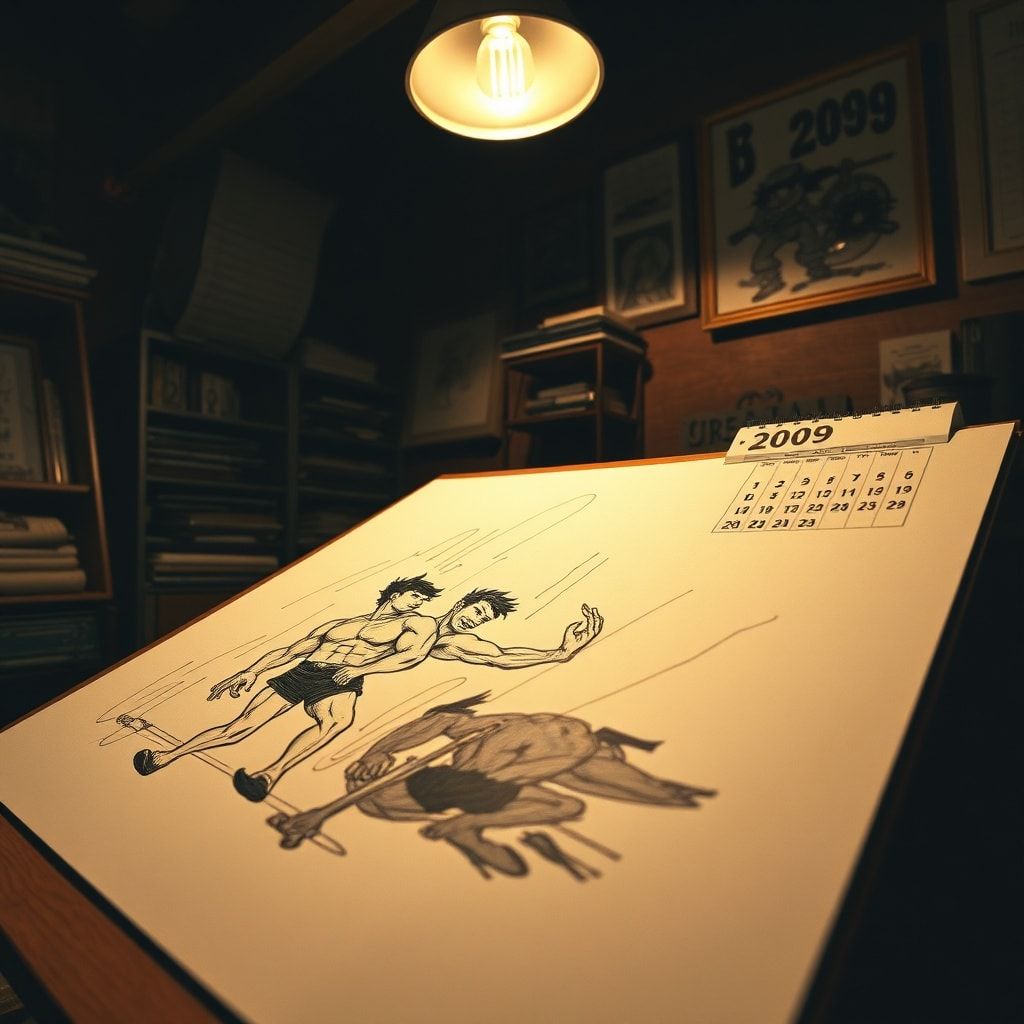
The One‑Punch Man phenomenon began its meteoric rise with Chapter #1, titled “One Punch,” published in 2009, introducing Saitama as a bald, indifferent hero who could end any fight with a single blow. This debut was not just a parody; it was a deliberate subversion of the shonen power‑escalation trope that had dominated the medium for decades. The creator, ONE, paired the absurdity of Saitama’s strength with a surprisingly simple training regimen: three years of 100 push‑ups, 100 sit‑ups, 100 squats, and a 10 km run daily. While the numbers sound hyperbolic, they serve as a narrative device to underscore the theme that true power, in this universe, is a product of relentless consistency rather than mystical lineage.
The anime adaptation, released in October 2015, amplified the visual impact of Saitama’s feats, translating the comic’s static panels into fluid, high‑octane action sequences. Despite his god‑like abilities, the Hero Association’s entrance exam awarded him a meager 71 points, relegating him to one of the lowest ranks—a commentary on bureaucratic blind spots. In the current webcomic arc, Saitama has ascended to an A‑Class rank of 39, reflecting a slow but steady acknowledgment of his raw power within the institutional hierarchy. These milestones illustrate how Saitama’s narrative has been meticulously calibrated across media, reinforcing his status as a benchmark for the strongest anime characters.
For further reference, see the official project page.
Old Guard Perspective: How the Strongest Anime Characters Shaped Early Power‑Scaling Trends

Before Saitama’s arrival, the pantheon of strongest anime characters was dominated by figures like Goku, Naruto, and Luffy—heroes whose power levels were quantified through explicit metrics such as Dragon Ball’s “Power Levels” or Naruto’s “Chakra Reserves.” Studios in the early 2000s leaned heavily on these quantifiable scales, often publishing supplemental guidebooks that listed exact numbers, thereby cementing a culture of statistical fandom. This era also saw the rise of “power creep,” where each new season introduced an ever‑higher tier of strength, compelling audiences to constantly recalibrate their expectations.
The shift introduced by One‑Punch Man was seismic. Rather than presenting a linear progression, Saitama existed as a static apex from his first appearance, rendering traditional scaling tools obsolete. This inversion forced both creators and fans to reconsider the purpose of power scaling: is it a narrative engine, a marketing hook, or a philosophical statement? Studios responded by experimenting with meta‑narratives—Series like “Mob Psycho 100,” also by ONE, embraced the absurdity of limitless power while focusing on character growth beyond raw strength. Meanwhile, legacy franchises began integrating humor and self‑awareness, as seen in later arcs of “Dragon Ball Super,” where Goku’s “Ultra Instinct” form borders on parody.
The industry’s adaptation to this paradigm shift illustrates a broader trend: the strongest anime characters are no longer defined solely by numeric superiority but by their capacity to subvert, critique, and enrich the genre’s storytelling conventions.
Technical Crunch: Dissecting the Lore Mechanics Behind the Strongest Anime Characters

At the heart of Saitama’s lore lies a deceptively simple equation: relentless physical conditioning + narrative satire = infinite strength. The 100‑push‑up, 100‑sit‑up, 100‑squat, 10 km run routine is not merely a comedic gag; it establishes a baseline of human‑achievable effort that, when extrapolated to an absurd degree, creates a mythic “limitless” state. In contrast to characters whose abilities are tied to external sources—Saiyan ki, ninja chakra, or Devil Fruit powers—Saitama’s power is internally sourced, making him a unique data point in any comparative analysis.
From a design perspective, the One‑Punch Man manga employs minimalist art during Saitama’s fights, focusing on stark, clean lines that emphasize the sheer finality of his blows. The anime adaptation, however, leverages high‑budget CGI to render shockwaves and debris with cinematic flair, reinforcing the physical impact of his punches. This duality showcases how production choices can amplify or temper a character’s perceived strength.
Statistically, if we attempt to quantify Saitama’s output, we encounter a paradox: his damage per hit is effectively infinite, rendering conventional DPS (damage per second) calculations meaningless. Yet, narrative constraints—such as his occasional boredom or the need for a worthy opponent—introduce a soft cap that preserves dramatic tension. This balance between omnipotence and storytelling necessity is a hallmark of the strongest anime characters, where raw power must coexist with plot relevance.
Future Implications: What the Next Decade Holds for the Strongest Anime Characters
Looking ahead, the legacy of Saitama and his peers is poised to influence both content creation and franchise strategy. The upcoming season of One‑Punch Man is rumored to delve deeper into the Hero Association’s political machinations, potentially positioning Saitama as a reluctant catalyst for systemic reform. Such a narrative direction would elevate his role from a comedic force to a symbol of institutional critique, expanding the thematic scope of what the strongest anime characters can represent.
Beyond the series itself, the broader industry is likely to adopt Saitama’s meta‑commentary as a template for new IPs. Studios are already experimenting with “anti‑power‑scaling” protagonists—characters whose strength is intentionally ambiguous, allowing writers to focus on character development, world‑building, and philosophical questions about heroism. Moreover, the rise of streaming platforms offers creators the freedom to explore longer, more nuanced arcs without the constraints of traditional broadcast schedules.
And don’t even get me started on the fan‑service that follows a character who can end any fight with a single jab. The memes, the merch, the endless “who would win?” threads—these are the cultural aftershocks that keep the franchise alive long after the original creator has moved on. If the next wave of anime wants to stay relevant, they’ll need to learn from the masterclass Saitama gave us: make strength a backdrop, not the headline.
Check out the strongest anime characters archives.
Check out the strongest anime characters archives.