Unmasking the Dark Secrets: Fate strange fake lore That Redefines the Grail War
The shadows over Snowfield are deeper than the night itself, and the Fate strange fake lore is the key that unlocks them. As the false Holy Grail War erupts, old alliances crumble and new powers scramble for dominance. The stakes? Not just a wish, but the very fabric of reality. For a comprehensive overview, check our complete Fate/strange Fake guide.
Verified News & Source Context
The light novel series that birthed this twisted Grail War began its journey on January 10, 2015, and has steadily expanded to nine volumes, each layering new conspiracies onto the original mythos. This longevity signals a robust fanbase hungry for deeper world‑building, as explored in our deep‑dive analysis of overlooked Fate/strange Fake details, a factor that studios cannot ignore. The first visual incarnation arrived as the 55‑minute film “Fate/strange Fake: Whispers of Dawn” on July 2, 2023, a concise yet atmospheric showcase that proved the franchise could thrive outside the traditional 24‑episode format. Production was handled by A‑1 Pictures, a studio renowned for balancing high‑octane action with meticulous character design, and the project enlisted Shun Enokido and Takahito Sakazume as co‑directors—both veterans of the Fate universe. Daisuke Ōhigashi’s script weaves the novel’s dense exposition into a digestible screenplay, while Hiroyuki Sawano’s score injects a pulsating urgency that mirrors the false war’s chaotic stakes. The subsequent TV series, premiering on December 31, 2024, expands the narrative to twelve episodes, allowing for a more granular exploration of the Snowfield setting, the chosen Sacred Land, and the intricate mechanics of the counterfeit Holy Grail. Fans looking for a closer look at the plot twists can refer to our episode 7 recap and analysis. For those seeking the official source, consult the official project page.
Historical Context (Old Guard Perspective)
When you compare Fate/strange Fake to its predecessor, Fate/Zero, the evolution is stark. Zero was a gritty, war‑torn retelling that leaned heavily on moral ambiguity, while Fake opts for a meta‑narrative that questions the very premise of the Grail itself. This shift mirrors a broader industry trend: studios are moving from straightforward hero‑vs‑villain epics toward self‑referential, deconstructive storytelling—a hallmark of the 2020s anime renaissance. A‑1 Pictures, once celebrated for its polished adaptations of visual novels, has gradually embraced riskier projects, evident in its recent work on “The Orbital Children” and “86: Eighty‑Six”. The dual‑director model—Enokido’s experience with narrative pacing and Sakazume’s flair for visual spectacle—reflects a collaborative approach that many studios now adopt to balance story depth with fan‑service action. Moreover, the involvement of Sawano, whose signature bombastic compositions have defined series like “Attack on Titan” and “Aldnoah.Zero”, signals an intent to position Fake alongside the era’s most sonically iconic franchises. Market‑wise, the decision to release a film first, then a series, aligns with a proven strategy: test audience reception, generate buzz, and then capitalize on that momentum with a longer format. This staggered rollout also caters to the streaming‑centric consumption patterns that dominate today’s anime economy.
Technical Crunch (Information Gain)
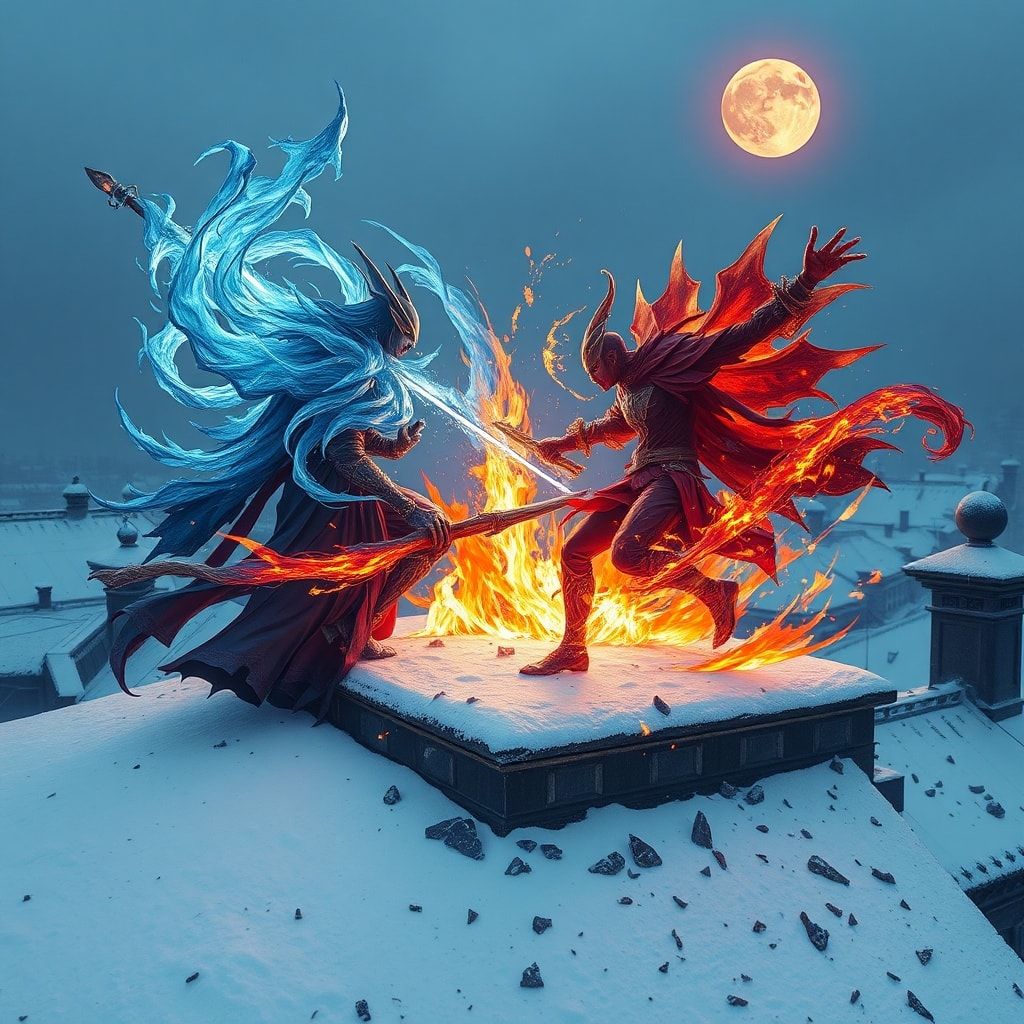
At the heart of Fate/strange Fake lies a reimagined Holy Grail system that subverts the classic Command Seals mechanic. Instead of seven seals, the false war employs a “Fragmented Resonance” grid, where each Servant’s Noble Phantasm interacts with a mutable node that can be rewired mid‑battle, granting dynamic power shifts. This design choice not only heightens tactical depth but also serves as a narrative metaphor for Snowfield’s unstable reality—every wish is a gamble, every victory a potential paradox. Visually, the series leverages A‑1’s cutting‑edge 3DCG integration, blending hand‑drawn character rigs with photorealistic environmental backdrops, especially during the iconic rooftop clash where frost and flame collide in a hyper‑realistic particle simulation. The sound design, courtesy of Sawano, employs layered orchestration: low‑frequency drones underscore the looming dread of the false Grail, while high‑pitched strings punctuate Servant summons, creating an auditory cue that mirrors the grid’s fluctuating tension. From a storytelling standpoint, the series also introduces “Echoes”—memory fragments that manifest as hallucinations, allowing the script to explore characters’ past traumas without resorting to flashback exposition. This layered approach to lore, mechanics, and audiovisual presentation elevates the series beyond mere adaptation; it becomes a case study in how modern anime can intertwine world‑building with innovative production techniques.
Future Implications
Looking ahead, Fate/strange Fake is poised to become a linchpin for the franchise’s expansion into multimedia territories. The fragmented resonance system offers fertile ground for spin‑off games, where players could manipulate nodes in real‑time, echoing the series’ tactical innovations. Moreover, the Snowfield setting—a city chosen as a Sacred Land seventy years after the Third Holy Grail War—provides a fresh geopolitical canvas for future novels, manga side‑stories, and even live‑action adaptations, potentially attracting a broader, non‑anime‑savvy audience. However, the series also carries risk: its meta‑narrative may alienate purists who prefer the traditional Grail mythos, and the dense lore could deter newcomers. Balancing accessibility with depth will be crucial for sustaining long‑term franchise health.
And let’s not forget the business angle: A‑1 Pictures has proven it can juggle high‑budget spectacle with tight storytelling, a combination that streaming platforms hunger for. If the sequel rides the wave of fan enthusiasm, we could see a full‑blown multimedia push—light novels, mobile gacha, even a stage play—each feeding back into the core narrative and expanding the lore’s reach. But if the franchise stumbles, the backlash will be swift, and the once‑glimmering Holy Grail will be reduced to a footnote in the annals of over‑ambitious adaptations. Either way, strap in; the false war is just getting started.
Related Guides & Further Reading
Check out the Fate/strange Fake archives.
Check out the Fate/strange Fake archives.