Why Goblin Slayer goblins Outshine Every Demon Race in Anime History
When the first episode of Goblin Slayer aired, the world learned that tiny, snarling pests could eclipse the grandest of mythic beasts. The series’ relentless focus on Goblin Slayer goblins forces us to confront why these low‑tier monsters dominate the narrative stakes. If you thought the real horror lay in the hero’s grim resolve, think again – the goblins themselves are the true, unsung antagonists.
Broadcast History and Ancillary Media
The anime television series official project page debuted on October 7, 2018 and concluded its 24‑episode run on December 22, 2023. This extended broadcast window is unusual for a dark‑fantasy title, indicating strong viewer retention despite its graphic content.
The companion film, Goblin Slayer: Goblin’s Crown, released February 1, 2020. It added an 85‑minute side story that deepened the lore surrounding goblin hierarchies and the titular Slayer’s methodology.
Source Material and Linguistic Note
The original light novel, launched February 15, 2016, now spans sixteen volumes, each expanding on the grim realism introduced in the anime. The Japanese term for goblins, 小鬼 (ゴブリン), literally translates to “little demon,” a linguistic nuance that underscores their perceived inferiority yet hints at an inherent malevolence. This duality fuels the series’ tension: goblins are both pitiable vermin and lethal predators.
Industry relevance emerges when considering the series’ placement within the broader dark‑fantasy wave of the late 2010s, where studios like White Fox and Kadokawa sought to push boundaries of gore and moral ambiguity, positioning Goblin Slayer as a benchmark for mature storytelling.
Shift from Demon‑Centric to Goblin‑Centric Fantasy
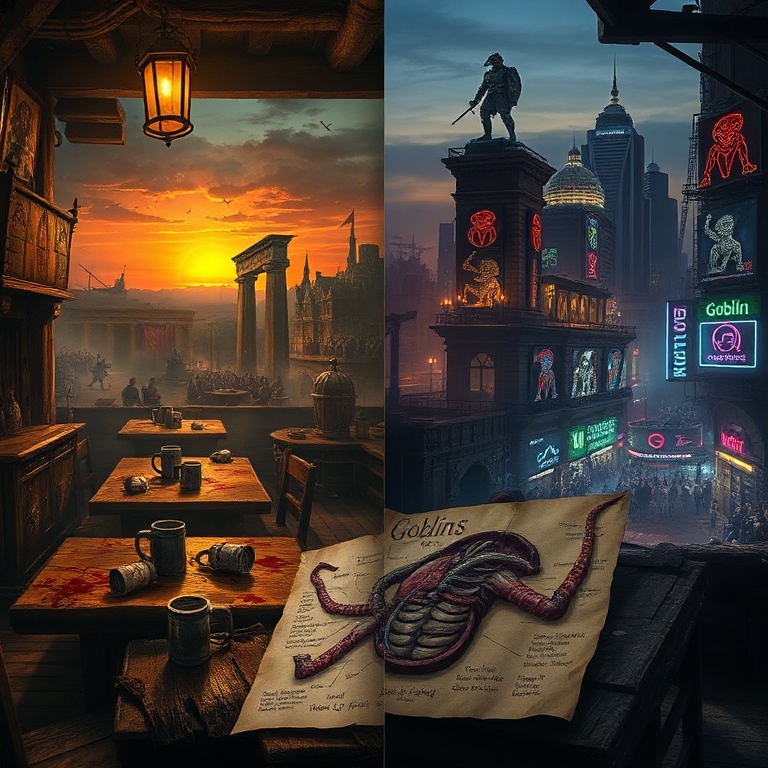
Before Goblin Slayer entered the arena, demon‑centric anime such as Devilman Crybaby and Blue Exorcist dominated the genre, portraying high‑concept, flamboyant antagonists with elaborate mythologies. Goblins, by contrast, were relegated to comic relief or background fodder in series like Fairy Tail and Konosuba. The shift began with studios experimenting on the margins: the 2014 OVA Gargantia on the Verdurous Planet hinted at low‑tier enemies gaining narrative weight.
Goblin Slayer’s production team, led by director Takaharu Ozaki and writer Kumo Kagyu, deliberately inverted this trend, granting the smallest of monsters a central role.
Studio White Fox, known for its work on Re:Zero and Steins;Gate, leveraged its experience in character‑driven storytelling to craft a world where the horror is grounded in everyday survival rather than cosmic stakes. This pivot reflects a market shift toward “gritty realism” that appealed to an aging otaku demographic craving mature content.
Moreover, the series’ release coincided with the rise of streaming platforms like Crunchyroll, which facilitated global exposure and allowed niche titles to find dedicated audiences. By positioning goblins as the primary antagonistic force, Goblin Slayer not only differentiated itself from legacy demon‑centric franchises but also set a precedent for future series to explore the underbelly of fantasy ecosystems.
Goblin Design, Mechanics, and World‑Building
From a lore‑mechanics standpoint, Goblin Slayer goblins are engineered with a blend of folklore and pseudo‑biological realism. Their key traits are:
- Low armor class
- High pack aggression
- Rapid regeneration
These traits create a tactical challenge that forces adventurers to adopt specialized strategies, such as fire‑based traps and coordinated strikes.
The series introduces “goblin nests” as dynamic environments: cramped tunnels, foul‑smelling chambers, and makeshift altars that serve both as narrative set‑pieces and gameplay arenas. This design mirrors tabletop RPG mechanics, where goblins function as low‑level encounters that scale through environmental hazards.
Production design reinforces these mechanics through meticulous background art. The art team employed a muted palette of earthy browns and sickly greens, contrasting sharply with the vivid reds of blood, to evoke a visceral sense of dread. Sound design further amplifies the menace; the guttural chitter of goblin packs is layered with metallic clinks of improvised weaponry, creating an auditory cue that signals imminent danger.
Narrative structure also benefits: each episode often opens with a “goblin incident” that escalates into a larger moral dilemma, allowing the series to dissect the societal impact of these creatures on frontier towns. By embedding goblins into every facet of world‑building—statistics, environment, sound, and story—the series demonstrates why these seemingly minor monsters dominate the thematic core.
Upcoming Spin‑offs and Industry Influence
The commercial success of Goblin Slayer has already spurred multiple spin‑offs, including a mobile gacha game and a forthcoming second season slated for 2025. These extensions suggest a strategic pivot: the franchise will likely broaden its focus beyond pure extermination narratives, integrating goblin politics, hierarchy, and even redemption arcs.
Culturally, the series has ignited debates about the portrayal of violence and trauma, prompting academic conferences and think‑tank panels to dissect its impact on younger audiences. This discourse may influence future censorship guidelines, especially in regions sensitive to graphic content.
Moreover, the franchise’s merchandising pipeline—ranging from detailed figurines of goblin anatomy to limited‑edition weapon replicas—demonstrates a lucrative model for monetizing niche lore. As the otaku community continues to crave depth over spectacle, Goblin Slayer’s emphasis on “goblin‑centric” storytelling positions it as a blueprint for sustainable, lore‑rich franchises.
Author’s Perspective
Listen, kiddo, the moment you think a 12‑inch green pest can’t outshine a dragon is when you’ve stopped paying attention. Goblin Slayer proved that a well‑written, blood‑soaked vermin can yank the spotlight from any high‑falutin deity, and the industry finally woke up to the fact that audiences crave grit, not glitter. Those studios still churning out sparkly mecha with smiley mascots are missing the point—real tension lives in the mud‑splattered boots of a silver‑ranked hunter, not in the flash of a magical sword.
Don’t be fooled by the hype train that rolls out every season promising “new darkness.” The true darkness is in the details: the way goblins scavenge, the way they adapt, the way they’re woven into the socioeconomic fabric of the world. If you want to stay relevant, study the anatomy of those little demons, learn how they’re used as narrative tools, and stop treating them as disposable cannon fodder. That’s the veteran’s secret sauce—understand the underdog, and you’ll dominate the arena.
Check out the Goblin Slayer goblins archives.
Check out the Goblin Slayer goblins archives.