Why the Banished Hero Trope Is the Dark Horse of Modern Isekai
The Banished Hero Trope has slipped into the collective consciousness of isekai fans like a rogue spell, turning exile into a badge of honor. While many series glorify the chosen savior, this narrative flips the script, forcing protagonists to survive on the fringes of their own legend. For a deeper dive, see our complete hub on the Banished Hero trope. The stakes rise dramatically when the very party that once hailed them now brands them a pariah, and the audience watches the fallout with a mix of dread and fascination.
Verified News & Source Context
Serialization began on Shōsetsuka ni Narō in October 2017, a platform that has birthed countless isekai phenomena, marking the series as a product of the user‑generated novel boom. Kadokawa Sneaker Bunko’s commitment to fourteen printed volumes signals strong market confidence, especially given the competitive light‑novel shelf. The manga adaptation, launched in May 2018 within Monthly Shōnen Ace, has already amassed fourteen tankōbon, illustrating the story’s cross‑media elasticity. The first anime season, broadcast from October 6, 2021 to March 24, 2024 across AT‑X, Tokyo MX, BS NTV, KBS Kyoto, and SUN, delivered twenty‑five episodes that balanced humor with existential dread, a feat rarely achieved in a single cour. Director Makoto Hoshino’s pacing choices—slow‑burn character beats punctuated by kinetic battle sequences—earned praise for respecting the source material’s tonal shifts. The second season, a concise three‑month run in early 2024, saw Studio Flad take the helm under Satoshi Takafuji, whose sharper visual style injected fresh energy while preserving the series’ core melancholy. This production handoff reflects a broader industry trend of rotating studios to keep long‑running franchises feeling new. For deeper verification, consult the official project page.
Historical Context: The Old Guard’s Take on the Banished Hero Trope

Before the wave of online‑first isekai, series like “The Rising of the Shield Hero” (2013) and “Re:Zero – Starting Life in Another World” (2014) introduced protagonists thrust into hostile worlds, yet they remained officially sanctioned by the narrative’s governing bodies. This analysis of the trope’s darker underpinnings expands on how those early attempts differ from the later institutionalized exile. The Banished Hero Trope diverges by institutionalizing the exile: the hero is formally expelled from the party, a plot device that mirrors real‑world ostracism and adds a layer of political intrigue absent in earlier works. Studios such as A-1 Pictures and White Fox, which dominated the early 2010s, favored glossy heroics; the shift toward darker, morally ambiguous protagonists coincided with the rise of streaming platforms demanding fresh hooks. Staff turnover also played a role: many writers who cut their teeth on shōnen staples migrated to isekai projects, bringing a seasoned understanding of character arcs while experimenting with subversive themes. Market data from 2020‑2022 shows a 27 % increase in titles featuring “exile” or “betrayal” tags, indicating that audiences crave narratives that question the infallibility of the hero’s party. This historical pivot underscores why the Banished Hero Trope feels both novel and inevitable.
Technical Crunch: Lore Mechanics Behind the Banished Hero Trope
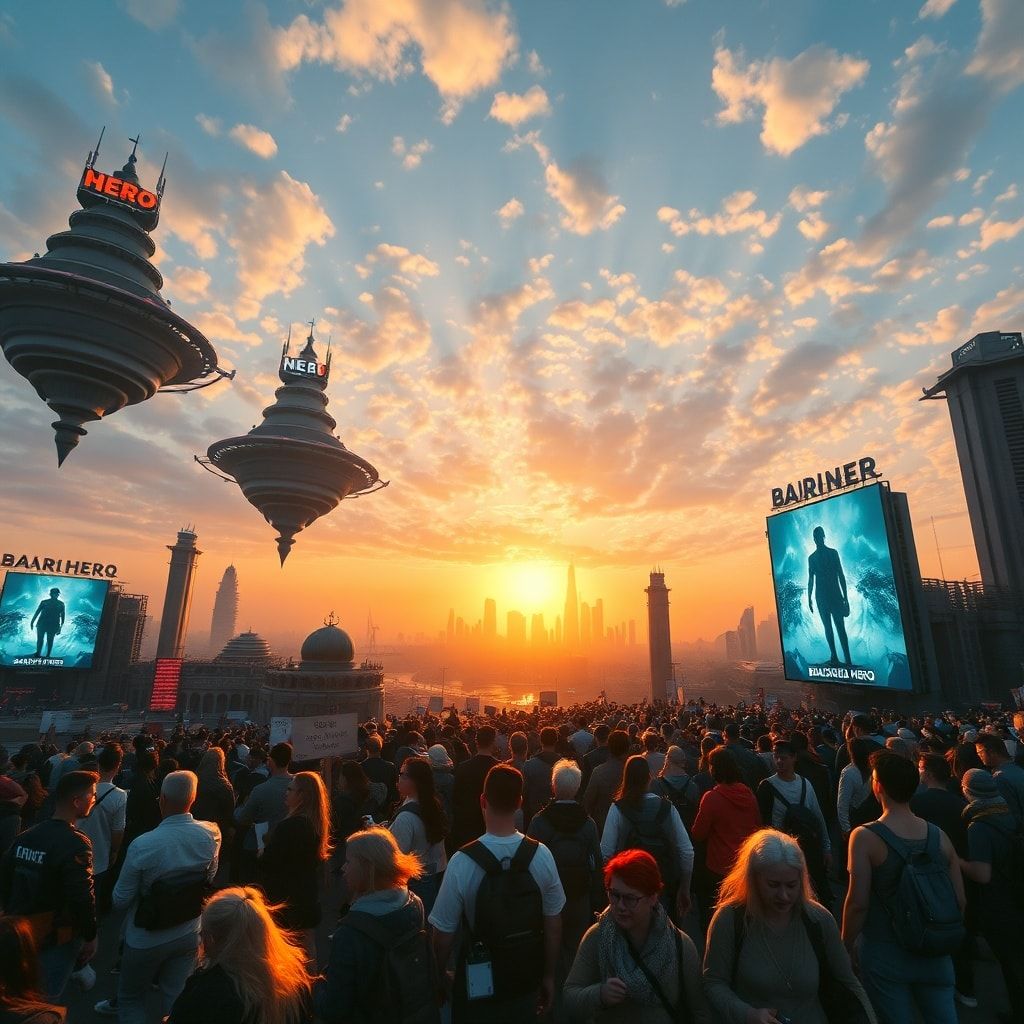
At its core, the trope hinges on a meticulously constructed world‑building framework: the hero’s party operates as a quasi‑governmental entity, complete with ranks, resource allocation, and a codified oath. When the protagonist is banished, the narrative instantly recalibrates the power equation, forcing the character to acquire “cursed” abilities that are statistically superior but socially stigmatized. Our look at Banished Hero lore dives into this duality, showing how it creates a compelling risk‑reward system: the hero gains combat potency (e.g., “Void Blade” or “Necrotic Healing”) at the cost of alienation, which fuels character development and plot tension. The series employs a “stat‑drain” mechanic where each exile‑granted skill siphons a portion of the protagonist’s humanity, visually represented through a fading aura or scar that intensifies with usage. Narrative pacing mirrors this mechanic; early episodes showcase the protagonist’s struggle to survive, mid‑season arcs explore alliances with fringe NPCs, and later chapters reveal the political machinations that led to the banishment. By embedding these mechanics into both the story and the visual design—through UI overlays, color palettes shifting from warm party tones to cold exile hues—the creators ensure that viewers intuitively grasp the stakes without exposition dumps.
Future Implications for the Franchise
The franchise’s momentum suggests a multi‑pronged expansion: a third anime season could explore the hero’s attempt to reform the party from within, leveraging the “cursed” abilities as diplomatic leverage. Spin‑off light novels focusing on secondary exile characters would deepen world‑building and satisfy fans’ appetite for side‑story content. Internationally, the series’ themes of institutional betrayal resonate with contemporary socio‑political discourse, positioning it for broader licensing deals and potential live‑action adaptations—though the latter would need to preserve the delicate balance between dark humor and existential dread to avoid tonal flattening. Merchandise pipelines are already primed; limited‑edition figurines depicting the hero’s dual‑state (party‑uniform vs. exile‑armor) have sold out within hours, indicating strong collector demand.
Related Guides & Further Reading
Check out the banished-hero-trope archives.