Why the Most Divisive Anime Keeps Splitting Fans: Evangelion and Beyond
The conversation around the most divisive anime never really dies; it mutates, spikes, and resurfaces whenever a new generation discovers the original controversy. Explore the most‑divisive‑anime hub to see how the debate has evolved across eras. Fans argue over whether the series’ artistic ambition outweighs its narrative opacity, and studios watch the backlash like a market barometer. For a broader perspective, see our comprehensive guide on divisive anime that maps out why these works keep sparking debate.
1995‑1996 TV Broadcast – Reception
Neon Genesis Evangelion aired its 26‑episode run from October 4 1995 to March 27 1996, a period when Japan’s TV anime landscape was dominated by mecha spectacles and shōnen optimism. The series’ final two episodes abandoned conventional animation in favor of abstract, introspective sequences that left many viewers bewildered.
This artistic gamble sparked a wave of criticism, cementing Evangelion’s reputation as a most divisive anime. If you’re curious how the series has stayed a flashpoint for debate over three decades, check out our deep‑dive into its broadcast history and lasting impact.

1997 Film – The End of Evangelion (Counterpoint)
In response, Gainax released “The End of Evangelion” in 1997, a cinematic counterpoint that re‑imagined the TV finale with visceral action and explicit resolution. The film’s graphic content and nihilistic tone further polarized audiences, dividing them into staunch defenders and vocal detractors.
2007‑2021 Rebuild Film Series – Modern Reimagining
Between 2007 and 2021, the franchise expanded into the four‑film Rebuild series, retelling the story with updated CGI, new plot threads, and an altogether different ending, attempting to reconcile old fans with newcomers. This effort illustrates the ongoing chaos that keeps fans divided, a phenomenon we explore in detail in our analysis of modern anime controversy.
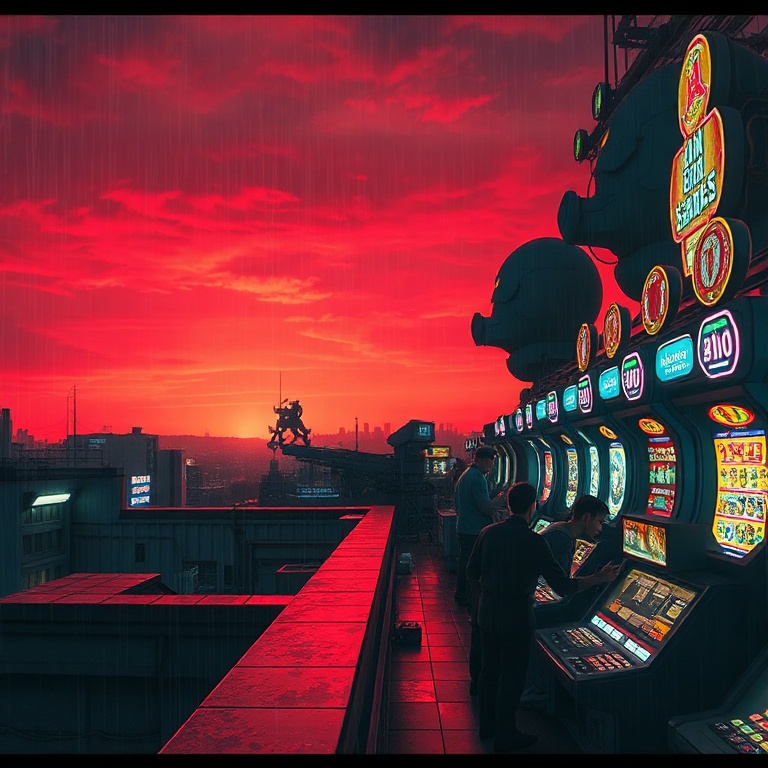
Commercially, the franchise’s reach exploded: Evangelion‑themed pachinko machines generated a staggering ¥700 billion in revenue by 2015, underscoring how controversy can translate into lucrative merchandising. For more official details, see the official project page.
Shift from Classic Mecha – Historical Context
When Evangelion debuted, the anime industry was still riding the wave of classic mecha titans like Mobile Suit Gundam and Macross, which emphasized clear heroic narratives and linear plot progression. Earlier adaptations, such as the 1979 “Mobile Suit Gundam” TV series, adhered to a straightforward war drama template, allowing audiences to easily align with protagonists.
Evangelion shattered that template by injecting psycho‑religious symbolism, fragmented storytelling, and a protagonist whose existential dread eclipsed any conventional heroism. This shift mirrored a broader studio trend in the mid‑90s where creators like Hideaki Anno began questioning the medium’s limits, moving away from the commercial safety of formulaic series toward auteur‑driven experiments.
Staff evolution also played a role: many of Gainax’s original staff were university students with avant‑garde theater backgrounds, bringing a raw, improvisational energy that clashed with the polished, market‑driven productions of the era. Market shifts, such as the rise of home video and early internet fan forums, amplified the debate, allowing dissenting voices to coalesce and spread rapidly. Compared to contemporaries like “Serial Experiments Lain”—another polarizing title—Evangelion’s commercial heft and studio backing made its divisiveness a cultural touchstone rather than a niche curiosity.

Production Techniques & Narrative Architecture
From a production standpoint, Evangelion pushed the envelope on both animation techniques and narrative architecture. The series employed a hybrid of traditional cel animation and experimental rotoscoping for its introspective episodes, resulting in a stark visual contrast that mirrored the protagonist’s mental fragmentation.
The infamous Episode 25 and 26 utilized minimalistic backgrounds, rapid cuts, and heavy reliance on voice‑over monologues, effectively turning the medium into a psychological essay. Statistically, the show’s viewership dipped during these episodes, but its home video sales surged, indicating a disconnect between broadcast reception and long‑term fan investment.
Narratively, the series introduced a layered mythos intertwining Judeo‑Christian symbolism, Kabbalistic references, and post‑industrial anxieties, demanding viewers to parse multiple interpretive frameworks simultaneously. This complexity is reflected in the franchise’s extensive supplemental material—director’s commentaries, manga adaptations, and the “Neon Genesis Evangelion: The Shinji Ikari Raising Project” spin‑off—each adding canonical depth.
Production design also featured meticulous mechanical engineering; the EVA units were designed with realistic joint constraints and biomechanical plausibility, a stark departure from the flamboyant designs of earlier mecha. All these technical choices contributed to a work that rewards repeated analysis, cementing its status as a most divisive anime.

Legacy, Franchise Evolution & Future Implications
Looking ahead, Evangelion’s legacy continues to shape industry risk‑taking. The Rebuild series demonstrated that a franchise can reinvent itself, prompting studios to consider multiverse approaches for other polarizing titles—think “Sailor Moon Crystal” or “Fate/Stay Night” adaptations.
- Commercial success in non‑traditional media (e.g., pachinko) signals that controversy can be monetized.
- Studios may prioritize “edgier” content to generate buzz, risking narrative cohesion for shock value.
- Streaming platforms expand global reach, inviting cross‑cultural critiques that could reshape how Japanese creators address universal themes.
However, the risk is that studios may prioritize shock value over narrative cohesion, potentially diluting artistic integrity.
Veteran Insight
First, let me tell you something you won’t hear from the hype‑machine: Evangelion’s divisiveness isn’t a flaw, it’s a feature. The series forces you to stare at the abyss of your own expectations and then smacks you with a neon‑lit existential crisis that most mainstream mecha would never dare. If you’re still clutching your plush‑filled Rei because you missed the point, you’re missing the whole damn point. The genius of Anno was to weaponize confusion, turning the audience’s discomfort into a mirror reflecting the post‑bubble Japanese psyche. That’s why the fanbase is split like a busted EVA cockpit—some see art, others see a mess, and both camps fuel the endless debate that keeps the franchise alive.
Second, the industry has learned to milk that division like a high‑octane pachinko ball. Every new spin‑off, every Rebuild tweak, every merch drop is calibrated to provoke, to split, to get people talking. It’s a business model built on controversy, and it works because the most divisive anime becomes a cultural touchstone that younger fans discover, argue about, and then re‑argue over in forums and conventions. The danger? Creators might start chasing the “divisive” label for its own sake, forgetting that true polarization comes from daring storytelling, not cheap shock tactics. Keep an eye on the next wave—if it can’t make you question why you even watch anime, it’s not worth the hype.
Further Reading
Related Guides & Further Reading
Check out the most divisive anime archives.