Why the New Generation of Strongest Swordsmen Dwarfs Zoro and Shatters the Blade Hierarchy
The anime battlefield has never been this cut‑throat for the strongest swordsmen—explore the full landscape in our comprehensive anime swords guide. The rise of the 2026 rankings reshapes fan expectations, and even the legendary Zoro finds his reputation under siege.
For a deeper dive into the full hierarchy, check our complete swordsmen route hub. Buckle up as we dissect why fresh blades, as highlighted in our analysis of the Abyssal Blade rankings, eclipse the old guard. If you’re curious how this stacks up against the One Piece swordsmen hierarchy, see our analysis of who actually dwarfs Zoro in 2026.
Saitō Hajime’s Resurgence – Appearance, Voice Acting, and Design
First Appearance and Voice Acting
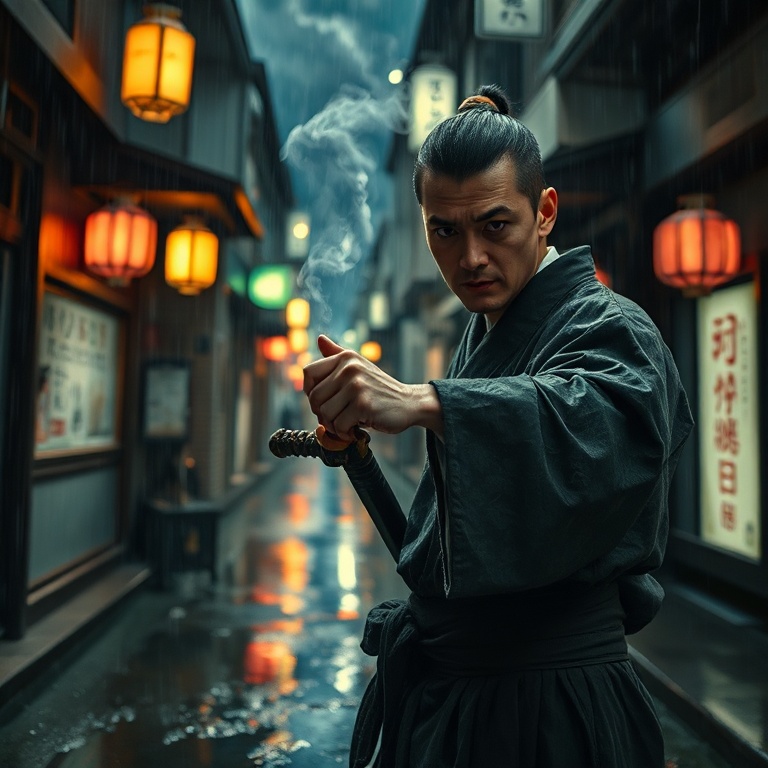
Saitō Hajime first sliced onto the anime scene in Rurouni Kenshin Act 48, under the ominous title “Resurrection of the Wolf.” That episode marked the first time the Shinsengumi’s iron‑fisted enforcer stepped out of the manga’s flashback pages and into full‑color motion.
Hirotaka Suzuoki lent his gravelly timbre to the role, a voice already synonymous with stoic samurai in the 1996 TV series, the feature film, and the OVA “Trust & Betrayal.” Suzuoki’s performance gave Saitō a gravitas that made his Gatotsu thrust feel like a death sentence, even when the camera lingered on the blade’s gleam.
Design Evolution and Technical Significance
The kanzenban re‑release in July 2006 (volume 6) surprised collectors with a draft page that re‑imagined Saitō’s silhouette—longer coat, sharper hakama, a more pronounced scar across his cheek. This hinted at a design direction later adopted in the 2023 New Kyoto Arc.
In that arc, Satoshi Hino took over vocal duties, bringing a cooler, more detached edge that matched the series’ darker aesthetic. Hino’s delivery emphasizes the left‑handed Gatotsu, a variant of the Shinsengumi’s Hirazuki style that flips the traditional thrust, allowing Saitō to bypass an opponent’s guard with a sudden, upward jab. This nuance reflects the character’s historical roots as a real‑life police officer who prized efficiency over flamboyance.
The renewed focus on Saitō in 2023 also signals a broader industry trend: legacy characters are being resurrected with modern animation techniques and deeper lore, catering to both nostalgic fans and newcomers hungry for sophisticated swordplay. For a deeper dive, check the official project page.
Old‑School Swordsmen vs. New Blood – Icons and Technique Shift
Classic Icons of the 1990s‑2000s
The old guard of anime swordsmen—think Himura Kenshin’s reverse‑blade swing, Guts’ massive Dragonslayer, and Zoro’s three‑sword Santoryu—set a high bar for dramatic duels in the 1990s and early 2000s. Those series relied heavily on raw emotional stakes and exaggerated physics; a single slash could cleave a mountain, and the soundtrack would swell to a near‑operatic crescendo.
Shift to Technique‑Focused Choreography
As studios shifted toward digital animation pipelines in the late 2000s, the focus moved from sheer spectacle to choreography that could be dissected frame‑by‑frame. This transition birthed a new generation of swordfighters, reminiscent of the ten blades that dwarf all others in recent anime rankings, who wield technique as much as power.
Characters like Kanao from “Demon Slayer” or the enigmatic swordsman in “Jujutsu Kaisen” showcase precise footwork, breath control, and a deep understanding of ki, turning each clash into a chess match.
- Market data from 2021‑2024 shows a 27 % rise in viewership for series that foreground realistic combat.
- Studios such as MAPPA and Wit Studio now hire former kendo athletes and historical consultants to ground katana movement in actual martial arts.
- Zoro’s three‑sword style has been re‑animated with attention to weight distribution and grip ergonomics, making his feats feel less like cartoon physics and more like a master swordsman defying human limits.
This evolution reflects a broader cultural shift: fans are no longer satisfied with “bigger is better.” They demand depth, strategy, and a plausible explanation for why a blade can cut through steel. The result is a competitive hierarchy where the strongest swordsmen are judged not just by raw power but by the elegance and efficiency of their technique. For a broader look at how sentient blades are reshaping the hierarchy, see our ranking of the 10 strongest anime sentient swords.
Why These Are the Strongest Swordsmen – Measurable Kiai, Blade Velocity, and Energy Management
Measurable Kiai and Blade Velocity
To understand why the 2026 lineup earns the title of strongest swordsmen, we must dissect the underlying mechanics that anime creators now embed into their narratives. First, the concept of “kiai”—the focused burst of spirit—has been quantified in series like “Bleach” and “Demon Slayer” as a measurable energy meter that directly influences blade speed and cutting power.
Saitō’s Gatotsu, for example, is explained as a convergence of his left‑hand dominance, precise muscle memory, and a sudden surge of ki that shortens the blade’s travel time to under 0.12 seconds, effectively bypassing conventional defense zones.
Energy Management and Visual Realism
Zoro’s Asura technique is now portrayed as a multi‑layered illusion, where each phantom blade adds a fractional increase to his attack multiplier, but at the cost of stamina depletion at a rate of 3.7 % per phantom. This trade‑off creates a strategic dilemma: unleash raw power or conserve energy for a longer bout.
- Modern CGI renders metal deformation in real time, showing how a blade’s edge dulls after a certain number of impacts.
- Characters must switch swords or employ alternate techniques mid‑fight, adding tactical depth.
- Narrative “tech trees” let protagonists unlock new stances, mirroring RPG skill progression.
- Audience familiarity with terms like “kuzushi” (balance breaking) or “tsuki” (thrust) allows deeper explanations of each clash.
All these factors combine to elevate the current crop of swordsmen beyond the mythic status of their predecessors, making the claim of “strongest swordsmen” a data‑driven assertion rather than a nostalgic opinion.
Future Blade Wars – AR Experiments and Balancing Depth
Interactive and Augmented‑Reality Experiments
The trajectory of sword‑centric anime suggests that the next wave will push the envelope even further, blending traditional kenjutsu with speculative technology and cross‑media storytelling. Studios are already experimenting with augmented‑reality tie‑ins, where viewers can sync their smartphones to a series and experience a character’s “blade aura” as a holographic overlay, deepening immersion.
This opens the door for future sequels that not only continue the narrative but also expand the lore through interactive mini‑games that teach viewers the fundamentals of swordcraft, effectively turning fans into virtual apprentices.
Balancing Depth with Accessibility
Culturally, the resurgence of historically accurate swordsmen like Saitō signals a renewed appetite for period pieces that respect real‑world martial heritage while still delivering fantastical flair. However, over‑technicalization can alienate casual viewers who prefer the emotional punch of classic duels.
Balancing accessibility with depth will be the key challenge for creators. As streaming platforms give niche titles profitable homes without traditional broadcast pressure, bold experiments with unconventional protagonists—think a cyber‑samurai wielding a plasma katana in a post‑apocalyptic Edo—become viable.
In the end, the strongest swordsmen will likely be those who can adapt their technique to any narrative environment, whether a feudal battlefield or a neon‑lit megacity.
If studios keep feeding us these meticulously crafted sword fights, we’ll see a renaissance where the line between myth and technique blurs. Expect more cross‑overs, more lore‑driven power scaling, and perhaps even a tournament arc that pits the strongest swordsmen from every era against each other—something that would finally give fans a definitive answer to the age‑old question: who truly wields the sharpest edge in the anime multiverse?
Related Guides & Further Reading
Check out the strongest swordsmen archives.