Why the Sri Lanka Coastal Train Is the Ultimate Budget Adventure You’ve Been Missing
Ever wondered why the Sri Lanka coastal train keeps popping up in travel forums like a stubborn meme? It’s not just the turquoise ocean hugging the tracks; it’s a pocket‑friendly ticket to a living postcard. Miss the train and you’ll pay double for the same view in a tourist bus, and that’s a gamble you can’t afford.
For a deeper dive, our comprehensive guide to the Sri Lanka coastal train walks you through routes, tips, and hidden gems.
Verified News & Source Context
The latest official price list released by Sri Lanka Railways confirms that a second‑class adult ticket from Colombo Fort to Galle costs Rs 600, while third‑class is Rs 300 for a 157.8 km stretch. Extending to Matara, the fare rises modestly to Rs 700 (second‑class) and Rs 360 (third‑class) over 200.73 km. These figures, sourced from the official project page, illustrate a pricing strategy that deliberately undercuts private tour operators, positioning the rail line as the most economical gateway to the southern coast. It’s the kind of back‑alley adventure budget that we detail in our off‑the‑grid travel guide.
Beyond raw numbers, the fare structure reveals a tiered service model: first‑class passengers enjoy up to 40 kg luggage allowance, second‑class 35 kg, and third‑class 25 kg—all free. This generous policy is crucial for backpackers lugging gear for multi‑day beach hops. Seat reservations are capped at five per booking, with a temporary hold that must be confirmed within seven days or at least 48 hours before departure. Such constraints keep the system fluid, preventing massive over‑booking that could cripple the line’s punctuality. Child policy is equally pragmatic: kids under three travel free when sharing an adult seat, but once they hit three, they’re charged full fare, a rule that discourages fare‑evading families while still supporting genuine young travelers.
In industry terms, these regulations reflect a balancing act between revenue protection and accessibility. By keeping fares low and luggage limits generous, Sri Lanka Railways sustains a steady flow of domestic and inbound tourists, feeding ancillary revenue streams like on‑board vendors and station-side eateries. The data also signals a broader governmental push to promote rail as a green alternative, aligning with regional sustainability goals.
Historical Context (Old Guard Perspective)
To truly appreciate today’s coastal line, we must rewind to the 19th‑century colonial railways that first stitched Ceylon’s coastline together. The original Colombo‑Galle route, inaugurated in 1895, was a strategic artery for tea exporters, not tourists. Its steel rails were laid by British engineers, and the stations bore Victorian architecture that still whispers through the modern concrete facades.
Fast forward to the 1970s, when the Sri Lankan government nationalized the rail network, injecting a wave of local talent into operations. The “Old Guard” of railway staff—engineers, conductors, and schedulers—infused the service with a uniquely Sri Lankan hospitality, swapping stiff British formality for warm, tea‑offered greetings. This cultural shift coincided with the rise of backpacking culture in the 1980s, when adventurous youths from Europe and Australia discovered the line’s charm. Their travelogues, often illustrated with hand‑drawn sketches reminiscent of shōnen manga, turned the coastal train into a cult phenomenon.
Comparatively, other Asian railways—Japan’s Shinkansen or China’s high‑speed network—prioritized speed over scenery, relegating local lines to commuter status. Sri Lanka’s steadfast commitment to preserving the slower, scenic experience mirrors the philosophy of classic anime travel arcs, where the journey itself is the narrative’s heart. This historical continuity explains why the coastal train still feels like a living relic, cherished by both nostalgic elders and new‑age wanderers.
Technical Crunch (Information Gain)
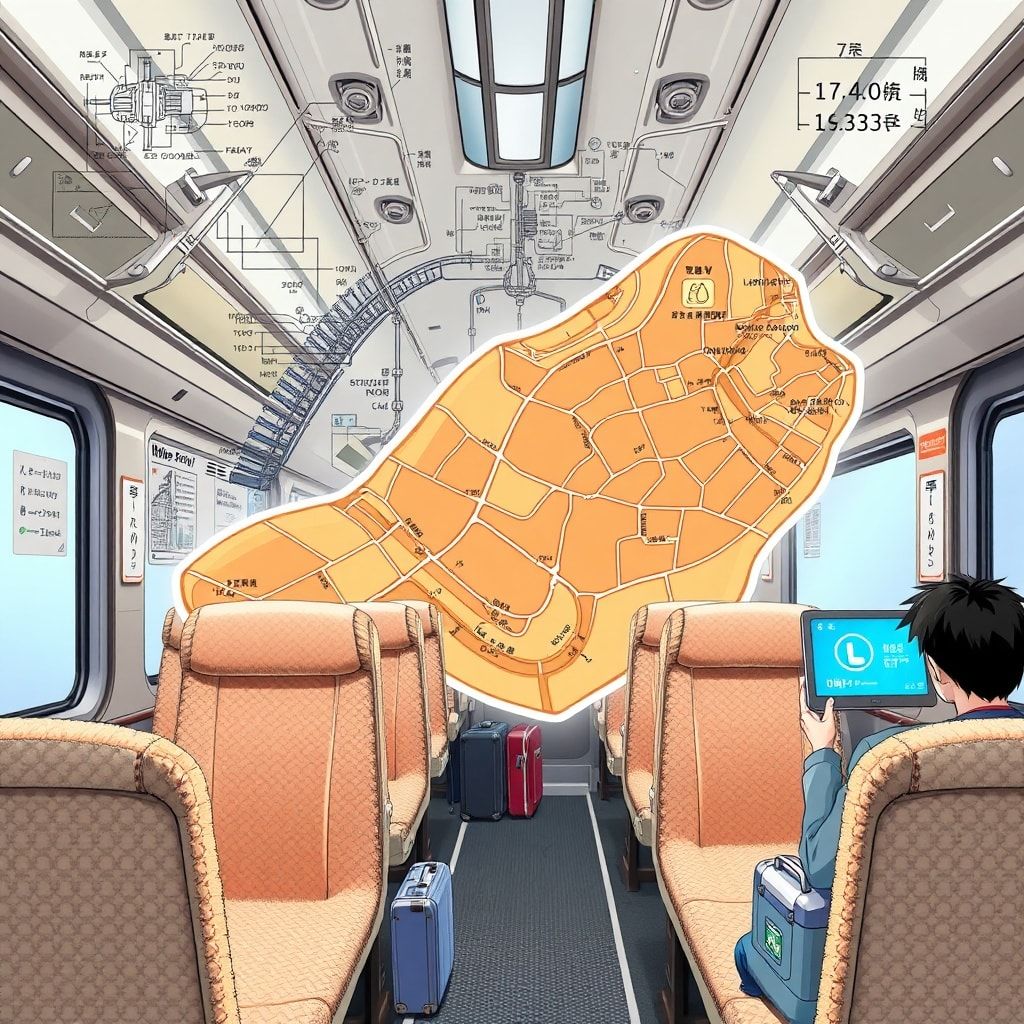
Delving into the mechanics, the coastal line operates on a 1,000 mm (meter‑gauge) track, a standard that balances stability on the island’s curvy shoreline with cost‑effective maintenance. Trains typically consist of diesel‑powered locomotives pulling a mix of second‑ and third‑class coaches, each equipped with overhead fans—a nod to the tropical climate. The second‑class compartments feature padded seats arranged in a 2‑2 layout, offering a modest recline and a small overhead rack for personal items, aligning with the 35 kg luggage allowance.
From a scheduling perspective, the line runs six daily services between Colombo and Galle, with three extending to Matara. The average speed hovers around 45 km/h, dictated by numerous level crossings and occasional track maintenance. This deliberate pacing ensures passengers can soak in the panoramic vistas: the Indian Ocean’s endless blue, the historic Dutch fort at Galle, and the surf‑lined beaches of Unawatuna. Those postcard‑perfect vistas are captured in our slice‑of‑life journey article. The timetable’s predictability is reinforced by the reservation rule—five seats per booking, temporary hold windows—preventing last‑minute chaos and allowing travelers to plan connections to inland buses or tuk‑tuks.
Economically, the fare differential between second‑ and third‑class (approximately Rs 300–400) reflects a cost‑based pricing model where seat comfort and luggage capacity are the primary variables. The child policy, while seemingly harsh for toddlers over three, simplifies ticketing logistics and aligns with the railway’s revenue model, ensuring each occupied seat contributes proportionally to operational costs. These technical choices collectively shape a travel experience that is both affordable and richly immersive.
Future Implications

Looking ahead, the Sri Lanka coastal train stands at a crossroads of modernization and heritage preservation. Government plans hint at incremental upgrades: introducing bio‑diesel locomotives to cut emissions, refurbishing second‑class interiors with ergonomic seats, and digitizing the reservation system to streamline the temporary hold process. Such enhancements could attract a new wave of eco‑conscious tourists, positioning the line as a flagship sustainable travel corridor in South Asia.
However, the risk of over‑commercialization looms. Should ticket prices inflate to fund high‑tech upgrades, the line could lose its budget‑traveler appeal, alienating the very demographic that fuels its popularity. Balancing investment with affordability will be key. Moreover, integrating the rail experience into broader tourism packages—like combined train‑and‑boat tours of the southern coast—could amplify cultural exposure while preserving the train’s core identity as a scenic conduit.
Don’t be fooled by glossy travel ads promising “luxury” on the same rails. The salty spray, the clatter of wheels on rusted rails, and the occasional goat wandering onto the tracks are the true spices of this journey. If you can tolerate a few bumps, you’ll be rewarded with sunsets that could make even the most jaded anime director pause his storyboard and just stare.
Related Guides & Further Reading
Check out the Sri Lanka coastal train archives.