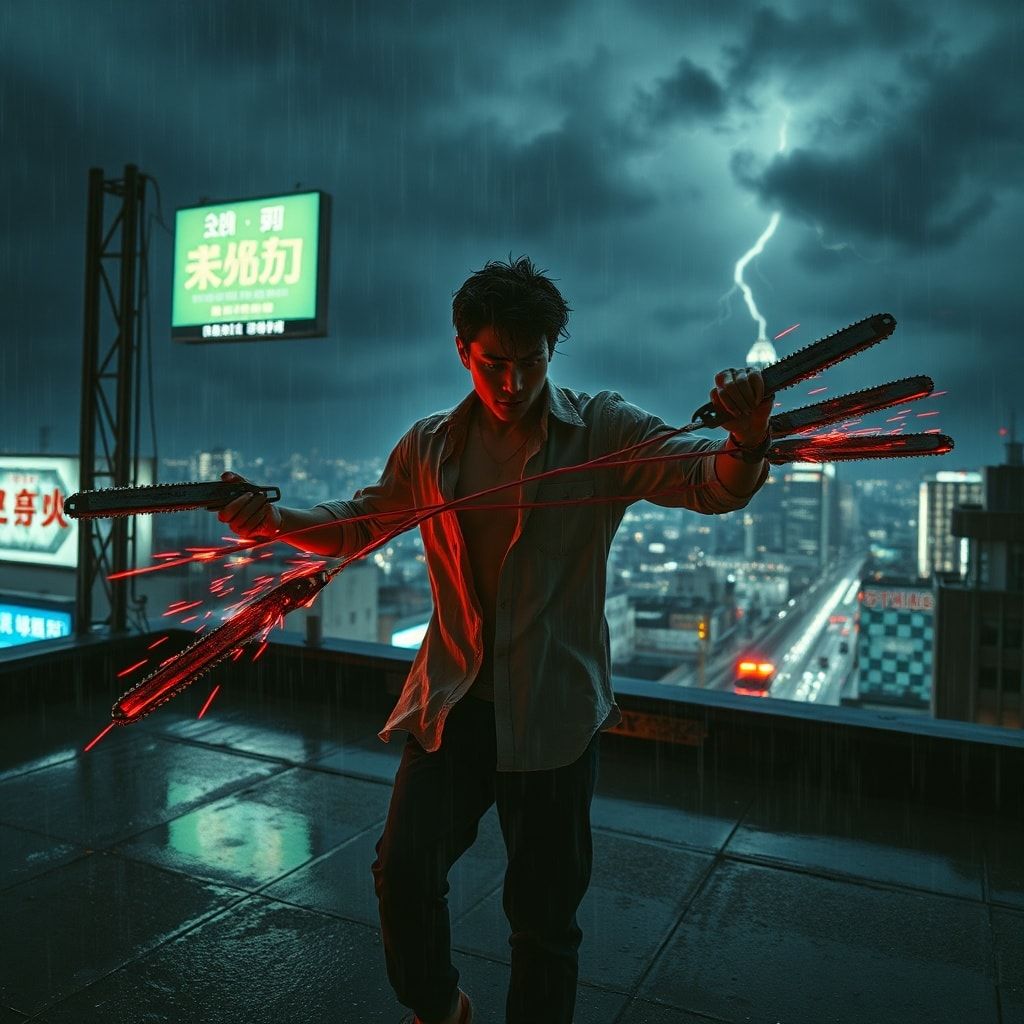
Chainsaw Man power scaling: Why Denji Beats Every Shonen Hero (and Still Gets Screwed)
When it comes to Chainsaw Man power scaling, Denji isn’t just another shonen protagonist—he’s a walking, revving paradox that shreds expectations. The manga’s brutal premise forces us to rethink what “strength” truly means in a world of devils. Yet fans still argue whether his chainsaw limbs can outclass the likes of Naruto or Deku.
Verified News & Source Context
The latest circulation figures—over 35 million copies by January 2026—are not just a vanity metric; they signal a cultural shift where grotesque body horror meets mainstream shonen tropes. Denji’s merger with the Chainsaw Devil Pochita grants him a literal weaponized metabolism: any limb can become a whirring saw, allowing him to cleave through both physical barriers and metaphysical concepts. The Chainsaw Devil’s unique ability to erase the very notion a devil embodies adds a layer of existential threat that most shonen powers lack. When Denji slays the Gun Devil, he doesn’t merely defeat a monster; he dismantles a geopolitical weapon system that governments have weaponized for decades. This act underscores the narrative’s commentary on how power can be commodified and then violently reclaimed. The manga’s adaptation into anime further amplifies these themes, with the production studio emphasizing visceral sound design and kinetic animation to make each chain‑saw rev a statement of raw dominance. For industry analysts, the blend of high‑octane action and philosophical weight makes Chainsaw Man a benchmark for future dark‑fantasy shonen projects. official project page provides a comprehensive timeline of releases and sales milestones.
Historical Context: The Old Guard Perspective
To gauge Denji’s place in the pantheon, we must compare him to the legacy of shonen icons that defined the medium in the ’90s and early 2000s. While Goku’s Saiyan transformations rely on energy amplification, and Naruto’s Nine‑Tails harnesses chakra, Denji’s power is rooted in contractual symbiosis with a devil—a concept that predates but diverges from the spirit‑based systems of earlier series. Studios that once prioritized bright, hopeful aesthetics now grapple with darker palettes, a shift mirrored in MAPPA’s handling of Chainsaw Man versus Toei’s classic treatment of Dragon Ball. Staff turnover also plays a role: the original manga’s art style, raw and gritty, contrasts sharply with the polished, cinematic framing of the anime, reflecting a broader industry trend toward high‑budget, streaming‑first productions. Market data shows a surge in “anti‑hero” protagonists after 2015, suggesting that Denji’s morally ambiguous survival instincts resonate with a generation disillusioned by traditional heroism. This evolution is not merely aesthetic; it informs how power scaling is discussed, moving from “who can fire the biggest blast?” to “who can rewrite the rules of existence?” The old guard’s emphasis on moral clarity gives way to a nuanced debate about agency, contracts, and the cost of power.
Technical Crunch: Lore Mechanics & Narrative Design

At the heart of Chainsaw Man’s scaling lies a meticulously constructed devil‑contract system. Each devil embodies an abstract concept—Fear, Control, or even the mundane “Chainsaw”—and the strength of a contract is proportional to the societal weight of that concept. When Denji fuses with Pochita, he inherits not only the Chainsaw Devil’s physical attributes but also its meta‑ability to erase the “Chainsaw” concept from reality, effectively nullifying any countermeasure that relies on that idea. This is why Makima, the Control Devil, becomes vulnerable: her dominion over obedience is a concept that can be subverted by a being who can rewrite reality’s rules. Statistically, the manga assigns “Devil Levels” (e.g., Level 5 for Gun Devil) that correlate with destructive radius, but Denji’s hybrid form bypasses these tiers by converting conceptual power into kinetic force. Production design mirrors this: animators use rapid cut‑aways and exaggerated sound design to convey the instantaneous translation of abstract power into physical carnage. Narrative pacing also matters; Denji’s power spikes are often tied to emotional triggers—hunger, love, or desperation—making his scaling non‑linear and thematically resonant. This layered approach forces readers to consider power not just as raw numbers but as a narrative device that interacts with character psychology and world‑building.
Future Implications of Chainsaw Man Power Scaling
The trajectory of Chainsaw Man’s power scaling will likely dictate the franchise’s expansion into multimedia territories. As the manga’s sales continue to climb, studios are eyeing spin‑offs that explore secondary devils, potentially introducing new power hierarchies that could either dilute Denji’s supremacy or enrich the universe’s complexity. A sequel series focusing on the aftermath of Makima’s defeat could examine how the erasure of the Control Devil reshapes societal structures, offering fresh ground for power‑scaling debates. Moreover, international streaming platforms are betting on the series’ visceral appeal, meaning future adaptations may amplify the visual representation of devil contracts, perhaps employing cutting‑edge CGI to depict concept‑erasure in ways static panels cannot. This could set a new standard for how abstract powers are visualized, influencing upcoming shonen titles that wish to blend philosophical depth with kinetic action.
Listen, kid, you think Denji’s just a walking chainsaw because he looks cool on a poster? He’s a walking paradox—every swing is a contract negotiation, every blood‑spurt a reminder that power in this world costs you your humanity. The old‑school shonen heroes got their boosts from training arcs; Denji gets his from literal devil‑pacts that can rewrite reality. That’s a level of narrative elasticity most series can’t even dream of, and it makes every “who’s stronger?” debate a lesson in metaphysics, not just muscle.
Don’t be fooled by the hype train that’s turning Chainsaw Man into a meme. The franchise is a litmus test for how far we can push the genre before it collapses under its own darkness. If the next season leans into world‑building instead of just gore, we’ll see a new benchmark for power scaling—one that forces future creators to think beyond “biggest attack” and ask, “what concept can I erase tomorrow?” That’s the kind of evolution that keeps the medium alive, even if it means watching Denji get ripped apart for the sake of a plot twist.
Check out the Chainsaw Man archives.