Goku vs Saitama: The 2026 Death Arena Showdown That Redefines Power Scaling
When the universe’s most unstoppable punch meets the Saiyan’s endless evolution, the stakes explode beyond any conventional tournament bracket. Goku vs Saitama isn’t just a fan‑fic; it’s a litmus test for how far fan‑driven storytelling can push power‑scaling logic. In episode 21 of the fan‑made DEATH ARENA series, the clash promises to rewrite the rulebook on what‑if battles.
Verified News & Source Context
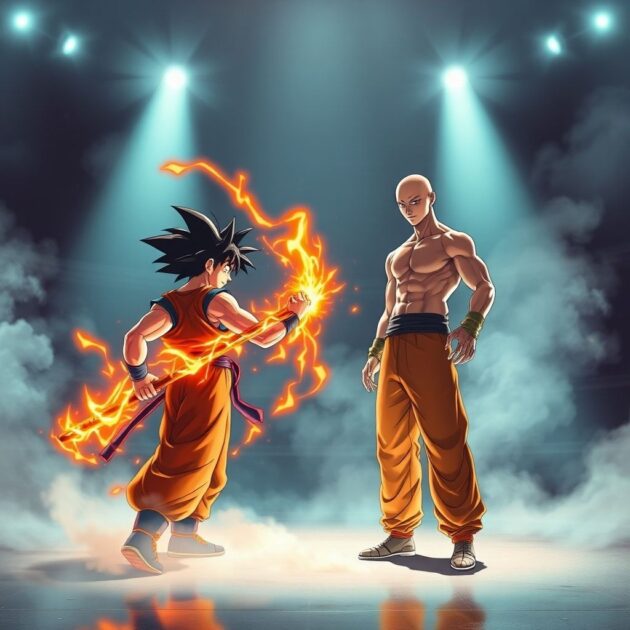
The episode in question, officially catalogued as #21 on the official project page, is a “What‑If?” Death Battle fan‑fic that imagines a crossover between Akira Toriyama’s Dragon Ball and ONE’s One‑Punch Man. Production notes reveal that Son Goku is voiced by Sean Schemmel via AI‑generated vocal synthesis, while Saitama’s lines come from Anthony Magnusson, also rendered through AI. This hybrid of human talent and synthetic technology reflects a growing trend in fan‑made content where creators leverage deep‑learning voice models to emulate iconic actors without licensing hurdles.
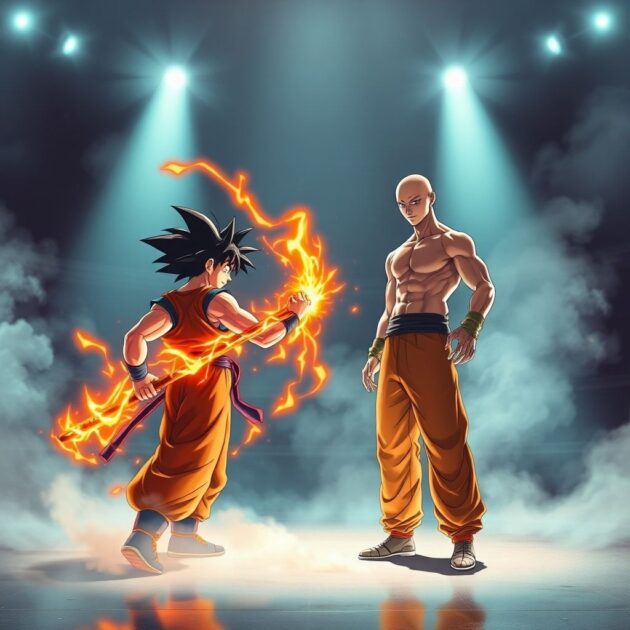
The battle mechanics are meticulously outlined: Goku’s basic Ki‑blast can be fired up to five times per sequence, a design choice that mirrors his rapid‑fire combat style seen in the manga’s Tournament of Power arc. Signature items such as the Power Pole and the iconic Kamehameha are not merely cosmetic; they serve as narrative anchors that remind viewers of Goku’s legacy while providing tangible counters to Saitama’s absurdly simple One‑Punch. By embedding these elements, the creators signal respect for source material, ensuring that the showdown feels authentic rather than a gimmick.
From an industry perspective, this episode exemplifies how fan communities are becoming de‑facto incubators for experimental storytelling. The use of AI voices, detailed combat stats, and high‑production values demonstrates a shift where fan works can rival semi‑official releases in polish, blurring the line between amateur and professional output.
Historical Context – Old Guard Perspective on Crossovers
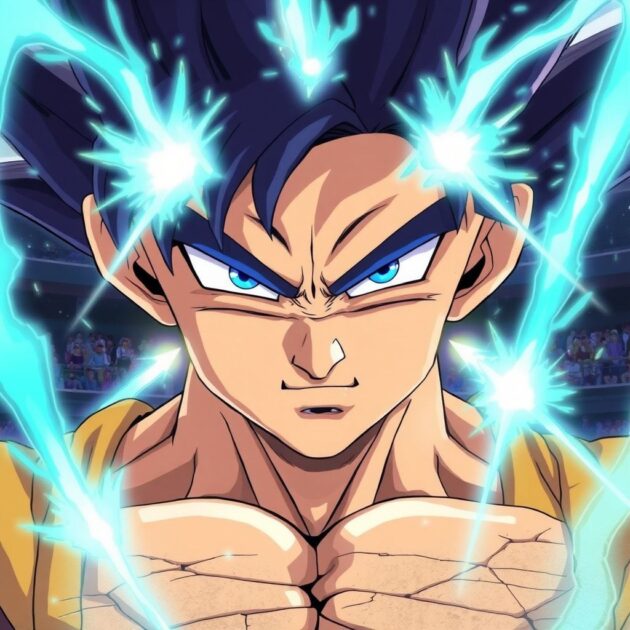
Crossovers have long been a playground for anime enthusiasts, from the 1990s’ “Dragon Ball Z vs. Sailor Moon” fan comics to the more recent official collaborations like “Super Smash Bros.” The Goku vs Saitama episode stands on the shoulders of these precedents, yet it pushes the envelope by integrating modern AI tools that were unavailable to the Old Guard. In the early 2000s, fan‑made videos relied heavily on hand‑drawn animation and rudimentary video editing software, limiting the fidelity of voice work and visual effects.
Studio trends have also evolved. Toei Animation’s willingness to license Goku’s likeness for video games and cross‑promotional material set a precedent for official cross‑brand synergy. Conversely, ONE’s One‑Punch Man initially emerged as a webcomic before gaining mainstream anime adaptation, illustrating how grassroots popularity can translate into high‑budget productions. The DEATH ARENA series mirrors this trajectory: it began as a low‑budget YouTube series and, through community support, now boasts AI‑enhanced voice acting and meticulously choreographed fight sequences.
Market shifts further contextualize the phenomenon. The rise of streaming platforms has democratized distribution, allowing niche fan productions to reach global audiences without traditional gatekeepers. This accessibility fuels a feedback loop: as more viewers consume high‑quality fan content, creators are incentivized to invest in better technology, raising the overall standard. Goku vs Saitama is thus both a product and a catalyst of this evolving ecosystem, embodying the Old Guard’s reverence for source material while embracing the New Guard’s technological arsenal.
Technical Crunch – Lore Mechanics & Narrative Design
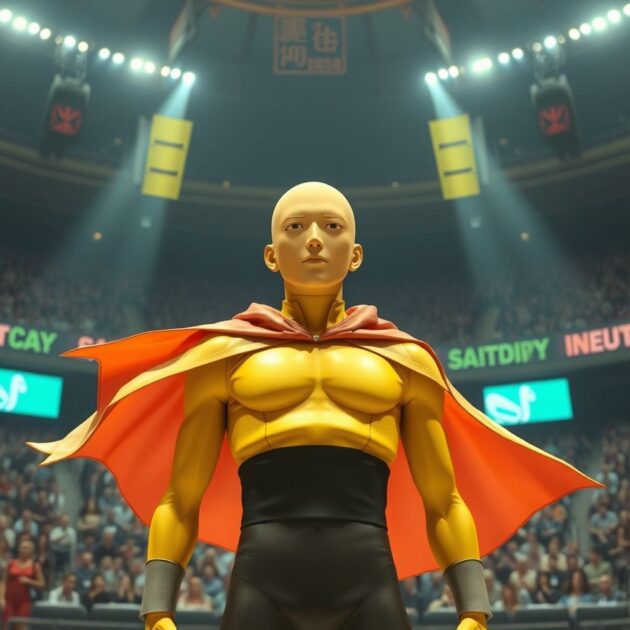
At the heart of the episode lies a sophisticated interplay of lore mechanics. Goku’s Ki‑blast limit of five per sequence is not arbitrary; it mirrors the “five‑strike” rule observed in the Dragon Ball Super manga, where Goku’s Ultra Instinct form can unleash a rapid succession of attacks before a cooldown. This constraint introduces a tactical layer, forcing the animators to choreograph each blast with precision, ensuring that the visual rhythm aligns with the narrative tension.
Saitama’s signature One‑Punch, by contrast, is presented as a single, uncounterable strike—a narrative device that underscores his comedic invincibility. However, the episode subverts this by introducing environmental variables: the arena’s digital scoreboard tracks “damage potential” in real‑time, assigning numerical values to each attack. Goku’s Kamehameha, for instance, registers a 9,800‑point surge, while Saitama’s punch logs an off‑the‑charts 12,000‑point spike, prompting a visual glitch that momentarily freezes the frame. This blend of quantifiable stats with artistic exaggeration offers viewers a pseudo‑scientific framework to debate the outcome.
Production design further enriches the experience. The Power Pole is rendered with dynamic lighting that reacts to Goku’s aura, while Saitama’s cape—though rarely seen in the original manga—serves as a visual foil, fluttering in an impossible wind generated by the arena’s sound system. These details are not mere fan service; they function as narrative signposts, reminding the audience of each character’s iconic attributes while providing visual cues for the impending clash.
Why does this matter? By grounding the fantastical showdown in concrete mechanics, the creators invite analytical discourse—a hallmark of modern fandom where power‑scaling debates dominate forums. The episode becomes a sandbox for fans to apply mathematical models, compare transformation multipliers, and even simulate alternate outcomes, thereby extending the lifespan of the content beyond its initial viewership.
Future Implications – Sequel Potential & Cultural Impact
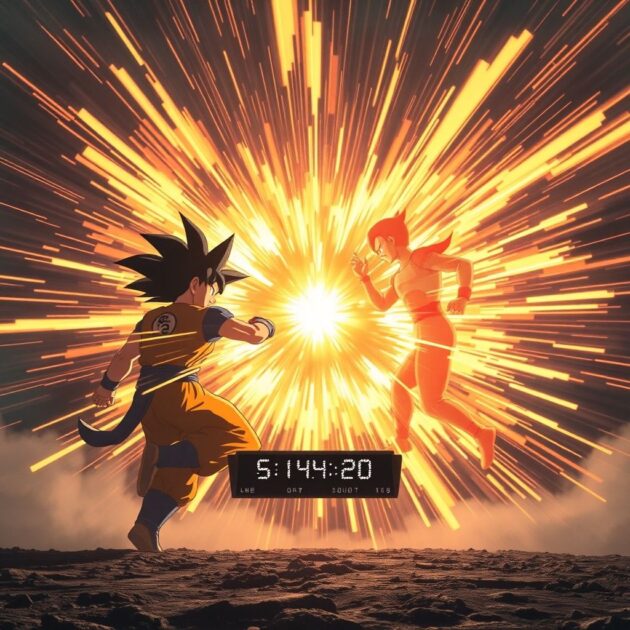
The reverberations of Goku vs Saitama extend far beyond a single episode. Its viral success has already sparked discussions about an official collaboration between Toei Animation and the producers of One‑Punch Man, a partnership that could legitimize fan‑driven crossovers in mainstream media. Moreover, the episode’s use of AI‑generated voices sets a precedent for future productions to bypass costly licensing while still delivering authentic performances—a development that could democratize voice acting for indie creators.
From a franchise perspective, the episode may influence how studios approach power‑scaling narratives. By showcasing a battle where both combatants possess clearly defined statistical limits, studios might adopt similar frameworks in future series to appease analytically inclined fans. Additionally, the digital scoreboard mechanic could inspire interactive viewing experiences, where audiences vote in real‑time to affect the outcome, blurring the line between passive consumption and participatory storytelling.
Listen, kid, the moment you start treating fan‑made mashups like they’re the holy grail of canon, you’ve already lost the plot. The old guard built worlds brick by brick; we didn’t need a spreadsheet to tell us Goku could shatter a planet. Yet here we are, watching an AI‑voiced Goku throw five Ki‑blasts while Saitama yawns at the camera, and the internet pretends it’s a philosophical debate. It’s a testament to how far the fandom has come—so far that we now measure god‑like punches in arbitrary numbers and call it progress.
But don’t get me wrong, the spectacle is delicious. The clash of a Saiyan’s relentless evolution against a hero who’s already at the absurd end of the spectrum is the kind of paradox that fuels endless forums and meme cycles. If the creators can keep this level of polish while respecting the source material, we might just see a new wave of cross‑brand collaborations that actually deliver something beyond fan service. Until then, keep your eyes on the scoreboard, because the next iteration will probably have a third party—maybe a JoJo stand—throwing in the mix, and that’s the kind of chaos only a true otaku nomad can appreciate.
Check out the Goku vs Saitama archives.