How to Stretch an India Month Budget: Backpacker Costs Unpacked
Planning a month-long trek across India on a shoestring? Your India month budget will dictate whether you sip chai in a rooftop café or survive on street‑side samosas. Miss the numbers and you’ll end up trading your passport for a night in a cramped hostel.
For a full breakdown, visit our India month budget hub before you start planning.
Verified News & Source Context
The e‑Tourist visa landscape sets the financial baseline for any nomad. If you’re looking for budget‑crushing tips, check out our guide on stretching the India month budget. Depending on nationality, a 30‑day visa can be as cheap as US$10 or climb to US$40, while a one‑year multiple‑entry pass sits at US$40 and a five‑year option at US$80. Those fees, though modest, are non‑negotiable and must be booked before arrival, often through the Indian government portal. Once you’ve cleared immigration, the iconic Taj Mahal entrance fee of ₹1,300 for foreigners (₹1,100 for the complex and ₹200 for the mausoleum) becomes a benchmark for heritage costs, contrasting sharply with the ₹250 charge for Indian citizens. Rail travel remains the backbone of budget transit: sleeper‑class tickets range ₹300‑₹800 (≈US$4‑$11), while AC 3‑tier jumps to ₹600‑₹1,500 (≈US$8‑$20). Seats must be secured 30‑60 days ahead via IRCTC, a process that can feel like a bureaucratic boss‑battle in an RPG. Domestic flights, though pricier, offer time‑saving shortcuts: ₹3,000‑₹15,000 (≈US$36‑$180) for short hops, with carriers like IndiGo and SpiceJet dominating the skies. Seasonal timing is crucial; the monsoon (June‑September) brings 40‑50 % more rain and frequent delays, making the drier October‑March window the sweet spot for reliable, cost‑effective travel. All these data points converge to shape a realistic, day‑by‑day financial map for the intrepid wanderer. For deeper context, see the official project page.
Historical Context (Old Guard Perspective)
Back in the early 2000s, budget travel to India was a niche pursuit, chronicled in guidebooks that listed hostel rates in rupees without converting to dollars. Those pioneers relied on overland buses and the occasional sleeper train, often paying in cash at unregulated ticket windows—a stark contrast to today’s digitized IRCTC system. Visa fees were a flat US$30 for most nationalities, and the concept of a “multiple‑entry” pass was virtually unheard of. The Taj Mahal’s entry price has remained relatively stable in rupee terms, but inflation and the rise of dynamic pricing for heritage sites have altered the perceived value for foreign tourists. Moreover, the explosion of low‑cost airlines in the 2010s reshaped the travel matrix: routes that once required days of rail now span a few hours in the air, albeit at a premium. This shift forced the backpacking community to recalibrate their budgets, allocating more for occasional flights while still cherishing the romance of night‑time train journeys. Studios producing travel documentaries mirrored this evolution, moving from grainy VHS footage to high‑definition streaming series that highlight both the gritty realism of sleeper berths and the sleek efficiency of modern airports. Understanding this historical trajectory helps modern nomads appreciate why certain costs feel inflated—they’re the legacy of an industry that has rapidly professionalized while still clinging to its adventurous roots.
Technical Crunch (Information Gain)

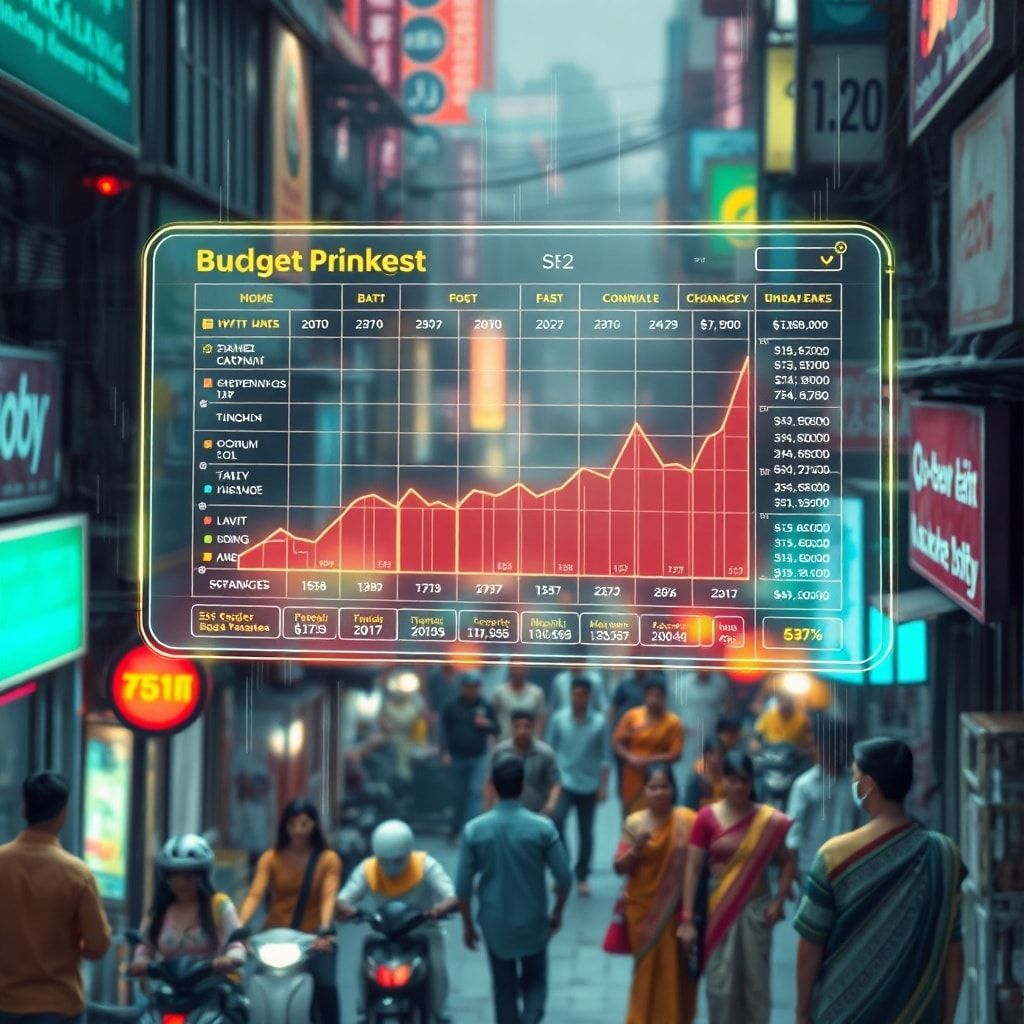
Let’s deconstruct the numbers into a practical daily ledger. Assuming a 30‑day stay, the visa fee averages US$25 (mid‑range of $10‑$40). Accommodation in hostels averages ₹500‑₹800 per night (≈US$6‑$10), while meals cost ₹300‑₹500 (≈US$4‑$7). Transportation splits into three core categories: local buses/rickshaws (₹100‑₹200 per day), intercity sleeper trains (average ₹500 per leg, assuming two long trips), and occasional flights (₹5,000 each for three strategic hops). Adding entry fees for major attractions—Taj Mahal (₹1,300), Jaipur forts (₹500), Kerala backwaters (₹300)—spreads across the month, yielding an average daily attraction cost of ₹100. Summing these yields a baseline daily expense of roughly US$20‑$25, translating to a total month budget of US$600‑$750, plus a safety buffer of 15 % for emergencies (≈US$90‑$110). Currency volatility adds another layer: the rupee’s fluctuation against the dollar can swing daily costs by ±5 %. Moreover, monsoon‑related disruptions may necessitate last‑minute flight re‑bookings, inflating the contingency fund. For a step‑by‑step guide on how to stretch every rupee, see our detailed backpacker‑budget breakdown. By quantifying each line item, travelers can prioritize—opting for more train journeys to save on flights, or swapping a few hostel nights for homestays to enrich cultural immersion without breaking the bank.
Future Implications
The evolving infrastructure and digitalization of Indian travel hint at a leaner, more connected backpacking ecosystem. As IRCTC integrates AI‑driven seat allocation and dynamic pricing, sleeper‑class fares may inch upward, nudging budget travelers toward hybrid models that blend rail nostalgia with short‑haul electric flights. Visa processing is also moving toward e‑visas with real‑time approval, potentially slashing the $10‑$40 range to a flat fee, thereby simplifying budgeting for first‑timers. Climate‑change‑driven monsoon patterns could compress the optimal travel window further, making October‑March even more coveted and possibly pricier due to demand spikes. This scarcity may spur the rise of micro‑tourism—short, intensive regional loops that minimize long‑distance travel costs while maximizing cultural depth. For content creators, these trends open narrative avenues: stories of adaptive nomads navigating AI‑curated itineraries, or eco‑conscious travelers leveraging solar‑powered transport across heritage sites.
First, let me tell you something the glossy travel blogs won’t: budgeting isn’t just about adding up numbers, it’s about mastering the art of compromise. You can’t have the pristine rooftop café in Mumbai every morning and the cheap street‑food stall in Varanasi at night without paying the price—literally. The moment you decide to splurge on a night‑flight from Delhi to Kochi, you’ll feel the sting in your hostel wallet for the next week. The key is to treat each expense as a strategic move on a chessboard, where the queen is your visa, the rooks are your transport tickets, and the pawns are daily meals. Sacrifice a few pawns—skip that extra‑large chai—and you keep the queen safe for the grand tour of the Taj.
Second, the monsoon isn’t just a weather pattern; it’s a budget‑breaker if you ignore it. I’ve seen fresh‑out‑of‑college backpackers get stranded in a flooded railway station, paying double for a last‑minute flight that could have been avoided with a simple calendar check. The savvy traveler plans the month around the dry season, stacks up contingency cash, and learns to read the sky like a seasoned samurai reads his opponent. In short, the “India month budget” is a living document—flexible, unforgiving, and rewarding to those who respect its rules. Adjust, adapt, and you’ll walk away with more than just souvenirs; you’ll have a story that doesn’t end at the airport gate.
Related Guides & Further Reading
Check out the India month budget archives.
Check out the India month budget archives.