How to Crush the India Month Budget: Backpacking Secrets the Ministry Won’t Tell You
Planning a month‑long trek across the sub‑continent can feel like stepping onto a giant, ever‑shifting chessboard where every rupee is a piece. The India month budget is the name of the game, and if you misjudge the opening move you’ll be check‑mated by hidden fees and surprise train fares. Before you set out, the India month budget hub provides a one‑stop overview of costs and tips. Let’s break down the numbers, the history, the nitty‑gritty mechanics, and what the next decade might hold for the wander‑lust crowd.
India month budget: Decoding the Official Numbers

The Ministry of Tourism’s 2025 Compendium reports an average daily spend of ₹9,350 (≈US$112) for foreign tourists, while domestic travelers average ₹2,620 (≈US$31). Those figures bundle accommodation, food, transport, and entry fees, giving us a baseline to judge whether we’re a high‑roller or a penny‑pincher. For a 30‑day stretch, a foreigner would theoretically need about ₹280,500 (≈US$3,360), whereas an Indian traveler could survive on roughly ₹78,600 (≈US$940). The disparity isn’t just a curiosity; it reflects the tiered market that backpackers navigate—luxury hostels versus modest guesthouses, street‑food stalls versus mid‑range restaurants.
The Compendium also lists budget‑type rooms at ₹800‑₹1,200 per night in hubs like Delhi, Jaipur, Varanasi, and Pondicherry. That translates to US$10‑US$15, a sweet spot for the classic backpacker who trades a private bathroom for a communal shower and a chance to meet fellow nomads. Meanwhile, the rail‑fare summary shows a 100‑km Second Class Sleeper ticket costs about ₹200 (≈US$2.40). Multiply that by an average of 1,200 km of rail travel per month—a realistic figure for a route that snakes from the Himalayas to the southern tip—and you’re looking at roughly ₹2,400 (≈US$29) in sleeper tickets alone.
Don’t forget the e‑visa fee: USD 25 plus service charge, a one‑time cost that grants a 30‑day single‑entry stay, extendable for another month—see our guide on visa and transport hacks. While it seems modest, it’s a fixed entry cost that must be factored into any budget plan. All these data points are pulled from the official project page, ensuring we’re not chasing rumors from hostel walls but standing on solid government‑published ground.
Old Guard Perspective: From 2010 Backpackers to Today’s Nomads
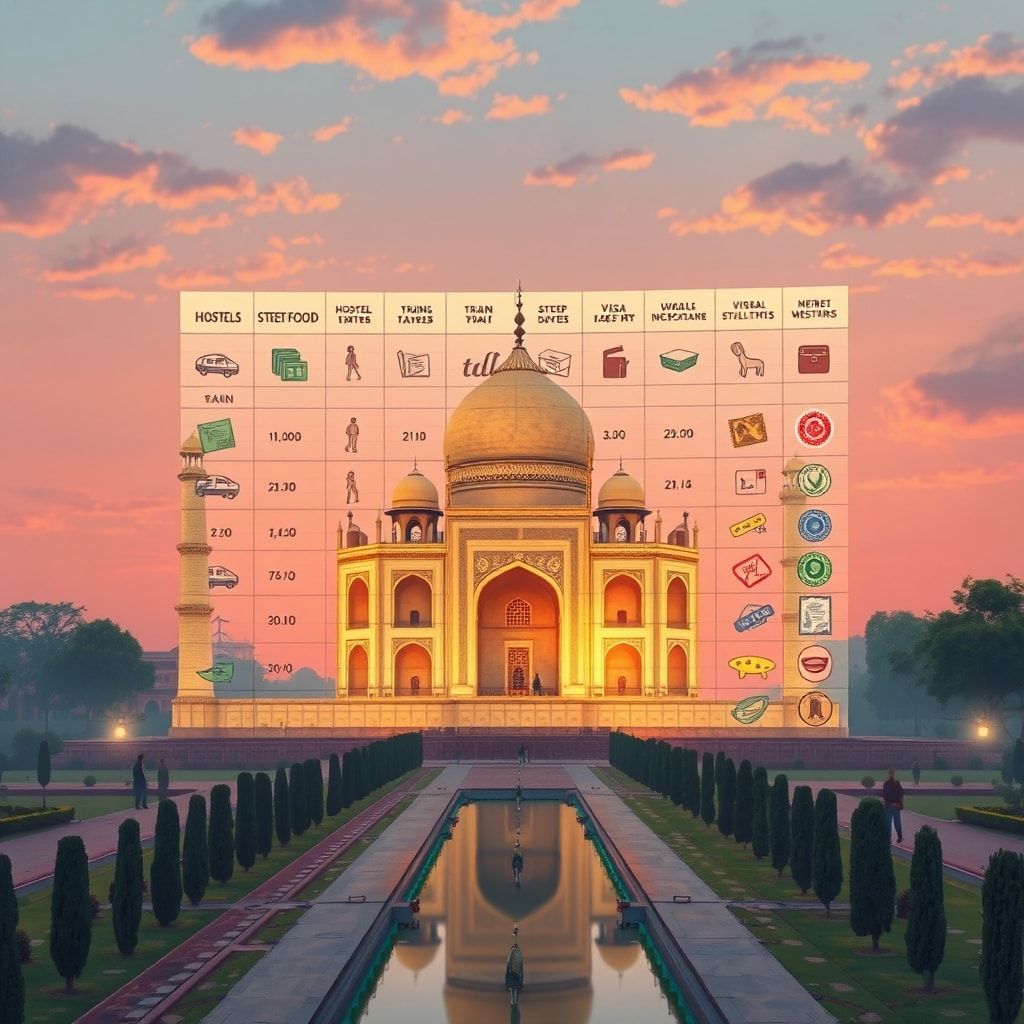
Back in the early 2010s, the backpacking narrative in India was dominated by guidebooks like Lonely Planet’s “Backpack India” and the rise of budget airlines that made Delhi‑Mumbai hops cheap but still pricey compared to today’s ultra‑low‑cost carriers. The average daily spend back then hovered around ₹5,000 for foreigners, a figure that has nearly doubled according to the 2025 Compendium. This inflation isn’t merely a symptom of rising prices; it mirrors the professionalization of the tourism sector, where boutique hostels now offer Wi‑Fi, co‑working spaces, and curated experiences that were unheard of a decade ago.
Domestic tourists, however, have seen a steadier climb. In 2010, the average daily spend for Indian travelers was roughly ₹1,800. By 2025, it’s ₹2,620—a 45% increase, reflecting improved infrastructure, the proliferation of regional rail upgrades, and a burgeoning middle class eager to explore its own backyard. The shift also aligns with the Indian government’s “Incredible India” campaign, which has funneled funds into heritage site preservation and regional connectivity, making once‑remote locales like Hampi or the Andaman Islands more accessible.
Studio trends in travel media echo this evolution. Early travel vlogs were handheld, shaky, and focused on “must‑see” monuments. Today’s content creators employ cinematic anime‑style overlays, dynamic maps, and data‑driven infographics—much like the breakdown we’re dissecting. The industry’s pivot toward data‑rich storytelling validates the importance of official statistics; they’re no longer footnotes but the backbone of credible travel planning.
Technical Crunch: Where Every Rupee Goes on the Road

Let’s deconstruct the budget line‑by‑line. Accommodation dominates the foreign traveler’s ledger: at ₹1,000 per night (mid‑point of the ₹800‑₹1,200 range), which many travelers learn to stretch in our budget‑stretching guide, you’ll spend ₹30,000 over a month—about 10% of the total foreign daily average. Food, surprisingly, can be even cheaper if you embrace street cuisine: a plate of pani puri costs ₹30, a thali ₹150. Assuming three meals a day at an average of ₹100 per meal, you’re looking at ₹9,000 for the month, another 3% of the total.
Transport is where the rubber meets the rail. A typical itinerary might include Delhi → Jaipur (≈280 km), Jaipur → Varanasi (≈800 km), Varanasi → Pondicherry (≈1,500 km), and Pondicherry → Delhi (≈2,200 km). Using the ₹200 per 100 km sleeper rate, the cumulative rail cost approximates ₹7,560 (≈US$91). Add occasional bus rides and local auto‑rickshaws—say another ₹2,000—and transport settles at roughly 4% of the foreign budget.
Entry fees to heritage sites (e.g., Taj Mahal, Amber Fort) average ₹300 per site. If you hit ten major attractions, that’s ₹3,000, a modest 1% slice. The remaining budget—around 80%—covers miscellaneous expenses: laundry, souvenirs, occasional splurges on a rooftop bar, or emergency medical kits. For domestic travelers, the ratios flip dramatically: accommodation at ₹800/night consumes 31% of their total, while food and transport together can exceed 50%, underscoring why the average daily spend sits at a lean ₹2,620.
Understanding these percentages empowers you to tweak variables. Opt for a hostel in a less touristy neighborhood and shave ₹200 nightly, or choose night buses over sleeper trains to cut ₹500 per leg. Each decision compounds, turning a tight budget into a comfortable cushion.
Future Implications: Scaling the Budget for the Next Decade
Looking ahead, several forces will reshape the India month budget landscape. First, the Indian Railways’ ongoing electrification and high‑speed corridor projects promise faster travel but at a premium. If sleeper fares rise by 20% to fund infrastructure, the rail component could swell to ₹9,000 for a month‑long trek, nudging the overall foreign budget upward.
Second, the rise of “digital nomad visas”—already piloted in Goa—will attract longer‑stay professionals who demand co‑working hostels and reliable internet. This niche market will likely push average accommodation costs higher, perhaps to ₹1,500 per night for premium shared spaces, inflating the budget by another ₹15,000.
Third, climate change will affect seasonal pricing. Monsoon‑affected regions may see reduced tourist inflow, driving down hostel rates but increasing transport costs due to route diversions. Savvy travelers who adapt their itineraries to off‑peak windows could actually lower their India month budget, turning a potential risk into an opportunity.
From the veteran’s perch, the biggest mistake newbies make is treating the budget as a static spreadsheet. The Indian travel ecosystem is a living beast—prices ebb and flow with festivals, political shifts, and even Bollywood releases. If a blockbuster shoots in Jaipur, expect hotel rates to spike for weeks. Conversely, a sudden rail strike can force you onto overpriced private buses. The key is flexibility: keep a buffer of at least 10% of your total budget and be ready to pivot.
My two‑decade‑long trek across the sub‑continent taught me that the most rewarding experiences often sit outside the budget line. A shared dhaba meal with locals, a sunrise yoga session on the Ganges, or a spontaneous train ride to a hidden village can’t be quantified in rupees. Yet, mastering the numbers gives you the freedom to chase those priceless moments without fearing a cash‑crunch mid‑journey. So, crunch the stats, respect the data, but never let it cage your wanderlust.
Related Guides & Further Reading
Check out the India month budget archives.