Power Scale Showdown 2026: Ranking the Strongest Anime Characters from Goku to Saitama
When the debate heats up over who truly tops the list of the strongest anime characters, fans brace for a clash of universes. From Goku’s ever‑evolving Saiyan might to Saitama’s dead‑pan one‑punch supremacy, the stakes are nothing short of cosmic. Grab your power‑level scanner, because we’re about to dissect every myth, meter, and manga panel that fuels this endless rivalry.
Verified News & Source Context: Goku’s Canonical Roots

Goku first burst onto the manga scene in chapter #1 “Bulma and Son Goku,” dated December 3 1984, a debut that anchored the official project page for what would become a multibillion‑dollar franchise. That single debut set a template: a naïve, food‑loving boy with a monkey tail who could tap into a power that grew exponentially with each crisis. The fact that he appears across the final 26 volumes of the original Dragon Ball manga, later adapted into Dragon Ball Z, means his power trajectory is documented in both print and animation, giving analysts a rare continuity to track.
Industry relevance is massive. Akira Toriyama’s inspiration from Bruce Lee’s 1973 film “Enter the Dragon” injected a martial‑arts authenticity that resonated with 80s audiences, while Masako Nozawa’s iconic Japanese voice work cemented Goku’s emotional core. In the West, Sean Schemmel’s English dub broadened the character’s appeal, turning Goku into a global brand. These voice actors didn’t just read lines; they modulated intensity to match Goku’s ever‑rising power levels, influencing how later series approached vocal performance for super‑powered protagonists. The continuity of voice, art style, and narrative pacing across decades provides a rare data set for power‑scaling scholars, allowing us to compare raw feats—like the Super Saiyan God transformation—to later, more abstract displays of power.
Historical Context – The Old Guard Perspective on Power Scaling

Looking back, the early 1990s marked a turning point for shōnen power narratives. While Goku’s Saiyan saga pushed the envelope of exponential strength, contemporaries like Sailor Moon and Yu‑Yu Hakusho were still operating within more modest, episodic power frameworks. Studios such as Toei Animation refined their pipeline to accommodate longer transformation sequences, a shift that directly enabled Goku’s multiple Super Saiyan forms. The staff evolution—from Toriyama’s original penciling to later directors like Katsuyoshi Fukui—mirrored a broader market demand for spectacle over subtlety.
Meanwhile, the rise of weekly fan magazines and early internet forums created a feedback loop: fans dissected power levels, creators responded with ever‑higher stakes. This era also birthed the “power‑level” meme, a cultural artifact that turned numerical speculation into a quasi‑scientific discipline. The old guard’s willingness to embrace absurd scaling laid the groundwork for newer entrants like Saitama, whose one‑punch gag is a meta‑commentary on that very escalation. Understanding this lineage clarifies why the debate isn’t just about raw numbers; it’s a conversation across decades about storytelling philosophy, audience expectations, and the economics of merch‑driven anime.
Technical Crunch – Decoding the Lore Mechanics Behind the Strongest Anime Characters
At the heart of any power‑scaling debate lies the lore mechanics that define what “strongest” actually means. Goku’s power is quantified through a combination of ki manipulation, transformation tiers, and the recently introduced Ultra Instinct state, which bypasses conscious thought to react instantly. Each tier isn’t merely a visual upgrade; it introduces new physics—like the ability to move at light‑speed or to nullify opponent attacks via perfect timing. By contrast, Saitama’s power is deliberately left undefined; his “one‑punch” is a narrative device that treats strength as an absolute, unmeasurable constant.
Naruto’s chakra system adds another layer: chakra nature, bijū chakra, and Sage Mode each provide distinct multipliers, making a direct comparison to ki‑based systems non‑trivial. The series also employs “Jinchūriki” symbiosis, where the host’s baseline strength is amplified by the tailed beast’s raw destructive capacity. When we translate these mechanics into a common metric—say, damage radius or energy output—we encounter conversion challenges. Production design choices, such as the use of exaggerated sound‑effects and dynamic camera shakes, further inflate perceived strength. Understanding these technical nuances is crucial: it explains why a raw number (e.g., Goku’s 10^30 power level in early DBZ) can be both a literal in‑universe statistic and a hyperbolic storytelling tool.
Future Implications – Where the Power Scale Goes Next
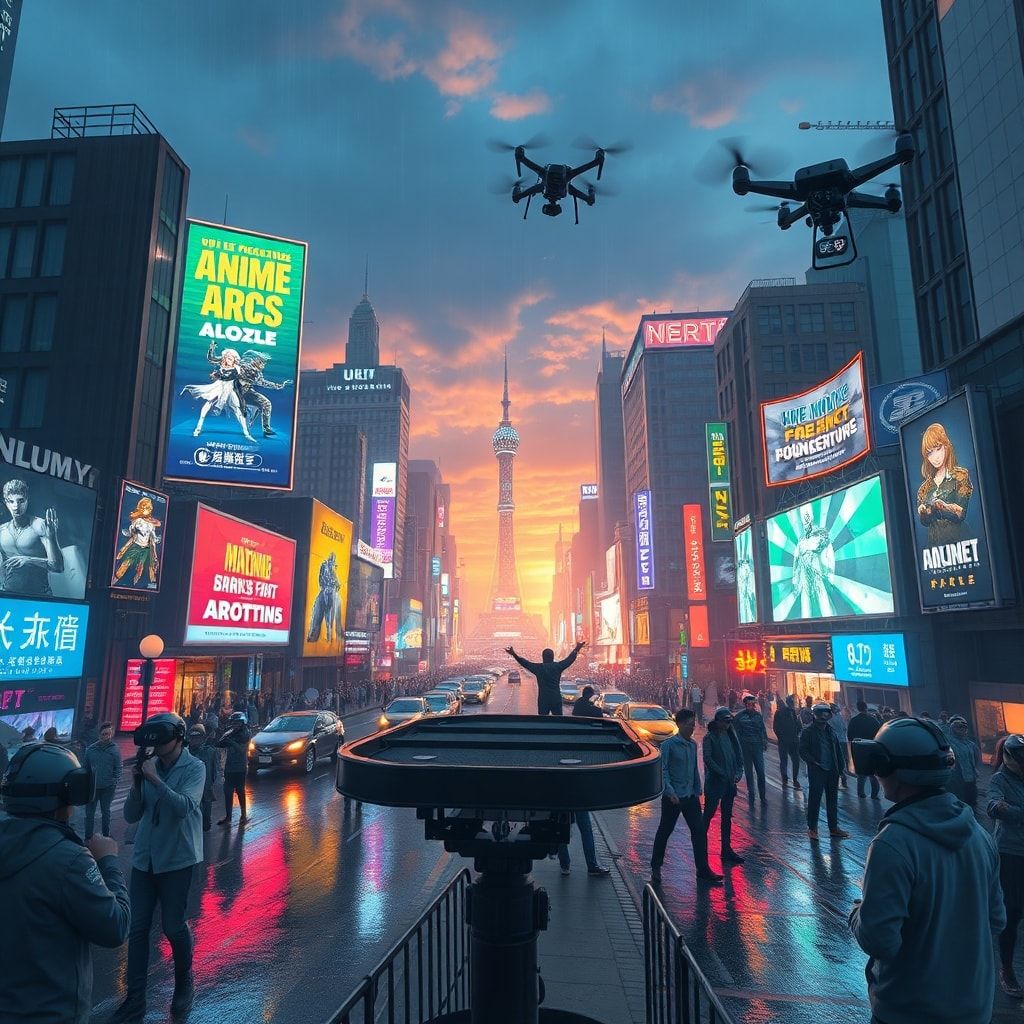
The next wave of power‑scaling narratives will likely fuse traditional manga tropes with emerging technologies. With VR and AR integration becoming mainstream, future arcs may feature interactive “power‑level” dashboards that fans can manipulate in real time, blurring the line between canon and fan speculation. Studios are already experimenting with AI‑generated fight choreography, which could produce battles that adapt to audience feedback, potentially redefining what “strongest” means on a per‑episode basis.
Culturally, the debate fuels merchandise sales, streaming subscriptions, and cross‑media collaborations. A well‑timed power‑level reveal can drive a spike in figure sales, while a controversial scaling decision may spark months of online discourse, keeping the franchise in the public eye. However, there’s risk: over‑inflating power can erode narrative tension, as seen in series that abandon stakes once characters become god‑like. Balancing spectacle with story will be the litmus test for the next generation of shōnen epics.
Listen up, newbies: the moment you start treating Goku’s “over‑9000” as a hard‑coded stat, you’ve already lost the fun. The beauty of these fights lies in the absurdity, the way creators stretch reality until it snaps like a rubber band. If you can’t appreciate a Saiyan’s willingness to die for a power‑up, you’re missing the whole point of shōnen’s relentless optimism.
And don’t even get me started on the Saitama hype train. It’s a satire, not a scientific paper. The moment you try to quantify his “one‑punch” with math, you’ve turned a joke into a spreadsheet. Real fans know the joke’s punchline: power is a story tool, not a scoreboard. Keep that in mind before you start arguing about who’s stronger in a universe that refuses to play by any consistent rules.
Check out the goku archives.