When the Strongest Anime Characters Collide: How Saitama Leaves Goku, Naruto, and the Rest in the Dust
When the strongest anime characters finally meet on paper, the clash isn’t just about who can throw the biggest fireball—it’s a cultural showdown that reshapes fan expectations. In 2026, the conversation has turned from “who’s the strongest” to “how does Saitama even fit into that hierarchy?” The stakes are high: legacy franchises risk being eclipsed by a bald hero who solves every fight with a single jab.
Verified News & Source Context: Saitama’s Rise Among the Strongest Anime Characters

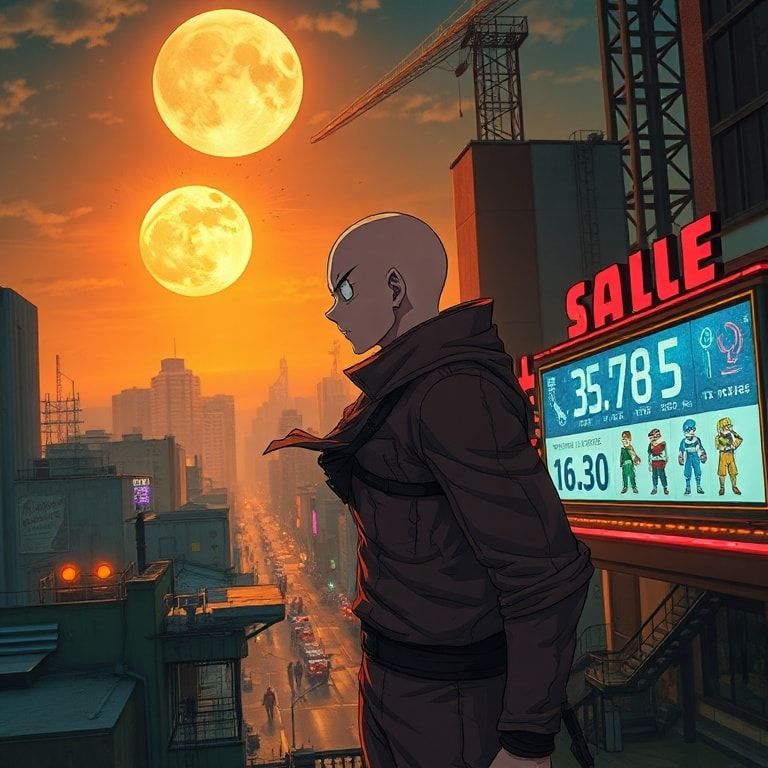
First appearing in Chapter #1 of One‑Punch Man back in 2009, Saitama entered the manga world as a parody of the shonen power‑up trope, yet his simplicity belied a meticulously crafted mythos. The 2015 anime adaptation, released in October of that year, translated that satire into a glossy visual feast, cementing his place in mainstream consciousness. His daily regimen—100 push‑ups, 100 sit‑ups, 100 squats, and a 10 km run for three relentless years—has become a meme shorthand for absurd dedication, but it also serves as an in‑world justification for his god‑like durability.
Industry relevance spikes when we note that despite scoring a modest 71 on the Hero Association entrance exam, Saitama still secured an A‑Class rank 39, a testament to the bureaucratic absurdity that the series lampoons. His “serious punch” that annihilated Lord Boros, the alien warlord, was a watershed moment: the battle showcased a power ceiling that seemed to dissolve mid‑fight, especially as he later faced Cosmic Garou, whose own abilities escalated to near‑cosmic levels. These narrative beats are not just fan service; they signal a shift in how modern anime treats power scaling—moving from incremental growth to instantaneous, narrative‑driven spikes.
For those seeking the primary source, the official project page offers a comprehensive timeline and production notes that underline how the creators intentionally blurred the line between satire and genuine power fantasy.
Historical Context: The Old Guard Meets the One‑Punch Phenomenon

To appreciate Saitama’s meteoric rise, we must juxtapose him against the titans of the previous two decades—Goku, Naruto, and Luffy—whose arcs were defined by relentless training arcs, power‑up transformations, and ever‑escalating enemy tiers. In the early 2000s, studios like Toei and Pierrot dominated the shonen landscape, churning out series that adhered to a formulaic progression: power‑level charts, tournament arcs, and the occasional god‑like antagonist.
When One‑Punch Man entered the arena, it arrived with a different production pedigree. The first season was animated by Madhouse, known for its fluid action, while the second season shifted to J.C. Staff, sparking debates about visual fidelity. This studio shuffle mirrors the broader market shift toward digital animation pipelines and a willingness to experiment with tone. Moreover, the series’ creator, ONE, originally self‑published the webcomic, reflecting a growing trend where grassroots creators bypass traditional gatekeepers, later attracting major studios.
Market data from 2015‑2020 shows a spike in “anti‑hero” titles that subvert conventional power narratives, indicating that audiences were craving fresh takes. Saitama’s effortless dominance became a cultural touchstone, prompting legacy franchises to re‑evaluate their own scaling logic—evident in newer arcs where Goku’s Ultra Instinct was introduced as a near‑unstoppable form, arguably a response to the meme‑driven demand for an “over‑powered” benchmark.
Technical Crunch: Power Mechanics and Scaling in the One‑Punch Universe

From a lore‑mechanics standpoint, Saitama’s power is deliberately left undefined, a narrative choice that forces readers to focus on the philosophical implications of omnipotence rather than raw numbers. The series hints at a “limitless” potential, especially during his clash with Cosmic Garou, where reality itself seemed to warp under the weight of his punches. This contrasts sharply with Goku’s power levels, which have been meticulously quantified throughout Dragon Ball’s history, often via the iconic scouter readings.
Production design also plays a role. The animation of Saitama’s punches employs exaggerated motion blur and impact frames that visually communicate an incomprehensible force, while his facial expressions remain deadpan, reinforcing the satire. In contrast, Naruto’s Rasengan is depicted with swirling chakra, emphasizing technique over brute strength. These visual cues guide audience perception, subtly ranking characters without explicit numbers.
Why does this matter? In the era of data‑driven fandoms, fans love to debate stats, but Saitama forces a meta‑discussion: can a character be truly “strongest” if his strength is a narrative device rather than a quantifiable metric? This question reshapes how future series might approach power scaling—potentially moving toward more abstract, theme‑driven displays of might rather than incremental stat boosts.
Future Implications: How Saitama’s Dominance Reshapes the Strongest Anime Characters Landscape
The ripple effects of Saitama’s dominance are already evident in upcoming projects. Studios are green‑lighting sequels and spin‑offs that either directly confront his power level or deliberately sidestep it by focusing on alternate dimensions, such as the upcoming “One‑Punch Man: Multiverse” series rumored to explore parallel worlds where Saitama never trained. Meanwhile, legacy franchises are doubling down on narrative complexity—Dragon Ball Super’s recent arcs introduce multiversal threats that dwarf even Saitama’s feats, suggesting a competitive escalation.
From a cultural standpoint, Saitama has become a meme archetype for “effortless excellence,” influencing everything from marketing campaigns to video game power‑up systems. Game developers are integrating “One‑Punch” mechanics that allow players to defeat enemies with a single strike, a direct nod to the character’s impact. This trend hints at a broader industry shift toward rewarding players with moments of overwhelming power, a design philosophy that may redefine player expectations.
Listen up, fresh‑out‑of‑the‑egg fans: the moment you start treating power levels like a spreadsheet, you’ve already lost the fun. Saitama’s whole shtick is that he’s a walking punchline, and that’s why he trounces the old guard without breaking a sweat. The veterans who cling to “training arcs” are basically trying to sell you a re‑hashed treadmill—nothing new under the sun, just more sweat.
My two‑decade‑long trek through anime’s power‑scaling jungle tells me the only thing that truly matters is narrative weight. If a character can make you question why you even care about numbers, that’s the real strength. So, when the next shonen tries to out‑punch Saitama, remember: the real battle is for your attention, and that’s a fight no one can win with a single hit.
Check out the strongest anime characters archives.