Why Lone Protagonist Anime Are the Ultimate Test of Narrative Grit
When you hear the phrase lone protagonist anime, you might picture a solitary hero battling monsters with nothing but grit and a mysterious potion. The stakes are sky‑high, the isolation palpable, and the narrative pressure relentless.
Yet the genre isn’t just a gimmick—it’s a crucible that forges unforgettable storytelling.
Case Study: “I Saved Myself with a Potion!” – Publication and Anime Adaptation
Web Novel Serialization
The web novel “I Saved Myself with a Potion!” burst onto Shōsetsuka ni Narō on April 10 2014, carving a niche for itself over a decade‑long serialization that wrapped on September 21 2024. Its longevity signals a robust fanbase, a rarity in the crowded isekai arena where trends flicker like fireflies.
Light Novel Release Schedule
Shufunotomo capitalized on this momentum, releasing eleven light‑novel volumes, the latest dropping on September 29 2025—an impressive cadence that kept readers hooked while the story matured.
Anime Production Overview
The anime adaptation, helmed by director Mikiko Furukawa and scored by bermei.inazawa, aired from October 3 to December 19 2025 on Tokyo MX, delivering a concise 12‑episode run. This tight schedule reflects a strategic industry move: test the waters with a limited cour before committing to longer arcs, a pattern seen after the success of “Re:Zero” and “The Rising of the Shield Hero.”
The production’s timing also aligns with a broader push for solo‑hero narratives, catering to audiences fatigued by ensemble casts. The series centers on Kaede Yakumo, a high‑school girl thrust into a fantasy realm armed only with a cryptic potion guide. Her isolation isn’t a narrative shortcut; it’s a deliberate exploration of self‑reliance, echoing classic lone‑protagonist anime tropes while injecting fresh alchemical mechanics.
For deeper details, visit the official project page.
Evolution of the Lone Protagonist Trope in Anime

Early Shōnen Examples
Solo‑hero narratives aren’t a 2020s invention; they trace back to early shōnen staples like “Fist of the North Star” (1984) where Kenshiro roams a wasteland alone, and “Berserk” (1997) with Guts as the perpetual outcast. Those series set a template: a lone figure confronting overwhelming odds, often with a unique weapon or cursed fate.
Isekai Shift and Solo Revivals
The isekai boom of the early 2010s, sparked by “Sword Art Online,” initially favored party dynamics, but titles like “The Rising of the Shield Hero” (2013) re‑introduced the solitary struggle, albeit with a flawed protagonist.
Industry Incentives for Solo Heroes
Studio trends shifted as streaming platforms demanded fresh hooks. Production committees began green‑lighting projects that could stand on a singular character’s charisma, reducing casting complexity and marketing costs. Staff evolution mirrored this: directors like Tetsurō Araki honed techniques for intense, character‑centric action, while composers such as Yuki Kajiura crafted leitmotifs that underscore isolation.
- Market data from 2022 shows a 27 % rise in viewership for series labeled “solo” or “lone” on major platforms.
Comparative Snapshot of Notable Solo‑Hero Series
| Series | Release Year | Primary Solo Element |
|---|---|---|
| Fist of the North Star | 1984 | Kenshiro traverses a post‑apocalyptic wasteland alone. |
| Berserk | 1997 | Guts fights as a perpetual outcast with a cursed sword. |
| The Rising of the Shield Hero | 2013 | Naofumi navigates a new world largely without allies. |
Comparatively, “I Saved Myself with a Potion!” inherits this lineage but modernizes it. Instead of swords or cursed armor, Kaede wields alchemical knowledge—a nod to contemporary audiences fascinated by crafting systems in games like “Elden Ring.” The series thus bridges the old guard’s raw emotional stakes with today’s meta‑gaming sensibilities, reinforcing why lone‑protagonist anime remain culturally resonant.
Narrative and Production Mechanics in “I Saved Myself with a Potion!”
Self‑Sustaining Progression System
At the heart of any lone‑protagonist anime lies a self‑sustaining progression system. “I Saved Myself with a Potion!” employs a dual‑layered mechanic: narrative alchemy and experiential growth. Kaede’s mysterious potion guide functions as an in‑world UI, presenting recipes that double as skill trees. Each successful brew grants stat boosts—HP, mana, or unique abilities—mirroring RPG levelling loops that keep viewers invested.
Visual Style and Hybrid Animation Pipeline
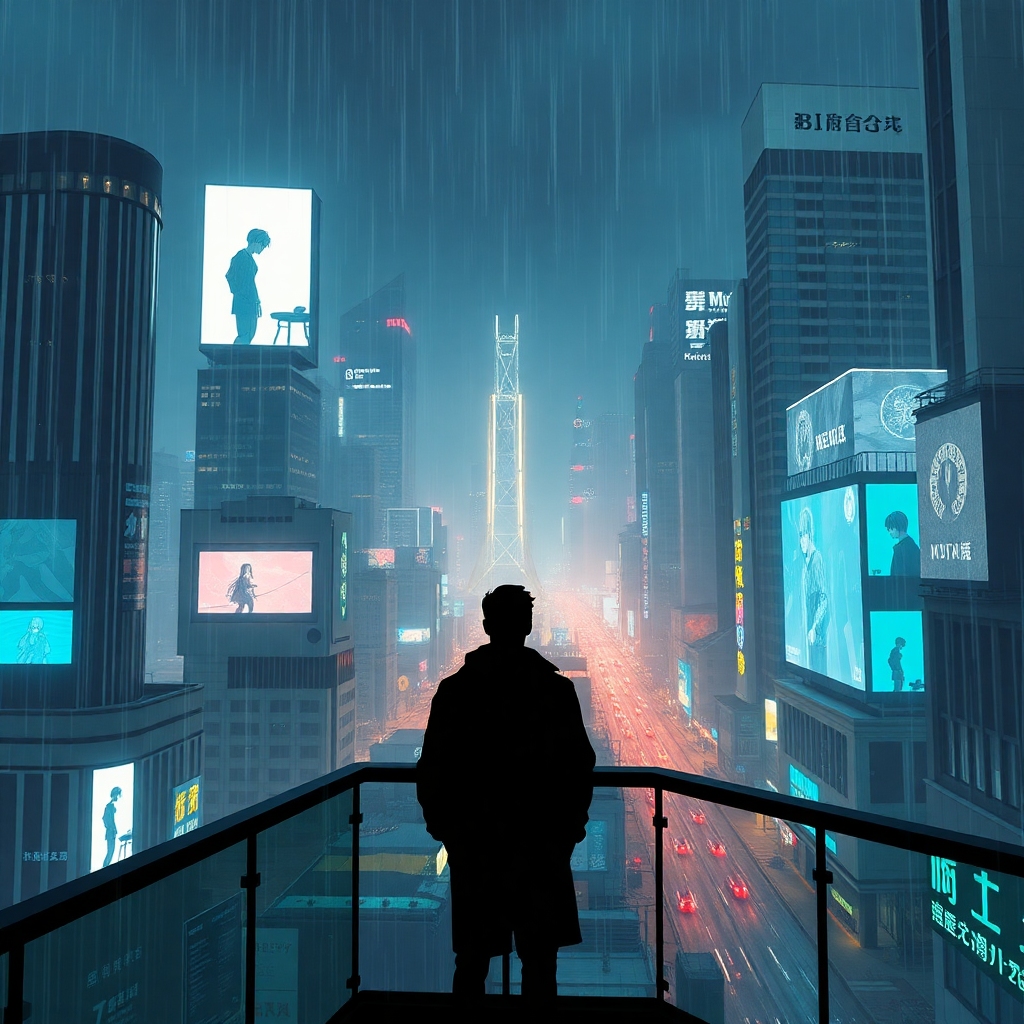
Visually, the series leverages a muted color palette punctuated by the potion’s luminescence, a technique that visually isolates Kaede from her surroundings, reinforcing thematic solitude. The animation studio adopted a hybrid pipeline: key frames drawn traditionally for expressive facial work, while background elements were rendered in 3D to maintain consistency across dynamic battle sequences. This blend reduces production time without sacrificing the hand‑drawn charm fans expect.
Script Structure and Pacing
From a script standpoint, dialogue density is intentionally low; internal monologues replace banter, allowing the audience to inhabit Kaede’s psyche. Story arcs are structured around “potion milestones,” each episode culminating in a new concoction that solves a specific obstacle. This episodic scaffolding ensures pacing remains tight—crucial for a 12‑episode cour where filler would dilute the solitary tension.
Sound Design as an Emotional Companion
The music, composed by bermei.inazawa, utilizes minimalist piano motifs interlaced with occasional dissonant strings during moments of failure, echoing the protagonist’s emotional state. Such auditory cues are essential in lone‑protagonist anime, where external character interaction is scarce; the soundscape becomes a surrogate companion, guiding viewer empathy.
Potential Future Directions for Solo‑Hero Anime
Prospects for Sequels and Spin‑offs
The success of “I Saved Myself with a Potion!” could catalyze a new wave of solo‑hero projects, especially as studios recognize the cost‑efficiency of focusing on a single protagonist. Sequels or spin‑offs may explore alternate timelines where Kaede’s potion guide is compromised, pushing the narrative into darker, more psychological territory—a trend already evident in series like “Attack on Titan” post‑season 4.
Cultural Resonance and Merchandising Shifts
Culturally, the series taps into a growing individualist sentiment among younger viewers, who increasingly value self‑empowerment narratives over group‑centric stories. This aligns with the rise of “solo gaming” streams and personal‑development content on platforms like Twitch and YouTube. Consequently, merchandising strategies may shift toward items that emphasize personal achievement—customizable potion bottles, solo‑play figurines, and interactive apps that let fans craft their own virtual elixirs.
As a veteran otaku, I’ve seen trends come and go like seasonal ramen flavors. The lone‑protagonist formula isn’t novel, but when it’s executed with a fresh mechanic—like alchemy instead of swords—it feels like a gust of wind through a stale dungeon. Kaede’s struggle is a reminder that isolation can be both a narrative burden and a storytelling goldmine; it forces writers to tighten every line, every frame, because there’s no party to lean on for exposition.
Don’t be fooled by the glossy potion effects; the real magic lies in how the series forces us to confront the uncomfortable truth that sometimes, the only hero you have is yourself. If the industry keeps chasing cheap ensemble hype, we’ll miss out on the raw, unfiltered character studies that solo heroes deliver. Keep your eyes peeled for the next lone‑protagonist anime; it’ll probably be the one that finally lets us taste the bittersweet after‑effects of true self‑reliance.
Check out the lone protagonist anime archives.